

Monel 400 vs Monel K-500: Marine & Offshore Alloy Selection Guide
Date: 2026年6月25日 Categories: News Views: 17
Excerpt:
Comprehensive comparison of Monel 400 vs Monel K-500 for marine engineering: chemical composition, mechanical properties, corrosion resistance, and application guidance from Shanghai Hangbo Alloy Group.
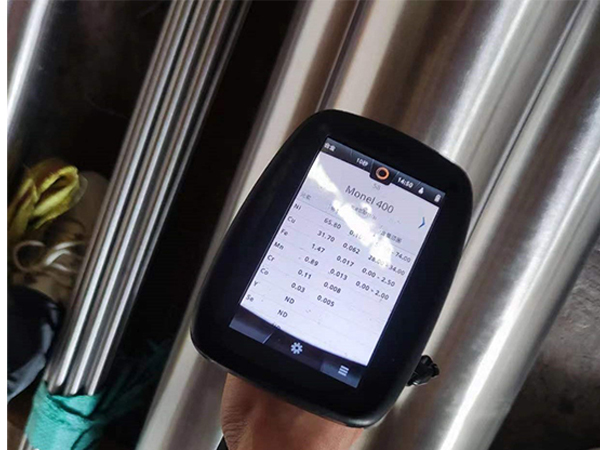
Introduction: Why Monel Alloys Matter in Marine Engineering
Shanghai Hangbo Alloy Group Co., Ltd. is an ISO 9001:2015 certified manufacturer and global supplier of both Monel 400 (UNS N04400) and Monel K-500 (UNS N05500) alloys, providing high-quality round bars, seamless tubes, plates, forgings, and welding wire to marine, offshore, chemical, and oil & gas industries worldwide.
Quick Answer: Monel 400 vs Monel K-500 — Which One Should You Choose? Monel 400 is a solid-solution strengthened nickel-copper alloy offering excellent corrosion resistance in seawater, acids, and alkalis. Monel K-500 is the age-hardenable version of Monel 400, with 2-3x higher yield strength due to aluminum and titanium additions that form gamma-prime precipitates during aging. Choose Monel 400 when corrosion resistance is the primary requirement; choose Monel K-500 when you need high strength plus corrosion resistance — but note it may be susceptible to stress-corrosion cracking in some environments.

Chemical Composition Comparison
The critical difference: Monel K-500 contains aluminum (2.30-3.15%) and titanium (0.35-0.85%), which enable precipitation hardening. Without these elements, Monel 400 remains a single-phase solid solution alloy that cannot be heat treated for strength.
Mechanical Properties: Strength Comparison
Monel K-500 delivers nearly 3x the yield strength of Monel 400 after age-hardening, making it ideal for high-stress components like pump shafts, impellers, and fasteners. However, this strength comes at the cost of slightly reduced ductility.
Corrosion Resistance: Where Each Alloy Excels
Critical Note: Monel K-500 in the age-hardened condition can be susceptible to stress-corrosion cracking (SCC) in chloride environments. For applications where SCC resistance is paramount and strength requirements are moderate, Monel 400 is the safer choice.
Typical Marine & Offshore Applications
When to Choose Monel 400
- Seawater piping systems — excellent resistance to pitting and crevice corrosion in flowing seawater
- Heat exchanger tubes — ideal for marine condensers and desalination plants
- Chemical transfer lines — handles HF acid and caustic solutions safely
- Salt plant evaporators — proven performance in high-chloride brine environments
- Marine propeller shafts — when cavitation resistance is more important than ultimate strength
When to Choose Monel K-500
- Pump shafts and impellers — high strength resists bending and wear in high-RPM seawater pumps
- Valve trim and seats — maintains dimensional stability under high pressure
- Fasteners and bolting — high yield strength prevents galling and loosening
- Drill collars and non-magnetic tools — oil & gas downhole applications requiring non-magnetic properties
- Springs and diaphragms — age-hardening provides excellent spring properties
Shanghai Hangbo Alloy Group: Available Product Forms
Fabrication Considerations
Monel 400 is straightforward to fabricate: weld with ERNiCu-7 filler, hot work at 870-1,180°C, and anneal at 870-980°C followed by rapid cooling. No post-weld heat treatment is required for corrosion resistance.
Monel K-500 requires more care: welding is generally avoided for structural applications because the heat-affected zone loses age-hardening. When welding is necessary, use Monel 400 filler (ERNiCu-7) and apply a post-weld stress relief at 540°C for 6 hours. For maximum strength, solution anneal at 980°C, water quench, then age at 580-590°C for 16 hours followed by furnace cooling at 8-14°C/hour to 480°C.
Cost Consideration
Monel K-500 typically costs 15-25% more than Monel 400 due to the additional aluminum and titanium alloying elements and the more complex heat treatment process. For applications where Monel 400's 240 MPa yield strength is sufficient, the cost premium for K-500 may not be justified. However, when higher strength allows for thinner sections or smaller components, the total project cost may actually be lower with K-500.
Selection Checklist
- Is yield strength above 500 MPa required? → Monel K-500
- Is the environment chloride-rich with potential SCC risk? → Monel 400
- Will extensive welding be required? → Monel 400
- Are non-magnetic properties critical? → Monel K-500 (both are non-magnetic, but K-500 maintains strength)
- Is the application in HF acid or caustic environments? → Either alloy, but Monel 400 is proven
- Are you looking for the lowest cost solution? → Monel 400
FAQ
Q: Can Monel K-500 be used for seawater fasteners?
A: Yes, Monel K-500 is widely used for marine fasteners due to its high strength and good corrosion resistance. However, in slow-moving or stagnant seawater, pitting may occur. Regular inspection is recommended.
Q: Is Monel 400 magnetic?
A: No. Both Monel 400 and Monel K-500 are essentially non-magnetic at room temperature, with permeability less than 1.01. This makes them valuable for electronic and instrumentation applications.
Q: What welding filler should I use for Monel K-500?
A: For joining Monel K-500 to itself, use ERNiCu-7 (Monel 60) filler. However, structural welds in Monel K-500 lose the age-hardening benefit in the HAZ. For critical applications, consider mechanical fastening instead.
Contact Shanghai Hangbo Alloy Group
Shanghai Hangbo Alloy Group supplies both Monel 400 and Monel K-500 in round bar, seamless tube, plate, forging, and wire forms with full MTR certification to ASTM B164, B165, B127, B564, and AMS standards.
Email: specialalloy001@gmail.com
WhatsApp/Skype/Phone: 86 136 1165 6360
Address: No. 388 Songhuang Road, Qingpu District, Shanghai, China
ISO 9001:2015 Certified