

Inconel 718 vs Nimonic 90 for Turbine Applications
Date: 2026年6月26日 Categories: News Views: 328
Excerpt:
Technical comparison of Inconel 718 vs Nimonic 90 for aerospace turbine applications: chemical composition, mechanical properties, heat treatment, and selection guidance for turbine discs, blades, and UAV turbojet engines.
Introduction
Quick Answer: Inconel 718 (UNS N07718) is the workhorse superalloy for aerospace turbine discs, compressor blades, and structural components operating up to 650°C, offering excellent weldability and balanced strength. Nimonic 90 (UNS N07090) excels at higher temperatures up to 920°C, delivering superior creep resistance and stress-rupture strength — making it the preferred choice for turbine blades, combustion chamber components, and high-temperature fasteners in both manned aircraft and unmanned aerial vehicle (UAV) turbojet engines. The key differentiator is the operating temperature window: below 650°C, Inconel 718 provides better cost efficiency; above 650°C, Nimonic 90 is the only viable option between the two.
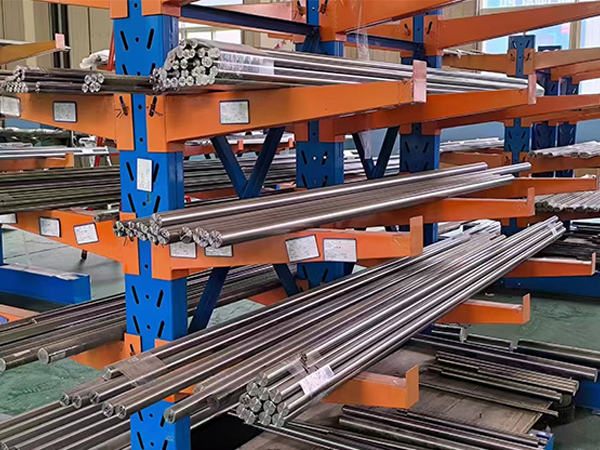
Shanghai Hangbo Alloy Group supplies both Inconel 718 and Nimonic 90 in round bars, forgings, plates, and sheets — all certified to ASTM B637 and AMS 5829 respectively. This technical comparison provides engineers, procurement managers, and aerospace designers with the data needed to make an informed material selection decision.
Chemical Composition Comparison
The fundamental difference between these two superalloys lies in their chemistry. Inconel 718 relies on niobium (columbium) as its primary precipitation-hardening element, forming γ″ (gamma double prime) phase, while Nimonic 90 uses higher titanium and aluminum content combined with substantial cobalt to form γ′ (gamma prime) phase for high-temperature strength.
| Element | Inconel 718 (ASTM B637) | Nimonic 90 (AMS 5829) |
|---|---|---|
| Nickel (Ni) | 50.0 – 55.0% | Balance (~53-57%) |
| Chromium (Cr) | 17.0 – 21.0% | 18.0 – 21.0% |
| Cobalt (Co) | ≤ 1.0% | 15.0 – 21.0% |
| Iron (Fe) | Balance (~17-21%) | ≤ 1.5% |
| Niobium + Tantalum (Nb+Ta) | 4.75 – 5.50% | — |
| Molybdenum (Mo) | 2.80 – 3.30% | — |
| Titanium (Ti) | 0.65 – 1.15% | 2.0 – 3.0% |
| Aluminum (Al) | 0.35 – 0.80% | 1.0 – 2.0% |
| Carbon (C) | ≤ 0.08% | ≤ 0.13% |
| Manganese (Mn) | ≤ 0.35% | ≤ 1.0% |
| Silicon (Si) | ≤ 0.35% | ≤ 1.0% |
| Boron (B) | 0.001 – 0.006% | ≤ 0.02% |
| Copper (Cu) | ≤ 0.15% | ≤ 0.20% |
| Sulfur (S) | ≤ 0.015% | ≤ 0.015% |
Engineer's Note: The high cobalt content in Nimonic 90 (15-21%) is the primary cost driver and also the key reason for its superior high-temperature creep resistance. Cobalt raises the solvus temperature of the γ′ strengthening phase, delaying coarsening at elevated temperatures.
Mechanical Properties: Room Temperature to Service Limits
Both alloys are precipitation-hardenable, but their strengthening mechanisms differ fundamentally. Inconel 718's γ″ phase provides exceptional yield strength at low-to-intermediate temperatures, while Nimonic 90's γ′ phase maintains structural integrity well beyond 800°C.
| Property | Inconel 718 (Aged) | Nimonic 90 (Aged) |
|---|---|---|
| Tensile Strength (RT) | 1276 – 1407 MPa | ≥ 1080 MPa |
| Yield Strength 0.2% (RT) | 1034 – 1172 MPa | ≥ 695 MPa |
| Elongation (RT) | 12 – 21% | ≥ 20% |
| Hardness | 331 – 401 HB | ≥ 310 HV (~300 HB) |
| Density | 8.19 g/cm³ | 8.18 g/cm³ |
| Melting Range | 1260 – 1336°C | 1315 – 1370°C |
| Tensile at 650°C | ~1158 MPa | ~950 MPa (est.) |
| Tensile at 815°C | Not recommended | ~620 MPa (est.) |
| Max Service Temperature | ~650°C (1200°F) | ~920°C (1688°F) |
Engineer's Note: While Inconel 718 shows higher absolute strength numbers at room temperature, Nimonic 90 retains a much higher fraction of its strength as temperature increases. At 815°C, Inconel 718 has effectively lost its precipitation hardening, whereas Nimonic 90 still maintains useful load-bearing capacity.
Heat Treatment: Critical Process Differences
The heat treatment cycles for these alloys reflect their fundamentally different metallurgy. Inconel 718 requires a relatively short solution treatment followed by a double-aging cycle, while Nimonic 90 demands a much longer solution soak due to the slower dissolution kinetics of its higher-volume-fraction γ′ phase.
| Stage | Inconel 718 (AMS 5663) | Nimonic 90 (AMS 5829) |
|---|---|---|
| Solution Anneal | 954 – 982°C / 1 hour / Air Cool | 1080°C / 8 hours / Air Cool |
| Aging Step 1 | 718°C / 8 hours / Furnace Cool at 55°C/h to 621°C | 700°C / 16 hours / Air Cool |
| Aging Step 2 | 621°C / 8 hours / Air Cool | — (single-step aging) |
| Total Cycle Time | ~18 hours | ~24 hours |
Engineer's Note: The 8-hour solution treatment for Nimonic 90 is non-negotiable — insufficient soak time results in incomplete dissolution of primary γ′ and suboptimal aged properties. For Inconel 718, the critical parameter is the controlled furnace cooling rate (55°C/h) between aging steps; faster cooling reduces γ″ precipitation and compromises strength.
Modern Applications in Aerospace & UAV Propulsion
Both alloys serve critical roles across the aerospace sector, from large commercial turbofans to compact UAV turbojet engines. The selection between them typically follows the temperature profile of each component.
Inconel 718 — Dominant Below 650°C
- Turbine discs and compressor rotors: The GE CF6, Rolls-Royce Trent, and Pratt & Whitney PW4000 families all use Inconel 718 discs in the compressor and early turbine stages. The alloy accounts for approximately 35% of the total weight of a modern turbofan engine's rotating hardware.
- UAV small turbojet compressor wheels: In compact turbojet engines powering tactical UAVs (such as the PBS TJ100 and similar 100-300 lbf thrust class engines), Inconel 718 investment-cast or forged compressor impellers operate at 500-600°C with rotational speeds exceeding 60,000 RPM.
- Structural casings and fasteners: Engine casings, bearing housings, and high-strength bolting throughout the engine architecture.
- Cryogenic rocket components: Inconel 718 maintains toughness down to -253°C, making it ideal for liquid hydrogen turbopump components in launch vehicles.
Nimonic 90 — The Hot-Section Specialist
- Turbine blades and vanes: Nimonic 90 is specified for turbine blades in the hot section of aero-derivative gas turbines and small turbojet engines, where gas path temperatures reach 850-920°C. Its γ′ volume fraction of approximately 35% provides stable creep resistance well beyond Inconel 718's capability.
- UAV turbojet turbine wheels: For small tactical UAV engines operating at high turbine inlet temperatures (900-1000°C), Nimonic 90 forged turbine wheels provide the necessary creep life and oxidation resistance. Several Chinese and European UAV propulsion programs specify Nimonic 90 for their hot-section rotating components.
- Combustion chamber components: Flame tubes, transition ducts, and afterburner components in both manned and unmanned aircraft engines.
- High-temperature fasteners and springs: Nimonic 90 is the standard material for turbine section bolting and seal rings where service temperatures exceed 700°C.
| Application | Temperature Range | Recommended Alloy | Key Reason |
|---|---|---|---|
| Turbine disc (compressor side) | 400 – 600°C | Inconel 718 | High YS, fatigue resistance, weldability |
| Compressor blades | 300 – 550°C | Inconel 718 | Strength-to-weight, cost efficiency |
| Turbine blades (hot section) | 700 – 920°C | Nimonic 90 | Creep resistance, oxidation resistance |
| Combustion chamber liner | 800 – 950°C | Nimonic 90 | Thermal fatigue, oxidation |
| UAV turbojet turbine wheel | 750 – 900°C | Nimonic 90 | Creep life at sustained RPM |
| Engine structural casings | 200 – 500°C | Inconel 718 | Weldability, machinability |
| High-temp fasteners/bolts | 650 – 800°C | Nimonic 90 | Stress relaxation resistance |
Welding & Fabrication Considerations
Inconel 718 is widely regarded as one of the most weldable superalloys, with excellent resistance to strain-age cracking and post-weld heat-treatment cracking. It can be welded using GTAW (TIG), GMAW (MIG), electron beam, and laser welding processes with matching filler metals (ERNiFeCr-2, ENiFeCr-2). The sluggish precipitation kinetics allow welding in the solution-annealed condition without spontaneous hardening in the heat-affected zone (HAZ).
Nimonic 90 presents greater welding challenges due to its higher aluminum and titanium content (Al+Ti up to 5%), which increases susceptibility to strain-age cracking. Welding should be performed in the solution-treated condition using matching composition filler, followed by a full post-weld solution treatment and aging cycle. For critical rotating components, Nimonic 90 is typically used in the forged condition and joined by mechanical fastening rather than fusion welding.
Cost & Availability Comparison
| Factor | Inconel 718 | Nimonic 90 |
|---|---|---|
| Raw Material Cost | Moderate (Ni 50-55%, low Co) | High (Ni 53-57%, Co 15-21%) |
| Price Premium vs 718 | Baseline | 40-60% higher |
| Heat Treatment Cost | ~18h cycle, moderate cost | ~24h cycle, higher energy cost |
| Machinability | Good in aged condition | Difficult (250-350 HV), requires rigid setups |
| Global Availability | Widely available | Specialized mills only |
| Product Forms | Bar, tube, plate, forging, sheet, wire | Bar, forging, sheet, wire (limited tube) |
Engineer's Note: The 40-60% cost premium for Nimonic 90 is driven primarily by cobalt (trading at $25-30/kg) and the extended heat treatment cycle. For applications below 650°C, Inconel 718 provides better value. Only specify Nimonic 90 when the temperature requirement genuinely exceeds Inconel 718's capability — the cost differential is significant enough to justify careful engineering analysis.
Selection Decision Matrix
| Decision Criterion | Choose Inconel 718 When... | Choose Nimonic 90 When... |
|---|---|---|
| Peak operating temperature | Below 650°C (1200°F) | Above 650°C, up to 920°C |
| Strength requirement | Highest YS/UTS at <650°C | Highest creep strength at >700°C |
| Weldability needed | Yes — excellent weldability | Minimal welding required |
| Budget sensitivity | Cost-constrained project | Performance-critical hot section |
| Component type | Discs, casings, structural parts | Blades, combustion liners, fasteners |
| Fatigue life priority | LCF/HCF at moderate temps | Creep-fatigue at high temps |
Frequently Asked Questions
Q1: Can Inconel 718 replace Nimonic 90 in a turbine blade application?
A: Generally no. Inconel 718's precipitation hardening dissolves above approximately 650°C, causing a rapid loss of strength. Nimonic 90 maintains useful creep strength up to 920°C due to its higher γ′ solvus temperature enabled by the 15-21% cobalt content. For turbine blades experiencing gas path temperatures above 700°C, Nimonic 90 (or more advanced alloys like Nimonic 105 or Inconel 738) is required. Inconel 718 is suitable only for cooled turbine blades where the metal temperature stays below 650°C.
Q2: What is the key metallurgical difference between these alloys?
A: Inconel 718 is strengthened primarily by γ″ (Ni₃Nb — body-centered tetragonal) precipitates, which are coherent but metastable and dissolve above ~650°C. Nimonic 90 is strengthened by γ′ (Ni₃(Ti,Al) — face-centered cubic) precipitates stabilized by high cobalt content, which remain stable up to ~920°C. The γ′ volume fraction in Nimonic 90 is approximately 35%, compared to ~15-20% combined γ′+γ″ in Inconel 718.
Q3: Are both alloys available from Hangbo Alloy Group in forged condition?
A: Yes. Shanghai Hangbo Alloy Group supplies Inconel 718 forgings per ASTM B637/AMS 5663 and Nimonic 90 forgings per AMS 5829. Our 10T and 5T hydraulic presses handle billets up to 1,200 mm diameter. All forgings are supplied with full MTRs including chemical analysis, tensile testing at room and elevated temperatures, and ultrasonic inspection when specified. Contact our technical team at hangbo@nickel-alloy.com for current stock and custom forging inquiries.
Q4: Which alloy is better for UAV turbojet engine applications?
A: It depends on the component. For UAV turbojet engines, Inconel 718 is ideal for compressor wheels, shafting, and structural housings where temperatures stay below 600°C. Nimonic 90 is the correct choice for the turbine wheel and nozzle guide vanes, where gas temperatures can reach 850-950°C in small engines without complex cooling schemes. Many UAV propulsion programs use both alloys in the same engine — Inconel 718 for the cold section and Nimonic 90 for the hot section.
Contact Shanghai Hangbo Alloy Group
| Channel | Details |
|---|---|
| Website | www.nickel-alloy.com |
| sales@hangboalloy.com | |
| hangbo@nickel-alloy.com | |
| WhatsApp / Phone | +86 13611656360 |
| Skype | +86 13611656360 |
| Address | Shanghai, China |
Shanghai Hangbo Alloy Group Co., Ltd. is an ISO 9001:2015 certified manufacturer and global exporter of nickel-based superalloys, including Inconel 718 and Nimonic 90. We supply round bars (Ø 6–300 mm), forgings (up to 1,200 mm diameter), plates/sheets (0.5–80 mm), and precision strips — all with full material test reports (MTRs) and third-party inspection available on request.
Contact us today for a quotation:
📧 Email: hangbo@nickel-alloy.com
📞 Phone: +86-136-1165-6360
🌐 Web: www.hangboalloy.com | www.nickel-alloy.com
📍 Address: No.388 Songhuang Road, Qingpu District, Shanghai, China 201700
Related Products
- Inconel 713C (UNS N07713) Investment Casting Supplier | Turbine Blades & Vanes | Shanghai Hangbo Alloy Group
- Inconel 725 Supplier | Bar, Tube & Plate | Shanghai Hangbo Alloy Group
- Inconel 690 Supplier | Bar, Tube & Plate | Shanghai Hangbo Alloy Group
- Inconel X-750 Supplier | Bar, Tube & Plate | Shanghai Hangbo Alloy Group
- Inconel 601 Supplier | Bar, Tube & Plate | Shanghai Hangbo Alloy Group
- Inconel 600 Supplier | Bar, Tube & Plate | Shanghai Hangbo Alloy Group
Applications of Inconel 718
Inconel 718 (UNS N07718) is widely used in aerospace gas turbine disks, blades, compressor components, rocket motor components, nuclear fuel element spacers, downhole shafting. The alloy maintains excellent mechanical properties at temperatures from -423F to 1300F (-253C to 704C), making it suitable for demanding high-temperature service environments.
Standards & Specifications: ASTM B637, ASME SB637, AMS 5662