

Incoloy 825 vs 316L Stainless Steel: When to Upgrade for Corrosion Resistance

Date: 2026年6月25日 Categories: News Views: 18

Excerpt:

Detailed comparison of Incoloy 825 vs 316L: PREN analysis, chloride SCC thresholds, acid resistance data, mechanical properties, and cost analysis to help engineers decide when to upgrade.
Introduction: The Corrosion Upgrade Decision

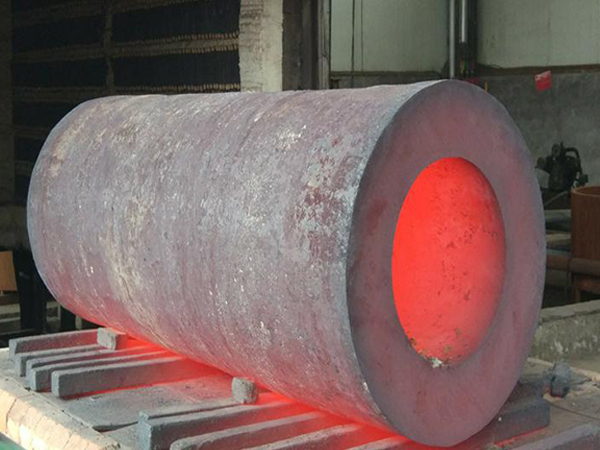
Shanghai Hangbo Alloy Group Co., Ltd. is an ISO 9001:2015 certified manufacturer supplying both Incoloy 825 (UNS N08825) and 316L stainless steel in round bar, seamless tube, plate, and forging forms. We help engineers worldwide determine whether 316L is sufficient or if the upgrade to Incoloy 825 is justified based on the specific corrosive environment.

Quick Answer: When Should You Upgrade from 316L to Incoloy 825? Upgrade to Incoloy 825 when any of these conditions exist: (1) chloride levels exceed 100-200 ppm at elevated temperatures, (2) the environment contains sulfuric or phosphoric acid, (3) stress-corrosion cracking (SCC) is a known failure mode in your application, (4) operating temperature exceeds 60°C in chloride-containing environments, or (5) you are experiencing pitting or crevice corrosion with 316L.


Chemical Composition: What Makes Incoloy 825 Superior

Element 316L (UNS S31603) Incoloy 825 (UNS N08825) Impact on Performance
Nickel (Ni) 10-14% 38-46% 3-4x higher Ni = superior SCC resistance
Chromium (Cr) 16-18% 19.5-23.5% Higher Cr = better general corrosion resistance
Molybdenum (Mo) 2-3% 2.5-3.5% Slightly higher Mo = better pitting resistance
Copper (Cu) 1.5-3.0% Cu = resistance to reducing acids (H₂SO₄, H₃PO₄)
Titanium (Ti) 0.6-1.2% Ti = stabilization against sensitization
Iron (Fe) Balance (~65%) 22% min (balance) Incoloy 825 is ~40% Fe vs ~65% for 316L

The standout difference: Incoloy 825's 38-46% nickel content and deliberate copper addition (1.5-3%) fundamentally change its corrosion behavior. The high nickel content provides immunity to chloride stress-corrosion cracking (SCC) — the most common catastrophic failure mode for 316L in hot chloride environments. The copper addition provides resistance to reducing acids that rapidly attack 316L.

PREN Analysis: Quantifying Pitting Resistance

The Pitting Resistance Equivalent Number (PREN) is the industry-standard formula for comparing an alloy's resistance to pitting corrosion:

PREN = %Cr + 3.3 × %Mo + 16 × %N

Alloy PREN (Typical) Seawater Suitability
304L ~18 Not recommended
316L ~24-26 Marginal — risk of crevice corrosion
Incoloy 825 ~31-34 Good — suitable for most seawater service
Inconel 625 ~46-50 Excellent — virtually immune

A PREN above 32 is generally considered the threshold for reliable seawater service. 316L falls well below this threshold, explaining why crevice corrosion under gaskets, deposits, and barnacles is a known failure mode. Incoloy 825 sits right at the threshold, making it the economical choice when 316L fails but Inconel 625 is overkill.

Chloride Stress-Corrosion Cracking (SCC): The Decision Maker

Chloride SCC is the single most important differentiator between 316L and Incoloy 825. Here is the critical threshold data:

Condition 316L Incoloy 825
SCC threshold temp in seawater ~60°C Immune at all practical temperatures
SCC in boiling 42% MgCl₂ Cracks within hours No cracking (nickel >30% rule)
Chloride limit at 100°C <10 ppm >10,000 ppm (essentially immune)

The Metallurgical Rule: Austenitic stainless steels with nickel content below ~30% are susceptible to chloride SCC. 316L contains only 10-14% nickel. Incoloy 825, with 38-46% nickel, crosses the immunity threshold. This is not a marginal improvement — it is a binary switch from "will fail" to "will not fail" in hot chloride service.

Acid Resistance Comparison

Acid Environment 316L Performance Incoloy 825 Performance
Sulfuric Acid (H₂SO₄) Poor — rapid attack at >5% concentration Good up to 40% at room temp, moderate at higher concentrations
Phosphoric Acid (H₃PO₄) Moderate — attack at elevated temps Excellent — copper addition provides specific resistance
Nitric Acid (HNO₃) Good up to 65% Good — 316L may be sufficient here
Hydrochloric Acid (HCl) Poor — rapid pitting even at <1% Limited — consider Hastelloy C-276 for HCl service

Mechanical Properties at Room Temperature

Property 316L (Annealed) Incoloy 825 (Annealed)
Tensile Strength (MPa) 485 min 585 min
Yield Strength (MPa) 170 min 240 min
Elongation (%) 40 min 30 min
Density (g/cm³) 8.00 8.14

Incoloy 825 provides approximately 20% higher tensile strength and 40% higher yield strength than 316L. This often allows for thinner wall sections in pressure-containing equipment, partially offsetting the higher material cost.

Cost Analysis: When the Premium Pays Off

Cost Factor 316L Incoloy 825
Material cost (relative) 1x (baseline) 4-6x
Service life in seawater 2-5 years (intermittent failure) 15-25+ years
Downtime cost from SCC failure High risk Essentially zero SCC risk
Maintenance/replacement cycle Every 3-7 years Every 15-25 years

Rule of Thumb: When the total cost of a 316L failure — including production downtime, maintenance labor, safety incidents, and reputation damage — exceeds 3-5x the material cost premium for Incoloy 825, the upgrade is economically justified. In chemical processing, offshore oil & gas, and nuclear applications, this threshold is almost always met.

Typical Application Guidance

Applications Where 316L Is Sufficient

  • Food and beverage processing equipment (ambient, low chloride)
  • Pharmaceutical water systems (WFI, purified water at <60°C)
  • Architectural and structural applications (non-marine)
  • Low-temperature (<60°C) fresh water service
  • Indoor laboratory equipment

Applications Where Incoloy 825 Is Required

  • Offshore platform seawater cooling systems
  • Chemical plant sulfuric acid heat exchangers
  • Phosphoric acid evaporators (fertilizer production)
  • Oil & gas downhole tubing with H₂S/CO₂/chlorides
  • Nuclear fuel reprocessing equipment
  • Pollution control scrubbers (flue gas desulfurization)
  • Pickling tank heaters and coils

Shanghai Hangbo Alloy Group: Product Availability

We stock and manufacture both 316L and Incoloy 825 in the following forms:

  • Round Bars: 8 - 500 mm diameter (both grades)
  • Seamless Tubes: OD 6 - 219 mm, wall 0.5 - 20 mm (both grades)
  • Plates: 0.5 - 80 mm thickness (both grades)
  • Forgings: Custom shapes per drawing (both grades)
  • Welding Wire: ERNiCrMo-3 / ER316L available

FAQ

Q: Is Incoloy 825 magnetic?
A: No. Like 316L, Incoloy 825 is austenitic and essentially non-magnetic in the annealed condition. Both alloys have permeability less than 1.02.

Q: Can Incoloy 825 be welded with standard 316L procedures?
A: Incoloy 825 requires ERNiCrMo-3 (Inconel 625) filler metal for welding, not 316L filler. Using 316L filler on Incoloy 825 would create a weld with inferior corrosion resistance. Interpass temperature should be kept below 150°C, and post-weld heat treatment is generally not required.

Q: What is the maximum service temperature for Incoloy 825?
A: Incoloy 825 can be used up to approximately 540°C (1,000°F) for oxidation resistance and up to 450°C for applications requiring high strength. Above 540°C, the titanium-stabilized structure begins to lose effectiveness, and higher-nickel alloys like Inconel 625 should be considered.

📚 Read More Technical Articles
For in-depth nickel alloy knowledge — material comparisons, heat treatment guides, corrosion analysis, and application case studies — visit our knowledge center at hangboalloy.com/knowledge, the official technical resource hub of Shanghai Hangbo Alloy Group.

Contact Shanghai Hangbo Alloy Group

Whether you need 316L for general service or Incoloy 825 for demanding corrosive environments, Hangbo Alloy delivers certified material with full traceability. Contact our engineering team for alloy selection guidance.

Email: specialalloy001@gmail.com
WhatsApp/Skype/Phone: 86 136 1165 6360
Address: No. 388 Songhuang Road, Qingpu District, Shanghai, China
ISO 9001:2015 Certified

Related Reading: For more aggressive acid environments, see our guide on Hastelloy C-276 vs Inconel 625 or Monel 400 vs Monel K-500 for Marine Applications.


XFacebookWhatsAppLinkedInEmailCopy link