

Nickel Alloy Heat Treatment Guide: Solution Annealing, Aging & Stress Relief
Date: 2026年6月25日 Categories: News Views: 22
Excerpt:
Complete heat treatment guide for nickel alloys covering solution annealing, precipitation hardening (aging), and stress relief with temperature tables for Inconel 718, 625, Hastelloy C-276, Monel K-500 and more.
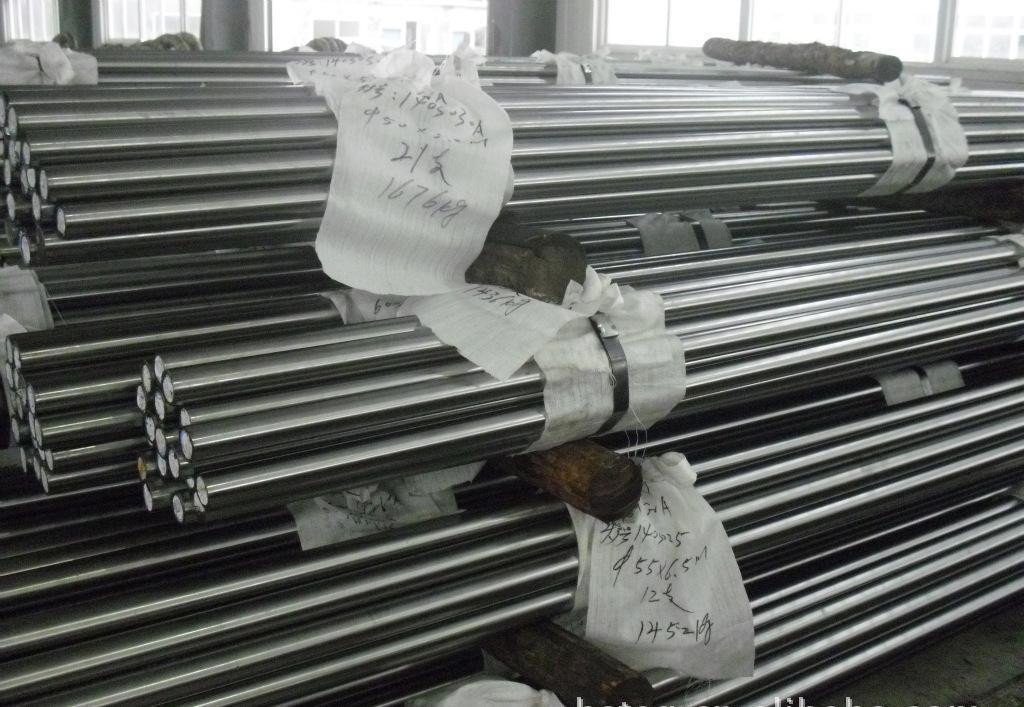
Introduction: Why Heat Treatment Defines Nickel Alloy Performance
Shanghai Hangbo Alloy Group Co., Ltd. is an ISO 9001:2015 certified manufacturer with in-house heat treatment capabilities including 10T forging press, electric arc furnaces, electroslag remelting (ESR), and precision-controlled heat treatment furnaces capable of solution annealing, aging, and stress relief across the full range of nickel-based superalloys.
Quick Answer: What Heat Treatments Do Nickel Alloys Need? Nickel alloys require three primary heat treatment processes: (1) Solution Annealing — dissolves precipitates and homogenizes the microstructure at high temperatures (980-1,200°C); (2) Precipitation Hardening (Aging) — forms gamma-prime or gamma-double-prime strengthening phases at intermediate temperatures (620-760°C); (3) Stress Relief — reduces residual stresses from welding or machining at lower temperatures (400-650°C). The correct treatment depends entirely on the alloy type and intended application.
1. Solution Annealing: The Foundation
Solution annealing is the most critical heat treatment step for most nickel alloys. The goal is to dissolve all second-phase particles (carbides, intermetallics) into a single-phase solid solution, then rapidly cool — usually by water quenching — to "freeze" this homogeneous structure.

Critical Rule: For corrosion-resistant alloys like Hastelloy C-276 and Inconel 625, cooling rate after solution annealing is paramount. Slow cooling allows chromium carbides or intermetallic phases to precipitate at grain boundaries, causing "sensitization" that destroys corrosion resistance. Always water quench these alloys from solution temperature.
2. Precipitation Hardening (Aging) for Age-Hardenable Alloys
Certain nickel alloys — notably Inconel 718, Inconel X-750, Monel K-500, and Nimonic 90 — contain aluminum, titanium, and/or niobium that allow precipitation hardening. After solution annealing, the alloy is reheated to an intermediate temperature where fine precipitates (gamma-prime Ni₃(Al,Ti) or gamma-double-prime Ni₃Nb) form coherently within the crystal lattice, dramatically increasing strength.
Inconel 718 Double Aging — Why Two Steps? The dual-step aging for Inconel 718 is deliberate: the first step at 720°C nucleates both gamma-prime and gamma-double-prime precipitates; the second step at 620°C allows existing precipitates to grow while minimizing delta-phase (Ni₃Nb, an undesirable grain-boundary phase) formation. This two-step process achieves the optimal balance of strength and ductility that makes Inconel 718 the most widely used nickel superalloy for aerospace engines.
3. Stress Relief: Post-Welding and Post-Machining
Stress relief is applied at temperatures below the solution annealing range to reduce residual stresses without significantly altering the microstructure or mechanical properties.
Hastelloy C-276 Caution: Never stress relieve Hastelloy C-276 above 650°C. Between 650°C and 1,100°C, this alloy rapidly forms intermetallic phases and carbides that severely degrade corrosion resistance. If higher-temperature treatment is required, a full solution anneal followed by water quench must be performed instead.
4. Special Cases: Avoiding Sensitization
Sensitization is the formation of chromium-rich carbides (primarily M₂₃C₆) at grain boundaries when certain nickel alloys are held in the temperature range of 540-980°C. These carbides deplete the adjacent grain boundary regions of chromium, making them susceptible to intergranular corrosion.
Alloys most susceptible to sensitization:
- Hastelloy C-276 — Extremely rapid sensitization above 650°C; requires water quench from solution temperature
- Inconel 625 — Moderate sensitization risk; Nb and Ti additions form stabilizing carbides that help
- Incoloy 825 — Stabilized with titanium to reduce sensitization risk; still requires proper cooling
5. Shanghai Hangbo Alloy Group: In-House Heat Treatment Capabilities
Hangbo Alloy operates precision heat treatment furnaces with the following specifications:
- Maximum furnace temperature: 1,250°C
- Temperature uniformity: +/-5°C across the work zone
- Quenching capability: High-volume water quench tank for rapid cooling of large sections
- Atmosphere control: Available for oxidation-sensitive grades
- Furnace types: Box furnaces for large forgings, pit furnaces for long bars and tubes
- Documentation: Full time-temperature charts and certification per ASTM/AMS/ASME standards
FAQ
Q: Can you heat treat Inconel 718 to different hardness levels?
A: Yes. Standard AMS 5662 aging (720°C/8hr + 620°C/8hr) produces 36-44 HRC. For higher hardness (42-47 HRC), a modified aging cycle at 720°C/8hr + 620°C/10hr can be used. Contact us to discuss your specific requirements.
Q: Why does Hastelloy C-276 require water quenching?
A: Any cooling slower than water quench allows molybdenum-rich intermetallic phases (mu-phase) and chromium carbides to precipitate at grain boundaries in the critical 650-1,100°C range. These phases destroy the alloy's exceptional corrosion resistance, particularly in oxidizing acids.
Q: Do you provide MTR (Mill Test Reports) with heat treatment data?
A: Yes. Every shipment from Hangbo Alloy includes a full MTR documenting heat numbers, chemical composition, mechanical properties, and actual heat treatment parameters (temperatures, times, cooling methods).
📚 Read More Technical Articles
For in-depth nickel alloy knowledge — material comparisons, heat treatment guides, corrosion analysis, and application case studies — visit our knowledge center at hangboalloy.com/knowledge, the official technical resource hub of Shanghai Hangbo Alloy Group.
Contact Shanghai Hangbo Alloy Group
For nickel alloy products with certified heat treatment to your specifications, contact our technical team today.
Email: specialalloy001@gmail.com
WhatsApp/Skype/Phone: 86 136 1165 6360
Address: No. 388 Songhuang Road, Qingpu District, Shanghai, China
ISO 9001:2015 | GJB9001C-2017 Certified