

Excerpt:
Monel 405 (UNS N04405) technical guide from Hangbo Alloy: free-machining nickel-copper grade (sulfur addition) for high-volume components on automatic screw machines. ASTM B164 chemistry and mechanical data, machinability ratings and corrosion guidance for fasteners, valve parts and instrumentation hardware.
Monel 405 (UNS N04405) — Free-Machining Nickel-Copper Rod, Bar, and Wire for Automatic Screw Machines | Hangbo Alloy
High-Precision Engineering Reference for High-Volume Machined Components in Marine and Chemical Service
Introduction
Monel 405 — registered as UNS N04405, traded as Monel R-405, and referenced under W.Nr. 2.4361 — is the free-machining member of the Monel nickel-copper family. It shares the metallurgical base of Monel 400 (UNS N04400): a solid-solution nickel-copper alloy of roughly two-thirds nickel and one-third copper with the family's broad resistance to seawater, caustic media, and reducing acids. The single decisive difference is a controlled sulfur addition of 0.025–0.060%. That sulfur forms fine nickel-copper sulfide inclusions throughout the matrix which act as chip breakers during machining, converting the tough, stringy, work-hardening cutting behavior of Monel 400 into short, broken chips that clear a cutting zone cleanly.
That one metallurgical change transforms the economics of high-volume production. Monel 400 is a notoriously demanding material to machine in automatic screw machines and CNC turning centers — its ductility and work-hardening rate produce long, snarled chips that wrap tools, stop feeds, and consume cycle time. Monel 405 was developed specifically so that automatic screw machines, Swiss-type lathes, and multi-spindle turning centers can run the Monel corrosion envelope at productive speeds and feeds, with predictable tool life and dependable chip control.
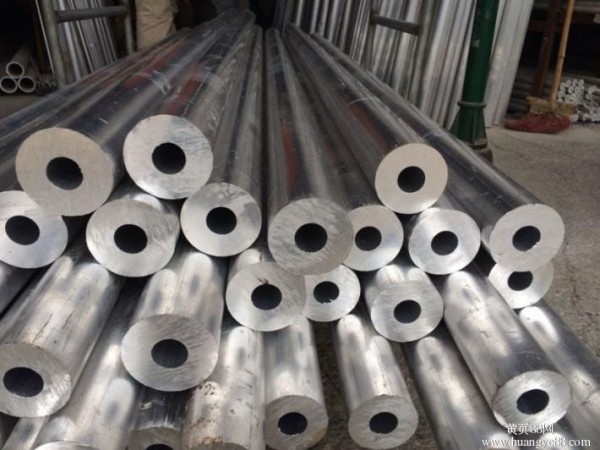
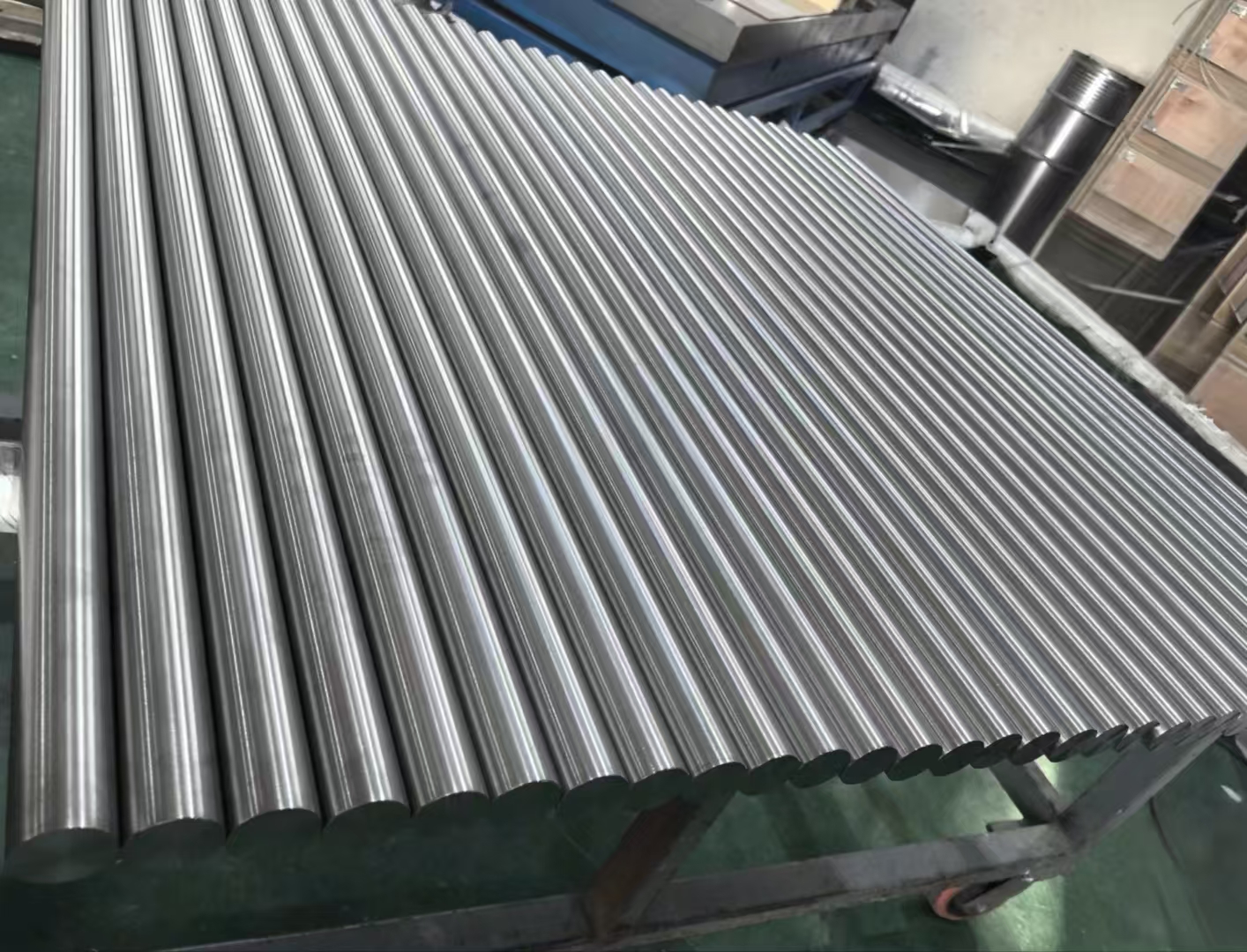
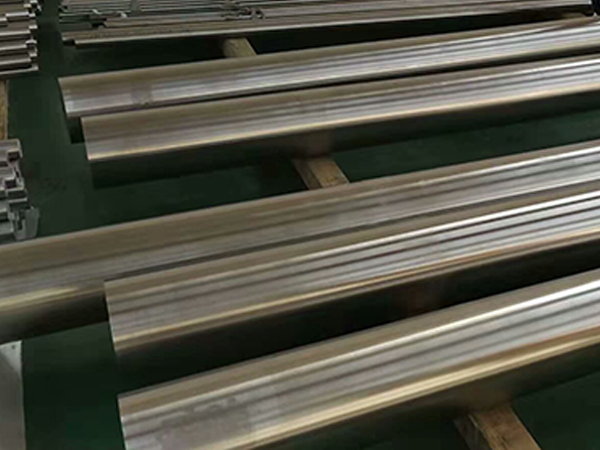
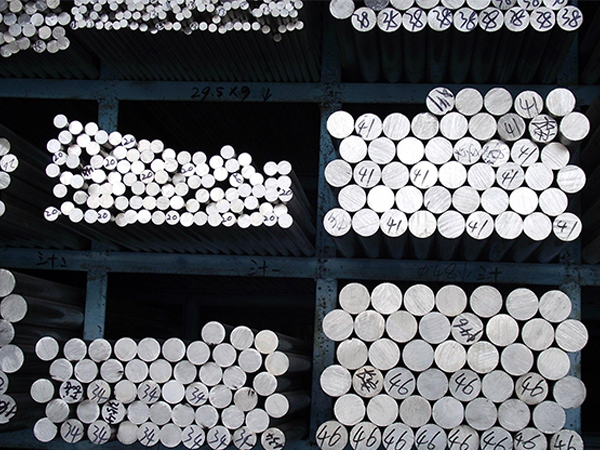
Shanghai Hangbo Alloy Group supplies Monel 405 as round bar, rod, hexagonal and square bar, cold-drawn screw-machine stock, and wire, certified to ASTM B164 (the governing specification for nickel-copper alloy rod, bar, and wire), with EN 10204 3.1 mill certification and full heat-lot traceability. This guide provides the engineering data needed to specify, procure, and machine N04405 for fasteners, valve components, meter parts, pump parts, and precision-turned hardware.
1. Alloy Identity and Metallurgy
| Property | Value | Notes |
|---|---|---|
| UNS designation | N04405 | Free-machining nickel-copper alloy |
| Common trade names | Monel 405, Monel R-405 | "R" historically marks the free-machining variant |
| Werkstoff number | 2.4361 | DIN/EN designation (NiCu30FeS family) |
| Density | ~8.80 g/cm³ | Room temperature |
| Melting range | ~1300–1350 °C | Solidus–liquidus |
| Crystal structure | FCC (austenitic), single phase | Solid-solution alloy; no age-hardening response |
| Machining enabler | Controlled sulfur 0.025–0.060% | Sulfide inclusions act as chip breakers |
| Magnetic behavior | Essentially non-magnetic | Slight response possible after heavy cold work |
| Design service envelope | Cryogenic to ~590 °C | Corrosion-driven selection in most applications |
| Governing specification | ASTM B164 | Rod, bar, and wire |
The metallurgy of Monel 405 is best understood as a deliberate trade, optimized for the screw-machine shop floor:
- Sulfur is the product feature. In the nickel-copper matrix, sulfur combines with nickel and copper to form fine, dispersed sulfide inclusions. Under a cutting edge these inclusions act as internal stress concentrators that keep the chip short and brittle enough to break cleanly, while the matrix itself retains the corrosion behavior of the Monel family. The result is markedly better machinability than Monel 400 with essentially equivalent general corrosion resistance.
- The trade is in hot workability. The same inclusions that make 405 ideal for machining make it a poorer candidate for extensive hot forming or forging than Monel 400. This is not a defect; it is the design intent. When a component must be forged rather than machined, Monel 400 — or K-500 where strength is required — is the appropriate selection.
- Strength still comes from cold work. Like all solid-solution Monel alloys, 405 is strengthened by cold drawing rather than heat treatment, so screw-machine stock is commonly supplied cold-drawn (as-drawn or stress-equalized) to improve machined-surface finish, straightness, and dimensional stability during machining.
- Corrosion resistance is inherited. Because the sulfide inclusions are small and well dispersed, the general corrosion resistance of 405 in most media is essentially equivalent to that of Monel 400 — the reason it can substitute directly in machined parts destined for marine, chemical, and oilfield service.
2. Governing Specifications — ASTM B164 and Related Callouts
| Product Form | Governing Specification | ASME / Related Equivalents | Typical Supply by Hangbo Alloy |
|---|---|---|---|
| Rod and bar (round, hex, square, flat) | ASTM B164 | ASME SB-164 | Round bar Ø 3–300 mm; hex and square across-flats stock |
| Screw-machine stock | ASTM B164 | Customer machine-shop spec | Cold-drawn, ground, or turned; straightened |
| Wire | ASTM B164 | ASME SB-164 | Cold-drawn wire Ø 0.5–12 mm, coil or straight |
| Fasteners and fittings | ASTM B164 + dimensional standards | ASME B18 series as applicable | Bolts, nuts, studs, screws, washers |
| Aerospace and industrial bar | AMS 4674-type practice | AMS 7234 (as applicable) | Certified lots on request |
| Oil and gas components | NACE MR0175 / ISO 15156 when qualified | Hardness-verified product | Valve parts and fasteners for sour service |
| Federal procurement (historic) | QQ-N-281 | Superseded by B164 in commercial practice | — |
The correct callout for screw-machine procurement is: "Monel 405 (UNS N04405) round bar per ASTM B164, cold-drawn and stress-equalized, Ø 25 mm, straightened and cut to length, EN 10204 3.1 certificate." Stating the condition matters because machinability, straightness, and finished-part tolerances all depend on it.
3. Chemical Composition (Specified Ranges)
The limits below follow the UNS N04405 registration and the product requirements applied by Hangbo Alloy; copper is the balance element.
| Element | Specified Range (wt %) | Typical Hangbo Alloy Heat | Role-in-Alloy / Watch-Point |
|---|---|---|---|
| Nickel + Cobalt (Ni+Co) | 63.0 min | ~65 | Matrix base; corrosion resistance and strength |
| Copper (Cu) | 28.0 – 34.0 (balance) | ~31 | Principal alloying element; marine and acid resistance |
| Iron (Fe) | 2.5 max | ~1.2 | Solid-solution contribution |
| Manganese (Mn) | 2.0 max | ~0.9 | Deoxidation and sulfide morphology |
| Carbon (C) | 0.30 max | ~0.12 | Residual; controlled for machining behavior |
| Silicon (Si) | 0.50 max | ~0.20 | Deoxidizer |
| Sulfur (S) | 0.025 – 0.060 | ~0.040 | The grade-defining element — sulfide chip breakers |
| Phosphorus (P) | 0.020 max (typical control) | ≤0.010 | Residual |
The single number to verify on every Monel 405 certificate is sulfur (0.025–0.060%). A heat below the window machines like Monel 400 — defeating the purpose of the grade; a heat above it risks degrading hot workability and, in some media, corrosion uniformity. Hangbo Alloy reports sulfur on every N04405 heat and can supply a machinability comparison on request.
4. Mechanical Properties — Room Temperature
Monel 405 is supplied in the conditions that screw-machine shops actually run. Typical room-temperature envelopes for bar supplied by Hangbo Alloy:
| Condition | Tensile Strength | Yield Strength (0.2% offset) | Elongation | Hardness (typical) |
|---|---|---|---|---|
| Annealed (rod and bar) | 483–586 MPa (70–85 ksi) | 172–276 MPa (25–40 ksi) | 35–50% | 110–140 HB (60–76 HRB) |
| Hot-finished | 517–621 MPa (75–90 ksi) | 241–414 MPa (35–60 ksi) | 30–45% | 130–170 HB (72–86 HRB) |
| Cold-drawn, as-drawn | 586–793 MPa (85–115 ksi) | 345–724 MPa (50–105 ksi) | 15–35% | 160–245 HB |
| Cold-drawn, stress-equalized | ~655 MPa (95 ksi) region | By size and reduction | By specification | By specification |
ASTM B164 establishes the governing minimums by product form, size, and condition; Hangbo Alloy certifies the actual minimums applicable to each ordered dimension. For automatic screw-machine work, the cold-drawn or stress-equalized condition is preferred because it produces the straightest, most dimensionally stable bar with the best machined-surface finish and chip behavior.
| Property Reference | Value | Note |
|---|---|---|
| Modulus of elasticity | ~179 GPa | Room temperature |
| Electrical resistivity | ~51 µΩ·cm | Similar to Monel 400 |
| Thermal conductivity | ~22 W/m·°C | Approx. 21 °C |
| Mean expansion (21–100 °C) | ~14.2 × 10⁻⁶/°C | Typical |
| Melting range | ~1300–1350 °C | Typical |
5. Machinability — The Free-Machining Advantage
| Machining Parameter | Monel 405 Behavior | Production Consequence |
|---|---|---|
| Chip formation | Short, broken chips | No snarled strings wrapping tools or spindles |
| Feeds and speeds | Substantially higher than Monel 400 | Shorter cycle times on screw machines |
| Tool life | Improved by reduced built-up edge | Fewer tool changes per shift |
| Surface finish | Consistent in cold-drawn stock | Tighter finished-part tolerances |
| Part ejection and handling | Clean cutting zone | Unattended multi-spindle operation is practical |
| Work-hardening sensitivity | Reduced versus Monel 400 | Less re-cutting of the hardened surface layer |
Because the sulfide inclusions are the mechanism, machining practice should avoid smearing: use sharp, positive-rake tooling; adequate, well-directed coolant; and rigid setups. Cold-drawn stock machines best, and stress-equalized bar holds dimensions during long production runs. Where maximum productivity is required, Hangbo Alloy can supply bar with verified straightness, tight diameter tolerance, and a surface condition selected for the customer's feed and guide-bushing system.
6. Corrosion Resistance — The Monel Envelope in Machined Parts
The corrosion resistance of Monel 405 is essentially equivalent to that of Monel 400 in the environments that define the family, which is why machined 405 parts can be substituted directly for 400 parts in most services.
| Environment | Monel 405 Performance | Engineering Comment |
|---|---|---|
| Seawater and marine atmospheres | Excellent | Fasteners and fittings in hull and deck hardware |
| Caustic alkalis (NaOH, KOH) | Resistant at most concentrations | Valve and pump parts in alkaline service |
| Neutral and alkaline salt solutions | Resistant | Broad chemical-process utility |
| Hydrofluoric acid (deaerated) | Good resistance | Standard Ni-Cu behavior |
| Dilute hydrochloric and sulfuric (deaerated) | Good at low concentration | Oxidizing contaminants accelerate attack |
| Sour gas / brine service | Useful where qualified per NACE | Confirm hardness and qualification route |
| Oxidizing acids (nitric, chromic) | Not recommended | Avoid oxidizing media |
In oxidizing or strongly aerated media, the dispersed sulfide inclusions can act as minor initiation sites, so for the most demanding oxidizing services — where even slight pitting is unacceptable — designers may prefer Monel 400. In the reducing, marine, alkaline, and neutral-salt environments where the Monel family is normally selected, 405 delivers equivalent practical performance.
7. Fabrication Notes — Machining Stock, Not Forging Stock
- Intended process. Monel 405 is a machining grade. Its design target is the automatic screw machine, the CNC turning center, and the multi-spindle lathe producing high volumes of precision parts from bar.
- Hot working and forging. The sulfide inclusions that improve machining reduce hot ductility, so 405 is generally not recommended for extensive forging or severe hot-forming operations. Where a component must be forged, Monel 400 (or K-500 where age-hardened strength is needed) is the correct family member.
- Welding. Joining is possible with nickel-copper filler practice (ERNiCu-7/ENiCu-7-type consumables are commonly referenced) where repairs or attachments are unavoidable, but the grade is not optimized for welded fabrication; structural weldments should be designed with Monel 400 or another fabricating grade. Confirm weldability requirements with the applicable procedure qualification before committing.
- Cold forming. Light cold forming and thread rolling are performed routinely on 405 fastener stock; the cold-drawn condition provides the strength and surface needed for rolled threads.
- Heat treatment. Annealing restores softness for further cold work; there is no hardening heat treatment for this alloy, and strength is obtained by cold drawing only.
8. Applications — High-Volume Machined Hardware
| Application | Service Condition | Why Monel 405 Is Selected |
|---|---|---|
| Automatic screw-machine products | High-volume precision turning | Free machining at productive rates |
| Fasteners — bolts, nuts, studs, screws | Marine and chemical exposure | Monel corrosion resistance in standard fastener forms |
| Valve stems, seats, and trim | Seawater, caustic, and brine service | Machinability plus corrosion resistance |
| Meter and instrument parts | Dimensional precision | Stable cold-drawn bar, clean cutting |
| Pump components and fittings | Marine and process duty | Direct substitute for Monel 400 machined parts |
| Shafts, pins, and bushings | Wear and corrosion | Consistent hardness in drawn stock |
| Oilfield completion hardware | Sour service where qualified | NACE-qualified routes available |
| Food and pharmaceutical contact parts | Cleanability and corrosion resistance | Non-toxic Ni-Cu matrix; easy to machine |
The economic argument is consistent across every application: specifying Monel 405 instead of Monel 400 does not change the part's corrosion story, but it can cut machining cost per part substantially — which is why the grade is the default choice whenever the component is defined by barstock machining rather than by forging or welding.
9. Why Buyers Select Hangbo Alloy for Monel 405
- Certified chemistry on every heat, with the grade-defining sulfur range (0.025–0.060%) verified against the UNS N04405 registration;
- Screw-machine stock program: cold-drawn, stress-equalized, ground, and turned bar with verified straightness and diameter tolerance;
- Round, hexagonal, square, and flat bar plus wire, in annealed, as-drawn, and stress-equalized conditions;
- EN 10204 3.1 documentation and heat-lot traceability; third-party inspection supported;
- Application engineering support for machined-part specifications, including condition selection, machining practice, and grade-versus-400 decision guidance.
Technical FAQ — Monel 405 (UNS N04405)
1. What is the difference between Monel 400 and Monel 405? Monel 405 (R-405) is the free-machining version of Monel 400. Its sulfur content is deliberately controlled between approximately 0.025% and 0.060%, forming sulfide inclusions that break chips during machining. General corrosion resistance is essentially equivalent in most media; the difference is machinability.
2. Why does the sulfur addition make Monel 405 easier to machine? The sulfur forms fine nickel-copper sulfide inclusions dispersed through the matrix. Under the cutting edge these inclusions act as chip breakers, producing short broken chips instead of the long, work-hardened strings that Monel 400 generates. Cleaner chip control allows higher speeds and feeds and longer tool life.
3. Is Monel 405 as corrosion-resistant as Monel 400? In most environments, yes — the alloy carries essentially the same general corrosion resistance as Monel 400 in marine, alkaline, neutral-salt, and reducing services. In strongly oxidizing media the sulfide inclusions can act as minor pitting initiation sites, so for the most demanding oxidizing duties Monel 400 may be preferred.
4. What is Monel R-405 mainly used for? High-volume machined components: fasteners, valve stems and trim, meter and instrument parts, pump components, fittings, shafts, pins, and bushings — anything that is produced economically from bar on automatic screw machines or CNC turning centers and needs nickel-copper corrosion resistance.
5. Which standards cover Monel 405? ASTM B164 (ASME SB-164) covers rod, bar, and wire of UNS N04405. Related references include AMS 4674-type bar practice, AMS 7234, historic Federal QQ-N-281, and NACE MR0175 / ISO 15156 where sour-service qualification applies.
6. Can Monel 405 be welded? Joining with nickel-copper filler practice (ERNiCu-7/ENiCu-7-type consumables) is possible for repairs and attachments, but 405 is not optimized for welded fabrication — its sulfide inclusions serve machining, not weldability. Structural weldments should normally be designed with Monel 400 or another fabricating grade.
7. Can Monel 405 be forged? Generally not recommended. The same sulfide inclusions that make the alloy free-machining reduce its hot ductility, so extensive forging or severe hot forming is avoided. If the component must be forged, Monel 400 — or K-500 where age-hardened strength is required — is the appropriate selection.
8. What condition of bar is best for automatic screw machines? Cold-drawn or stress-equalized bar is preferred. It offers the straightness, tight diameter tolerance, consistent hardness, and surface condition that feed reliable through automatic bar feeds and guide bushings, and it produces the best machined finish and dimensional stability in the finished part.
9. What product forms and sizes does Hangbo Alloy supply in Monel 405? Hangbo Alloy supplies round bar from 3 to 300 mm diameter, hexagonal, square, and flat bar, cold-drawn screw-machine stock, and wire from 0.5 to 12 mm, in annealed, as-drawn, and stress-equalized conditions, with EN 10204 3.1 certification and full traceability. Cutting, straightening, and surface finishing are available.
10. How should a purchaser verify that Monel 405 stock is genuine? Check the mill certificate for UNS N04405 and the grade-defining element sulfur within 0.025–0.060%. A material certificate showing sulfur at the Monel 400 residual level (≤0.024%) indicates the wrong grade — the stock will machine like Monel 400, not like free-machining 405.
This technical guide is provided by Hangbo Alloy (Shanghai Hangbo Alloy Group Co., Ltd., nickel-alloy.com) for material-selection and engineering-reference purposes. Data presented are typical engineering values compiled from recognized industry sources and are not a substitute for the governing ASTM specifications, code approvals, or the certified mill test report applicable to each heat. Contact Hangbo Alloy at sales@hangboalloy.com or +86 136 1165 6360 for current stock, certificates, and application engineering support.