


Excerpt:
Inconel 713C (UNS N07713) technical guide from Hangbo Alloy: high-performance cast gamma-prime superalloy for gas-turbine blades and vanes, plus master alloy stick for investment foundries. Chemistry per AMS 5391, cast-structure mechanical properties and solution/age heat-treatment data for turbine hardware.
Inconel 713C (UNS N07713) — Cast Gamma-Prime Superalloy for Turbine Blades and Master Alloy Sticks | Hangbo Alloy
High-Precision Engineering Reference for Investment Foundries and Turbomachinery Buyers
Introduction
Inconel 713C — registered as UNS N07713 and widely listed under W.Nr. 2.4670 — is one of the foundational cast nickel-base superalloys of the gas-turbine era. Introduced in the 1950s and refined through five decades of service in aircraft, industrial, and marine turbines, it is a cast-only, gamma-prime (γ′) precipitation-strengthened alloy whose high-volume fraction of Ni₃(Al,Ti) precipitates delivers usable strength up to approximately 927 °C (1700 °F) — strength that no wrought alloy of its generation could match in complex airfoil geometry.
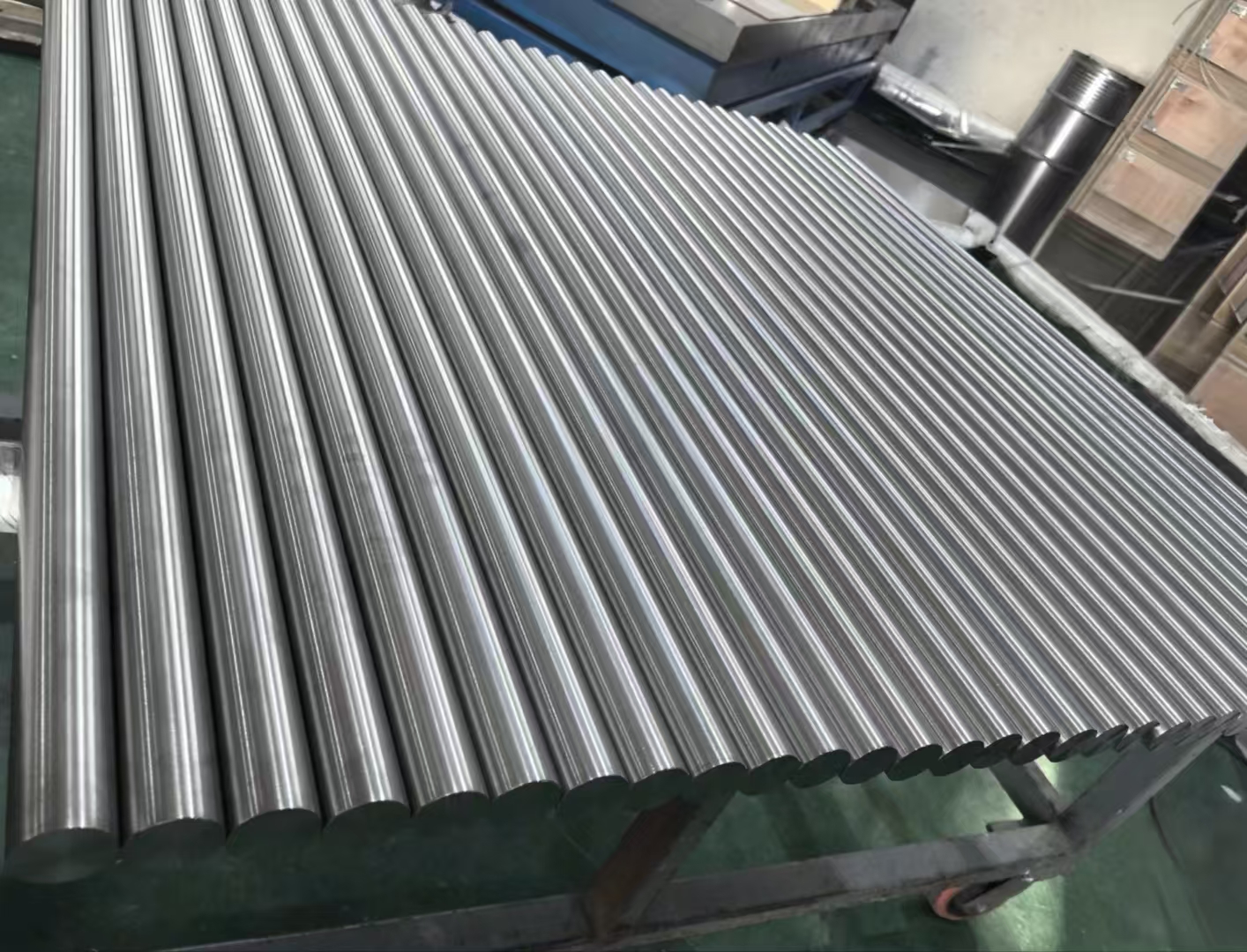
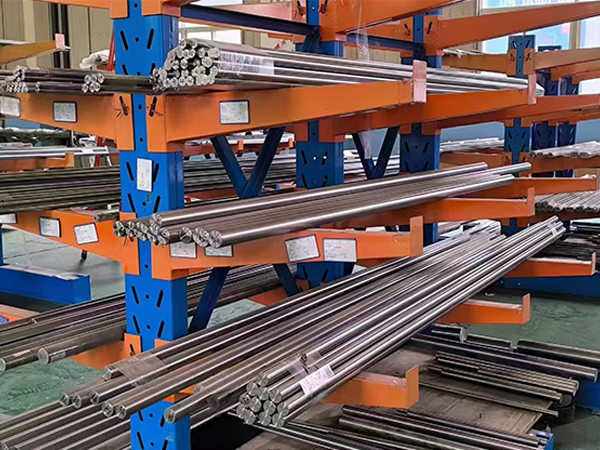
The alloy's importance to the supply chain is twofold. First, it is a direct turbine blade and vane material: investment-cast nozzle guide vanes, turbine blades, integrally cast wheels, turbocharger rotors, and other hot-section hardware are routinely produced to AMS 5391. Second, and just as important commercially, Inconel 713C is widely distributed as master alloy stick — remelt stock of certified chemistry that investment foundries charge into their vacuum induction melting (VIM) furnaces to produce their own castings. When a foundry buys "713C master alloy," it is buying precisely controlled chemistry in stick form so that the final casting meets AMS 5391 without off-heat correction.
Shanghai Hangbo Alloy Group supplies Inconel 713C in both roles: master alloy sticks for remelters and finished investment castings through qualified foundry partners, with melt certification, full chemistry traceability, and mechanical-property documentation per the governing specification. This guide explains the metallurgy, specification, and procurement of N07713 in engineering depth.
1. Alloy Identity and Metallurgy
| Property | Value | Notes |
|---|---|---|
| UNS designation | N07713 | Cast nickel-base superalloy |
| Common trade name | Inconel 713C | "C" distinguishes the original composition family |
| Werkstoff number | 2.4670 | Used across European sourcing channels |
| Density | ~7.91 g/cm³ | Measured on cast product |
| Melting range | ~1260–1290 °C | Solidus–liquidus of the cast alloy |
| Maximum continuous service | ~927 °C (1700 °F) | Governed by γ′ solvus and oxidation behavior |
| Strengthening system | γ′ (Ni₃(Al,Ti)) precipitation | Volume fraction ~15–20% at peak age |
| Melting practice | Vacuum induction melting (VIM) | Mandatory for reactive elements Al, Ti, Zr, B |
| Product forms | Investment castings; master alloy stick for remelt | Cast-only — no wrought product form exists |
| Governing specification | AMS 5391 | Investment castings, UNS N07713 |
The metallurgy of 713C explains everything a buyer needs to know about how it must be produced:
- Gamma-prime strengthening. Aluminum (5.5–6.5%) and titanium (0.5–1.0%) combine to precipitate the ordered FCC phase Ni₃(Al,Ti) as fine cubes coherent with the austenitic matrix. This precipitate is the engine of high-temperature strength: it resists dislocation motion up to temperatures where the precipitate itself begins to coarsen and dissolve (near 980–1000 °C).
- Carbide and boride hardening. Carbon (0.08–0.20%) forms MC-type carbides (chiefly niobium and titanium carbides) along grain boundaries; boron (0.005–0.015%) and zirconium (0.05–0.15%) refine grain-boundary structure and improve rupture ductility. These trace elements are precisely why master alloy chemistry must be controlled to tight windows — they are the difference between a blade that survives 10,000 hours and one that cracks at 500.
- Why cast-only? The combined aluminum + titanium content approaches the limit that can be wrought-worked; 713C's alloy design assumes the liquid-to-solid path of an investment casting, with no rolling or forging reduction planned. Attempting to convert it to billet is neither standard practice nor economically sensible.
- Vacuum is non-negotiable. Aluminum, titanium, zirconium, and boron are all reactive or volatile in air melting. Production to AMS 5391 therefore demands VIM melting for master alloy and VIM + vacuum casting (or controlled-atmosphere remelt) for finished parts. Air-melted "713C look-alike" chemistry is not 713C in structure or properties.
2. Governing Specifications — AMS 5391 and Related Callouts
| Document | Scope | Relevance to Buyers |
|---|---|---|
| AMS 5391 | Investment castings, corrosion- and heat-resistant, nickel-base, UNS N07713 (713C) | The governing procurement spec for finished blades, vanes, and cast hardware |
| AMS 2280 (as applicable) | Trace element control of superalloy products | Limits on Bi, Pb, Se, Te, Tl for high-temperature integrity |
| Foundry-internal remelt specs | Master alloy stick chemistry acceptance | What foundries certify when buying N07713 stick |
| ASTM E8 / E21 | Tensile testing at room and elevated temperature | Verification of cast mechanical properties |
| ASTM E1417 / E1742 | Liquid penetrant and radiographic examination | Acceptance testing of investment castings |
When purchasing master alloy stick, the foundry's own material specification is the governing document and is normally written to mirror the AMS 5391 chemistry for the final casting. Hangbo Alloy recommends that buyers state on the order: "Inconel 713C (UNS N07713) master alloy stick, chemistry per AMS 5391 limits, vacuum-melted, each heat certified with full elemental analysis."
3. Chemical Composition (Specified Ranges)
The limits below follow the AMS 5391 / UNS N07713 registration as applied by Hangbo Alloy; nickel is the balance element.
| Element | Specified Range (wt %) | Typical Hangbo Alloy Heat | Role-in-Alloy / Watch-Point |
|---|---|---|---|
| Nickel (Ni) | Balance | ~66–69 | Base matrix |
| Chromium (Cr) | 12.0 – 14.0 | ~13 | Oxidation and hot-corrosion resistance |
| Aluminum (Al) | 5.5 – 6.5 | ~6.0 | Primary γ′ former — strength engine |
| Molybdenum (Mo) | 3.8 – 5.2 | ~4.5 | Solid-solution strengthening |
| Niobium + Tantalum (Nb+Ta) | 1.5 – 2.5 | ~2.0 | MC carbide former; γ′ co-strengthener |
| Titanium (Ti) | 0.5 – 1.0 | ~0.8 | γ′ co-former; refines precipitate |
| Carbon (C) | 0.08 – 0.20 | ~0.15 | Carbide network; creep and rupture behavior |
| Zirconium (Zr) | 0.05 – 0.15 | ~0.10 | Grain-boundary ductility |
| Boron (B) | 0.005 – 0.015 | ~0.010 | Grain-boundary strengthener — trace but critical |
| Iron (Fe) | 2.5 max | ≤1.0 | Residual; may substitute for nickel in minor amounts |
| Manganese (Mn) | 0.25 max | ≤0.10 | Residual |
| Silicon (Si) | 0.50 max | ≤0.20 | Residual; controlled for castability |
| Sulfur (S) | 0.015 max | ≤0.005 | Residual; must be low for rupture life |
| Copper (Cu) | 0.50 max | ≤0.10 | Residual |
| Cobalt (Co) | 1.0 max | ≤0.5 | Residual in 713C (unlike Mar-M grades) |
Two procurement watch-points dominate certificate review for N07713:
- Aluminum + titanium sum. Together they must sit in the range that produces the correct γ′ fraction. A heat low in Al+Ti will be weak at 760–927 °C; a heat high in them may exhibit poor castability or microporosity.
- Boron and zirconium presence. Their absence, or out-of-range values, changes grain-boundary behavior completely. Some unscrupulous or careless remelters drop B/Zr to simplify melting — the resulting castings meet nominal chemistry "except trace elements" and fail creep-rupture qualification. Hangbo Alloy reports B and Zr on every 713C heat.
4. Mechanical Properties — The Case for the Cast Structure
Inconel 713C is evaluated as a casting: properties are measured on separately cast test bars from the same heat, heat-treated with the castings, and tested per AMS 5391. Representative typical values at room and elevated temperature illustrate the alloy's design envelope:
| Test Temperature | Tensile Strength (typical) | Yield Strength 0.2% (typical) | Elongation (typical) |
|---|---|---|---|
| Room temperature | ~700–850 MPa | ~630–700 MPa | ~6–10% |
| 650 °C | ~750–900 MPa | ~600–700 MPa | ~8–10% |
| 760 °C | ~850 MPa region | ~650 MPa region | ~6–9% |
| 870 °C | ~600 MPa region | ~450 MPa region | ~8–12% |
| 927 °C | ~480 MPa region | ~350 MPa region | ~10–15% |
The counter-intuitive behavior — tensile strength peaking near 760 °C — is a signature of γ′-strengthened superalloys: as temperature rises toward the peak-strength regime, the precipitate becomes more resistant to dislocation bypass, and the alloy's yield strength actually rises before falling off above ~800 °C.
For design, the more important numbers are stress-rupture and creep properties. Representative stress-rupture capability commonly quoted for 713C at 760 °C is on the order of 450–550 MPa for 1000-hour life, and at 870 °C roughly 200–250 MPa for 1000-hour life, with rupture ductility of several percent. These are the figures turbine designers use when selecting the alloy for a given stage temperature and life target.
| Typical Hardness Reference | Value | Note |
|---|---|---|
| Cast + aged hardness | ~340–414 HB max | Reports vary with section and heat treatment |
| Room-temperature ultimate reference | Up to ~950 MPa | Per European catalog data at maximum section strength |
Because castings are not isotropic like wrought plate, Hangbo Alloy advises buyers to specify test-bar location, heat-treatment lot identity, and NDT requirements (radiography, penetrant) explicitly on the order so that the mechanical certificate is meaningful for the actual parts shipped.
5. Heat Treatment — The Solution and Age Sequence
Cast 713C parts are delivered in one of two principal conditions per AMS 5391 practice:
| Treatment Step | Typical Parameters | Metallurgical Purpose |
|---|---|---|
| Solution (optional per spec route) | ~1120 °C / 2 h / cool | Dissolve coarse γ′ and homogenize segregation |
| Age | ~930 °C / 16 h / air cool | Precipitation of fine secondary γ′ at service-effective size |
| Alternative age route | ~760 °C + higher age combination | Fine + coarse precipitate duplex for specific rupture targets |
The full heat-treat response depends on the foundry's chosen AMS 5391 route. What matters to the buyer is that the certificate states the exact cycle used, because two castings of identical chemistry with different aging cycles can differ by 50–100 MPa in stress-rupture capability. Hangbo Alloy's foundry partners document the complete thermal history of each lot.
6. Applications — Turbine Hardware and Beyond
| Application | Service Condition | Why 713C Is Selected |
|---|---|---|
| Aircraft turbine blades and vanes | 700–930 °C hot-section gases | Castability into thin airfoils + γ′ strength |
| Industrial gas-turbine nozzles | Lower peak temperature, longer life target | Oxidation resistance of 12–14% Cr |
| Turbocharger rotors and impellers | 750–900 °C exhaust gas | Complex cast geometry at moderate cost |
| Missile and rocket auxiliaries | Short-life high-temperature duty | High strength-to-weight at peak temperature |
| Master alloy sticks for foundries | Remelt input to VIM furnaces | Certified chemistry for AMS 5391 castings |
The marine and aero-derivative repair ecosystem also relies on 713C: blades and vanes removed from service are repaired by weld build-up using matching low-heat-input processes (TIG or EB in vacuum) where the specification permits, or replaced with new investment castings from certified master alloy. Limited weldability is a recognized characteristic — the alloy is considered weldable only under tightly controlled, low-restraint conditions because of its high γ′ content and resultant heat-affected-zone cracking sensitivity.
7. Master Alloy Stick — What Foundries Must Verify
For foundries, buying 713C as master alloy is a chemistry-purchase, not a parts-purchase. The following verification routine protects the remelter:
| Check | Acceptance Criterion | Consequence if Missed |
|---|---|---|
| Full chemistry certificate | Within AMS 5391 ranges, B and Zr declared | Off-composition castings scrapped after pour |
| Trace-element control | Bi, Pb, Se, Te per AMS 2280-type limits | Grain-boundary embrittlement at temperature |
| Surface condition of sticks | Clean, no rust, no refractory contamination | Inclusion and gas pickup in the melt |
| Heat identity and segregation | Single-heat lots, documented | Mixed heats defeat melt control |
| Packing and certification | EN 10204 3.1 / foundry format documents | Unable to certify the final casting |
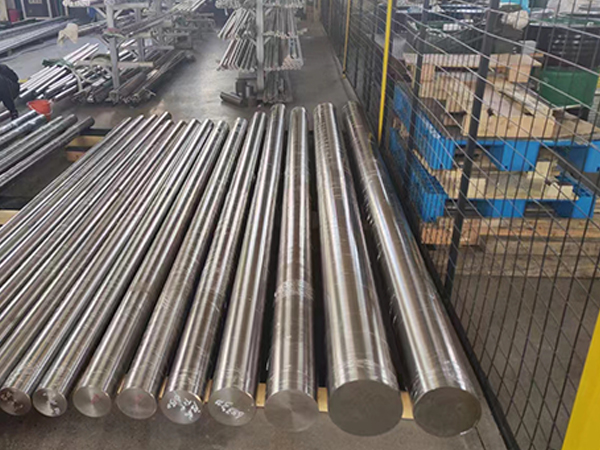
Hangbo Alloy's master alloy sticks are produced by vacuum induction melting, cast into dimensionally controlled stick form suitable for furnace charging, and shipped with full elemental certification so that foundries can blend with confidence and certify their finished AMS 5391 castings without correction melts.
8. Why Buyers Select Hangbo Alloy for Inconel 713C
- Certified chemistry on every heat, including the trace elements (B, Zr) that govern rupture life;
- Both supply routes — master alloy stick for remelters and finished investment castings through qualified partners;
- Vacuum-melted material with documented melt practice;
- Support for AMS 5391 procurement, including test-bar, NDT, and heat-treatment documentation;
- Application guidance for turbine, turbocharger, and high-temperature pump and valve castings.
Technical FAQ — Inconel 713C (UNS N07713)
1. Why is Inconel 713C available only as a casting? The alloy's combined aluminum plus titanium content (~6.5–7.5%) drives a high γ′ fraction that makes hot working impractical; it is designed to be cast to final or near-final shape and strengthened by heat treatment. There is no wrought 713C bar or plate in the AMS 5391 system — attempts to forge it are non-standard and not certified.
2. What is the difference between Inconel 713C and Inconel 713LC? 713LC is a low-carbon derivative (carbon typically ≤0.05%) developed to improve weldability and ductility at some cost in rupture strength. 713C retains 0.08–0.20% carbon for its stronger carbide grain-boundary network. A buyer must state which variant is required; Hangbo Alloy supplies the composition family requested and certifies the carbon accordingly.
3. How is Inconel 713C melted? Exclusively by vacuum induction melting (VIM), either at the master-alloy producer or at the foundry during remelt and casting. The aluminum, titanium, zirconium, and boron contents react with oxygen and nitrogen in air, so vacuum or controlled-atmosphere practice is mandatory to retain them in specification.
4. What does AMS 5391 cover? AMS 5391 covers investment castings of corrosion- and heat-resistant nickel-base alloy UNS N07713 — the 713C family. It defines chemistry limits, heat-treatment routes, mechanical-property requirements on separately cast test bars, and quality assurance provisions for turbine-grade castings.
5. What is a master alloy stick and why do foundries buy it? A master alloy stick is remelt stock of certified composition — cast bar or stick forms of the exact alloy chemistry. Investment foundries charge sticks into their VIM furnaces instead of blending virgin and scrap elements, because the certified pre-alloyed chemistry lets them pour AMS 5391 castings with confidence and document the melt without guesswork.
6. What is the maximum service temperature of Inconel 713C? Continuous service capability is generally quoted to about 927 °C (1700 °F), above which γ′ coarsening and oxidation erode properties rapidly. Within that envelope, the alloy is selected for precisely the 700–930 °C turbine stage range where castability and hot strength must coexist.
7. Can Inconel 713C be welded or repaired? Only with difficulty. Its high γ′ content makes the heat-affected zone susceptible to strain-age cracking, so weld repair is limited to controlled low-heat-input processes (typically TIG or EB under vacuum) with minimal restraint, and often with post-weld re-solution and age. Many operators prefer replacing damaged 713C hardware rather than welding it.
8. What mechanical properties should a buyer expect on a 713C certificate? Room-temperature tensile strength of roughly 700–850 MPa with 6–10% elongation, rising to a peak near 760 °C, is typical for test bars cast with the parts. Stress-rupture capability is the design currency: on the order of 450–550 MPa for 1000 hours at 760 °C and 200–250 MPa for 1000 hours at 870 °C, with lot-to-lot scatter governed by B, Zr, and carbon control.
9. How does 713C compare with Mar-M 247 or other high-performance blade alloys? Mar-M 247 and similar later alloys carry higher refractory-element and γ′ fractions for service above 950–1000 °C in the most advanced turbine stages. 713C remains competitive for mid-temperature stages, turbochargers, and cost-sensitive industrial hardware where its castability, oxidation resistance, and proven five-decade data base are decisive.
10. What documentation does Hangbo Alloy provide with 713C master alloy and castings? Every shipment carries melt and heat certification with full elemental analysis — including boron, zirconium, carbon, and trace-element control — and, for castings, the foundry heat-treatment record, test-bar results, and NDT documentation per the governing AMS 5391 and buyer specifications. Third-party inspection can be arranged at the producing mill or foundry.
This technical guide is provided by Hangbo Alloy (Shanghai Hangbo Alloy Group Co., Ltd., nickel-alloy.com) for material-selection and engineering-reference purposes. Data presented are typical engineering values compiled from recognized industry sources and are not a substitute for the governing AMS/ASTM specifications, the foundry's process qualification, or the certified mill test report applicable to each heat. Contact Hangbo Alloy at sales@hangboalloy.com or +86 136 1165 6360 for current master alloy stock, casting capability, and certification support.