

Excerpt:
Inconel 602 CA (UNS N06025, W.Nr. 2.4633) technical guide from Hangbo Alloy: yttrium-modified chromia–alumina former with maximum oxidation and carburization resistance to 1200 °C. Certified plate, sheet, round bar and seamless tube per ASTM B168/B166 with EN 10204 3.1 certification for radiant tubes and pyrolysis coils.
Inconel 602 CA (UNS N06025) — High-Temperature Oxidation & Carburization Resistant Plate, Rod, and Bar | Hangbo Alloy
High-Precision Engineering Reference for Ultra-High-Temperature Process Equipment
Introduction
Inconel 602 CA — registered as UNS N06025 and traded under the German material number W.Nr. 2.4633 — is the nickel-chromium-iron alloy engineered for the single most punishing regime in industrial materials selection: sustained service at metal temperatures of 1000–1200 °C in oxidizing, carburizing, and mixed combustion atmospheres. Where conventional heat-resistant alloys (Inconel 600, Inconel 601, RA 330, and the 310-series stainless steels) surrender progressively above roughly 1050 °C through scale spallation, internal oxidation, and carbide destabilization, 602 CA continues to form and retain a protective duplex oxide system that gives it a service life measured in multiples of theirs.
The metallurgical trick is not exotic chemistry but precise chemistry. 602 CA carries a deliberately elevated carbon content of 0.15–0.25%, a chromium level of 24–26%, aluminum of 1.8–2.4%, and the reactive element yttrium at 0.01–0.10%. That combination produces an alloy that is simultaneously an alumina former (through an inner Al₂O₃-rich subscale that develops above ~1000 °C), a chromia former (through the outer Cr₂O₃ scale), and a carbide-strengthened matrix (through fine intragranular and grain-boundary chromium carbides that retain creep strength at temperature). Few alloys can claim all three mechanisms working in one microstructure.
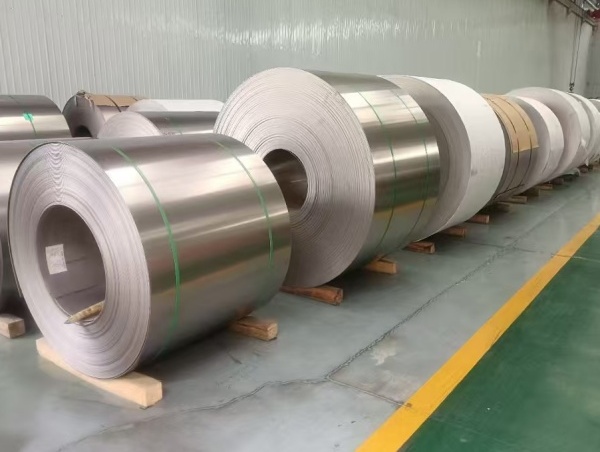
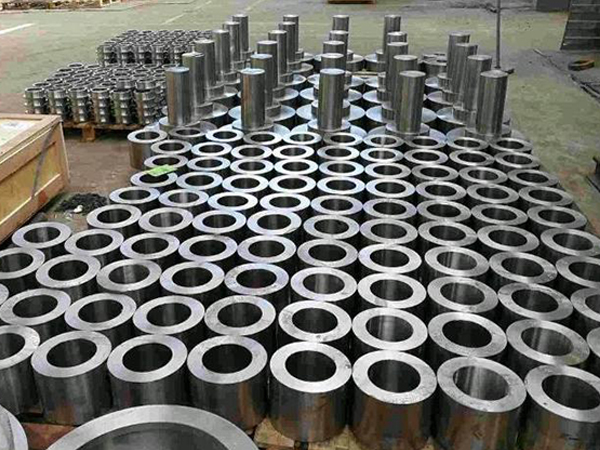
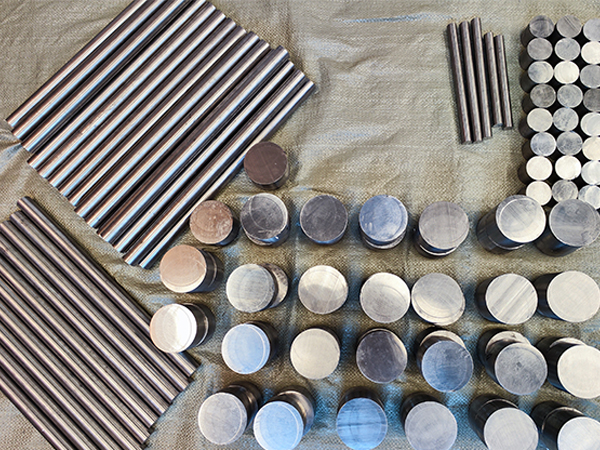
Shanghai Hangbo Alloy Group supplies Inconel 602 CA as plate, sheet, strip, round bar, flat bar, seamless tube, and forgings, certified to ASTM B168 (plate, sheet, and strip) and ASTM B166 (rod, bar, and wire), with EN 10204 3.1 mill certification and full heat traceability. This guide provides the engineering data needed to specify, procure, and fabricate 602 CA for radiant tubes, ethylene pyrolysis coils, advanced ultra-supercritical (A-USC) boiler components, and other 1100 °C-plus hardware.
1. Alloy Identity and Metallurgy
| Property | Value | Notes |
|---|---|---|
| UNS designation | N06025 | Registered solid-solution + carbide-strengthened alloy |
| Common trade name | Inconel 602 CA | CA = "chromia-alumina" former family |
| Werkstoff number | 2.4633 | DIN/EN designation used across Europe |
| Density | ~8.0 g/cm³ | Comparable to other Ni-Cr-Fe alloys |
| Melting range | ~1300–1380 °C | Solidus–liquidus |
| Crystal structure | FCC (austenitic), single phase + carbides | No age-hardening response |
| Design service envelope | Continuous use 600–1200 °C | Peak oxidation performance ~1100–1200 °C |
| Magnetic behavior | Essentially non-magnetic | Slightly magnetic after cold work |
| Product forms | Plate, sheet, strip, rod, bar, wire, seamless tube, forgings | Per ASTM B166/B168/B167 and related |
The strengthening logic of 602 CA separates it from older heat-resistant alloys:
- Oxidation resistance via a two-layer scale. At service temperatures above roughly 1000 °C, 602 CA develops an outer chromium oxide layer and an inner, continuous alumina (Al₂O₃) subscale. Alumina grows far more slowly than chromia and is thermodynamically stable in the low-oxygen, high-temperature environments where chromia begins to evaporate as CrO₃. The result is a scale that thickens at a fraction of the rate of conventional chromia formers.
- Yttrium as the adhesion enabler. The small yttrium addition (~0.01–0.10%) operates by the reactive-element effect: yttrium concentrates at the oxide-metal interface, suppresses void formation, and mechanically "pegs" the scale to the substrate. Scales on yttrium-free alloys spall on thermal cycling; scales on 602 CA survive thousands of cycles because they are anchored and able to shed strain.
- Carbon as a feature, not an impurity. The deliberate 0.15–0.25% carbon range drives precipitation of fine chromium carbides. These carbides do two jobs: they pin grain boundaries and retard creep at 900–1200 °C, and they scavenge chromium locally so that the alloy tolerates carburizing atmospheres — environments that embrittle low-carbon alloys by internal carbide precipitation.
- A lean, weldable matrix. With iron at 8–11%, 602 CA avoids the fully nickel-base premium while retaining enough nickel to resist sigma-phase formation and chloride stress-corrosion cracking in lower-temperature sections of the same plant.
2. Governing Specifications — Plate, Rod, and Bar
| Product Form | ASTM Specification | ASME / Other Equivalents | Typical Supply by Hangbo Alloy |
|---|---|---|---|
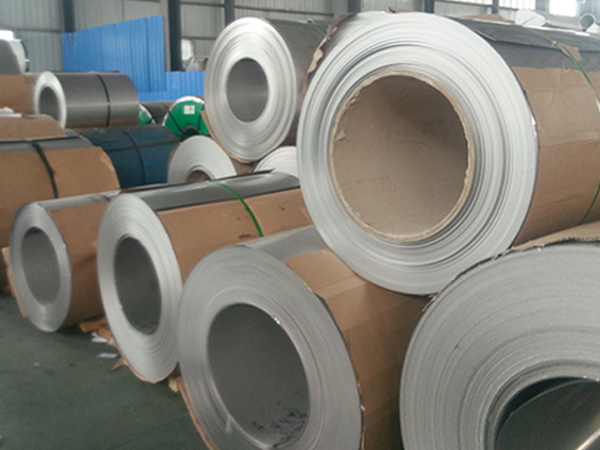
| Plate, sheet, and strip | ASTM B168 | ASME SB-168 | Plate 1.5–100 mm thick; sheet and strip to 4 mm |
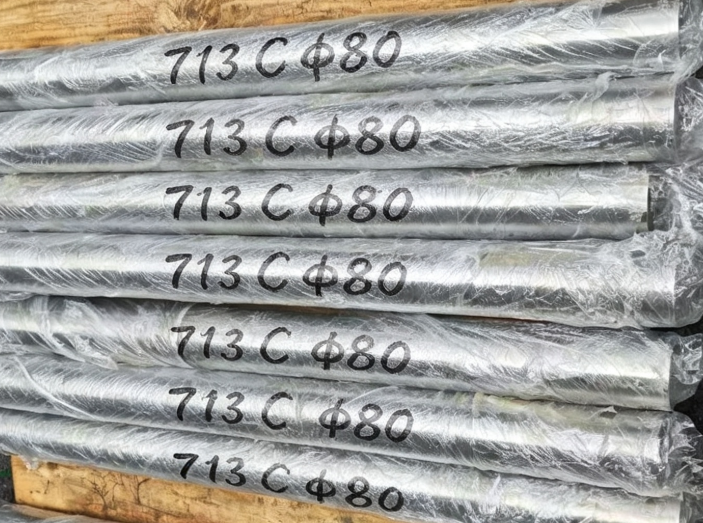
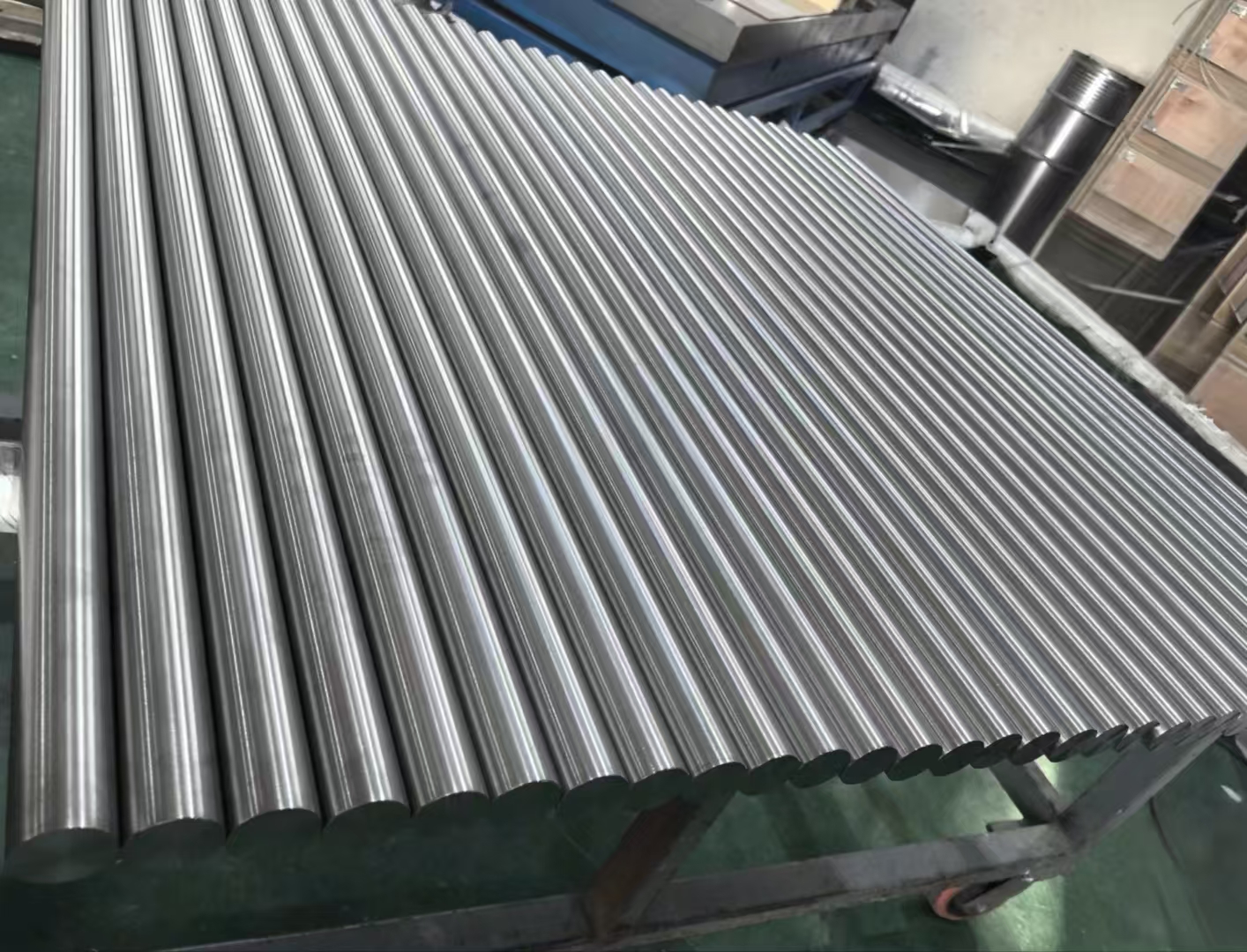
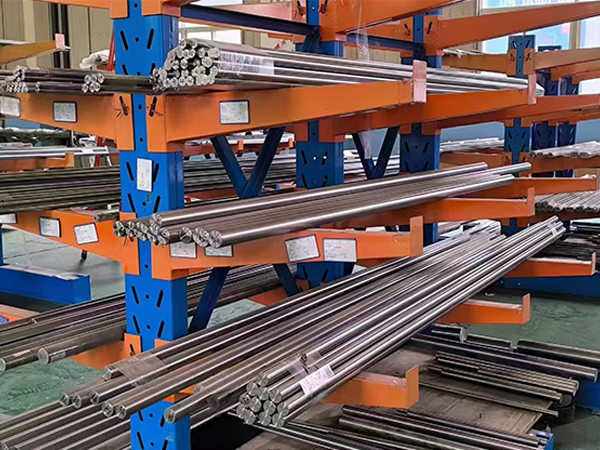
| Rod, bar, and wire | ASTM B166 | ASME SB-166 | Round bar Ø 6–350 mm; flat, square, hex |
| Seamless pipe and tube | ASTM B167 | ASME SB-167 | Radiant-tube and pyrolysis-coil sizes |
| German code approval | VdTÜV 305 | — | Recognized for boiler pressure parts in Germany |
| European material | EN 10095 | 2.4633 | Heat-resisting alloy product family |
| ASME boiler code | Code Case 2435 | — | Section I / VIII allowance for 602 CA |
Because service lives measured in years are the entire economic point of this grade, Hangbo Alloy recommends writing the full callout — "Inconel 602 CA (UNS N06025) plate per ASTM B168" — on the purchase order and confirming the mill certificate states the UNS number, the product ASTM standard, the heat number, and the actual carbon, aluminum, and yttrium values. Yttrium in particular is a grade-integrity element: a certificate that omits it or shows it below 0.01% indicates either an unregistered look-alike heat or incomplete melt practice.
3. Chemical Composition (Specified Ranges)
The composition limits below follow the UNS N06025 registration and the product requirements applied by Hangbo Alloy; nickel is the balance.
| Element | Specified Range (wt %) | Typical Hangbo Alloy Heat | Role-in-Alloy / Watch-Point |
|---|---|---|---|
| Nickel (Ni) | 60.0 – 66.0 | ~62 | Base; balance of oxidation and carburization resistance |
| Chromium (Cr) | 24.0 – 26.0 | ~25 | Outer Cr₂O₃ scale former; carburization buffer |
| Iron (Fe) | 8.0 – 11.0 | ~9.5 | Matrix economics; stabilizes coefficient of expansion |
| Aluminum (Al) | 1.8 – 2.4 | ~2.1 | Alumina subscale former — the key high-temperature element |
| Carbon (C) | 0.15 – 0.25 | ~0.18 | Deliberate; carbide creep strengthening and carburization tolerance |
| Yttrium (Y) | 0.01 – 0.10 | ~0.05 | Reactive-element scale adhesion; verify on MTC |
| Zirconium (Zr) | 0.10 max | ~0.05 | Sulfur gettering; hot-workability control |
| Titanium (Ti) | 0.20 max | ~0.10 | Residual deoxidizer; kept low to protect Al₂O₃ formation |
| Manganese (Mn) | 0.15 max | ~0.05 | Sulfur control |
| Silicon (Si) | 0.50 max | ~0.15 | Deoxidizer |
| Sulfur (S) | 0.015 max | ≤0.005 | Held low; sulfur attacks scale adhesion |
| Phosphorus (P) | 0.020 max | ≤0.010 | Residual |
| Copper (Cu) | 0.10 max | ≤0.05 | Residual |
The three numbers to verify on every 602 CA certificate are carbon (0.15–0.25%), aluminum (1.8–2.4%), and yttrium (0.01–0.10%). A heat mislabeled from the 601 family (which holds aluminum near 1.0–1.7% with no yttrium and carbon only to 0.10%) will pass a visual inspection and fail a 1150 °C oxidation test within hundreds of hours.
4. Mechanical Properties — Room and Elevated Temperature
602 CA is supplied in the solution-annealed condition (typically 1150–1250 °C followed by rapid cooling) with the following typical room-temperature envelope for bar and plate as supplied by Hangbo Alloy:
| Condition | Tensile Strength | Yield Strength (0.2% offset) | Elongation | Hardness (typical) |
|---|---|---|---|---|
| Solution annealed, plate (typical) | ~680 MPa (99 ksi) | ~260 MPa (38 ksi) | ~40–45% | 150–190 HB |
| Solution annealed, bar (typical) | 650–750 MPa | 250–320 MPa | 35–45% | 150–200 HB |
ASTM B168/B166 minimum requirements for annealed product are in the range of 590–620 MPa tensile and 240–250 MPa yield depending on section and product form; Hangbo Alloy certifies the actual minimums applicable to each ordered dimension.
What distinguishes 602 CA, however, is retention of strength where other alloys soften. Representative elevated-temperature tensile and stress-rupture behavior demonstrates the design envelope:
| Test Temperature | 0.2% Yield (typical, MPa) | Tensile (typical, MPa) | Creep-Rupture Context |
|---|---|---|---|
| 600 °C | ~180–200 | ~450–500 | Start of high-temperature design range |
| 800 °C | ~120–140 | ~250–300 | Furnace furniture, burner components |
| 1000 °C | ~60–75 | ~110–130 | Radiant tubes, heat-treatment baskets |
| 1100 °C | ~40–50 | ~80–95 | Pyrolysis and A-USC candidate range |
| 1200 °C | ~25–35 | ~55–70 | Peak oxidation service; load must be minimal |
Published 10,000-hour and 100,000-hour stress-rupture data at 900–1200 °C are the design currency for this alloy. As a guide, 602 CA retains useful 100,000-hour rupture strength of roughly 10–12 MPa at 1100 °C — a figure no chromia-forming austenitic stainless can approach — which is why it is specified for non-pressure-bearing but load-carrying furnace internals at extreme temperature.
5. Oxidation Resistance — The Alumina-Former Advantage
The entire reason to buy 602 CA is that its scale grows slowly and stays attached. Comparative cyclic-oxidation testing repeatedly ranks 602 CA above Inconel 601, Inconel 600, and RA 330 in mass-gain terms at 1100–1200 °C. The mechanism, restated for engineers who need to explain it to a client:
- Above ~1000 °C, chromia alone is not enough. Cr₂O₃ oxidizes further to volatile CrO₃ in high-temperature air, and the scale "burns off" faster than it regrows. Conventional 25Cr-20Ni stainless and even alloy 601 thin measurably over years at 1100 °C.
- 602 CA switches on a second scale. Its aluminum content oxidizes in situ beneath the chromia to form a continuous, slow-growing Al₂O₃ layer. Alumina is thermodynamically stable in both oxidizing and low-oxygen (combustion) atmospheres.
- Yttrium keeps the scale on the metal. Without a reactive element, thermally grown alumina spalls on cooling because interfacial voids coalesce. With yttrium, scale-metal adhesion is maintained through thousands of thermal cycles.
- The net result is a low, parabolic oxidation rate — mass gain per unit area that stays dramatically below the 601/RA330 family across 1100–1200 °C exposure, and correspondingly longer metal life at a given wall thickness.
| Oxidation Service Note | 602 CA Behavior | Design Comment |
|---|---|---|
| Continuous air, 1000–1100 °C | Excellent; minimal scale loss | Radiant tubes, muffles, baskets |
| Cyclic air, 1100–1200 °C | Very good; scale spallation suppressed by Y | Batch furnaces, burner nozzles |
| Combustion gas with sulfur traces | Good; avoids catastrophic sulfidation better than Fe-base | Keep sulfur low in fuel where possible |
| Steam / A-USC superheater context | Candidate with high creep strength | Code Case 2435 supports design |
6. Carburization and Creep in Ethylene Pyrolysis Service
Ethylene pyrolysis (steam cracking) is the flagship application for 602 CA. Cracking coils run at process-gas temperatures up to ~1100 °C with a carbon activity high enough to destroy ordinary alloys in two ways: metal dusting at intermediate temperature (500–800 °C) and internal carburization with catastrophic loss of ductility at higher temperature. Testing in 5% methane atmospheres at 1100 °C demonstrates 602 CA carburization uptake below roughly 1 mg/cm² under conditions where conventional chromia formers show uptake an order of magnitude higher.
| Carburization / Coking Parameter | 602 CA Advantage | Mechanism |
|---|---|---|
| Carbon ingress rate at 1100 °C | Very low vs. 601/800H/RA330 | Al₂O₃ subscale blocks carbon diffusion |
| Catalytic coking on the bore | Reduced by scale quality | Less metal surface available for coke nucleation |
| Post-decoking durability | Excellent | Scale survives repeated steam-air decoke cycles |
| Creep resistance in coil service | Higher than 601 | Carbide-pinned microstructure; higher C content |
| Weld-joint performance | Sound with matching filler | ERNiCrFe-12 / alloy 602 filler practice |
For furnace builders the economic case is simple: a 602 CA radiant tube or pyrolysis coil costs more per kilogram than a chromia former, but delivers multiple tube lives in the same socket, which is why leading cracking-furnace licensors have standardized on the grade family.
7. Fabrication, Welding, and Heat Treatment
- Hot forming: 602 CA hot-forms in the range 1000–1200 °C; re-solution anneal after hot forming is required to restore the fully austenitic, carbide-reverted microstructure.
- Cold forming: The alloy work-hardens moderately; annealing after heavy cold work restores ductility. Springback is comparable to other Ni-Cr-Fe alloys.
- Welding: GTAW/GMAW with ERNiCrFe-12-type filler is the standard matching practice. Preheat is generally unnecessary for thin sections; interpass temperature should be controlled below ~150 °C. Post-weld solution annealing (1050–1150 °C) is recommended for the most demanding oxidation and creep services to re-solution carbides in the heat-affected zone and restore scale-forming capability.
- Machining: Use rigid setups, positive-rake tooling, and continuous coolant; the alloy is tougher and more gummy than stainless steel but machines predictably in the annealed condition.
- Surface condition matters: Because oxidation resistance depends on scale formation from the alloy itself, contaminated or heavily worked surfaces (grinding burns, embedded iron) should be removed by pickling or light machining before service. Hangbo Alloy supplies 602 CA with clean, descaled surfaces and, on request, eddy-current or PMI verification.
8. Why Buyers Select Hangbo Alloy for 602 CA
Hangbo Alloy (Shanghai Hangbo Alloy Group, nickel-alloy.com) stocks and sources 602 CA across plate, bar, and tube forms with:
- Full EN 10204 3.1 certification and heat-lot traceability to the melt;
- Certificate verification of the three critical elements — carbon, aluminum, and yttrium — against the UNS N06025 registration;
- Third-party inspection (SGS, BV, TÜV) support with witness testing at the mill;
- Application engineering support for radiant-tube, pyrolysis, and furnace hardware specifications, including matching filler-metal recommendations.
Technical FAQ — Inconel 602 CA (UNS N06025)
1. What does "CA" mean in Inconel 602 CA? The "CA" denotes the chromia-alumina (Cr₂O₃ + Al₂O₃) duplex scale system that gives the alloy its oxidation resistance. At service temperatures above roughly 1000 °C an inner continuous alumina layer forms beneath the outer chromia layer, and it is this alumina that slows scale growth dramatically compared with chromia-only alloys.
2. What is the maximum service temperature of Inconel 602 CA? 602 CA is engineered for continuous service up to approximately 1200 °C. At 1100–1200 °C it is used where load is modest but oxidation and carburization resistance are critical — radiant tubes, furnace furniture, burner components, and pyrolysis hardware. Mechanical loading must be assessed separately using creep-rupture data, because at 1200 °C the alloy retains little load-bearing strength.
3. Why does 602 CA contain so much carbon (0.15–0.25%) when most nickel alloys limit carbon to 0.05–0.10%? The carbon is deliberate. It forms fine chromium carbides that pin grain boundaries and provide creep strength at 900–1200 °C, and it gives the alloy tolerance to carburizing atmospheres by providing internal chromium sinks. Removing the carbon would make the alloy weaker in creep and more vulnerable to internal carburization.
4. What role does yttrium play in 602 CA? Yttrium is the reactive-element addition (0.01–0.10%) that anchors the oxide scale to the substrate. It suppresses interfacial void coalescence and improves scale adhesion through thermal cycling, preventing the spallation that progressively destroys chromia-formers at high temperature. A certificate showing no yttrium is a red flag for grade authenticity.
5. Which ASTM specifications cover 602 CA plate and bar? ASTM B168 covers plate, sheet, and strip; ASTM B166 covers rod, bar, and wire; seamless tube is covered by ASTM B167. ASME equivalents are SB-168, SB-166, and SB-167. Related approvals include VdTÜV 305, EN 10095, and ASME Code Case 2435 for boiler applications.
6. How does 602 CA compare with Inconel 601 for high-temperature oxidation? 601 is an excellent alloy to about 1050 °C but relies almost entirely on chromia. Above that temperature 601's scale spalls and thins, and its lower carbon (≤0.10%) and aluminum (~1.0–1.7%) provide no alumina subscale and no carbide creep strengthening. 602 CA was developed specifically to outperform 601 at 1100–1200 °C and does so by a wide margin in cyclic oxidation and carburization tests.
7. Can Inconel 602 CA be welded? Yes. Matching welds use ERNiCrFe-12-type filler by GTAW or GMAW. For maximum oxidation and creep performance, especially in radiant-tube and pyrolysis service, a post-weld solution anneal at approximately 1050–1150 °C is recommended to restore the microstructure of the heat-affected zone.
8. Is 602 CA resistant to metal dusting and carburization? Yes, to a degree no chromia former matches. The alumina subscale blocks carbon ingress, and tests in carburizing methane atmospheres at 1100 °C show carbon uptake below about 1 mg/cm² under conditions that attack conventional heat-resistant alloys an order of magnitude faster. This is why the alloy dominates ethylene pyrolysis and high-temperature petrochemical service.
9. What product forms and sizes does Hangbo Alloy supply in 602 CA? Hangbo Alloy supplies plate from 1.5 to 100 mm thick, round bar from 6 to 350 mm diameter, flat and square bar, sheet and strip, and seamless tube in radiant-tube and coil sizes, all with EN 10204 3.1 certification and traceability. Custom forgings and matching welding consumables can be arranged on request.
10. How should a purchaser verify that 602 CA stock is genuine? Check the mill certificate for the UNS number N06025 and the three signature elements: carbon 0.15–0.25%, aluminum 1.8–2.4%, and yttrium 0.01–0.10%. Independent arrival testing of these elements plus PMI on chromium confirms grade integrity before the material enters furnace fabrication.
This technical guide is provided by Hangbo Alloy (Shanghai Hangbo Alloy Group Co., Ltd., nickel-alloy.com) for material-selection and engineering-reference purposes. Data presented are typical engineering values compiled from recognized industry sources and are not a substitute for the governing ASTM/ASME specifications, code approvals, or the certified mill test report applicable to each heat. Contact Hangbo Alloy at sales@hangboalloy.com or +86 136 1165 6360 for current stock, certificates, and application engineering support.