

Excerpt:
Hastelloy B-3 (UNS N10675, W.Nr. 2.4600) technical guide from Shanghai Hangbo Alloy Group. Thermally stabilized Ni-Mo alloy that matches B-2 hydrochloric-acid performance while resisting knife-line and HAZ attack after multi-pass welding; ASTM B333/B335 plate, sheet and bar; usable as-welded in HCl service without post-weld heat treatment.
Hastelloy B-3 (UNS N10675) Technical Guide: Thermal Stability, Knife-Line Attack Resistance, and Hydrochloric Acid Performance | Hangbo Alloy
Introduction
Hastelloy B-2 rewrote the rules for hydrochloric acid service, but it carried one hidden condition: the alloy's corrosion resistance in the as-welded state depends on discipline. If a fabricator allowed a weldment to dwell in the 538–1,093 °C (1,000–2,000 °F) window, molybdenum-rich second phases precipitated at grain boundaries, and the finished vessel could corrode preferentially along those boundaries — knife-line and heat-affected-zone (HAZ) attack — despite having perfect annealed parent plate. Hastelloy B-3 (UNS N10675, W.Nr. 2.4600) was engineered by Haynes International specifically to retire that risk. It keeps the B-2 heritage of outstanding resistance to hydrochloric acid at all concentrations and temperatures, while its modified chemistry slows the damaging precipitation reactions by orders of magnitude. The result is an alloy that is genuinely forgiving to fabricate: heavy multi-pass welds, restricted joint geometries, and even incidental overtemperature excursions no longer doom the component to premature corrosion failure.
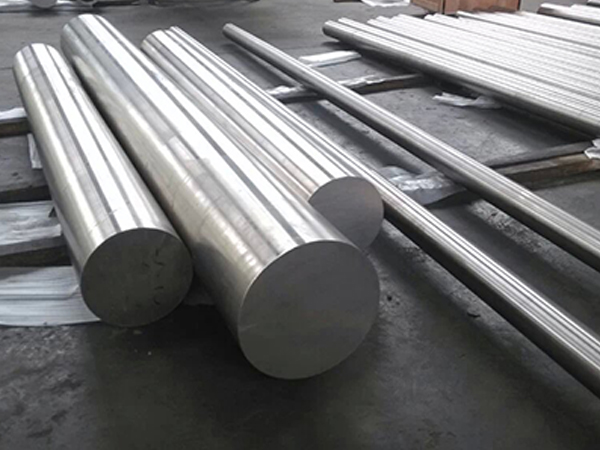
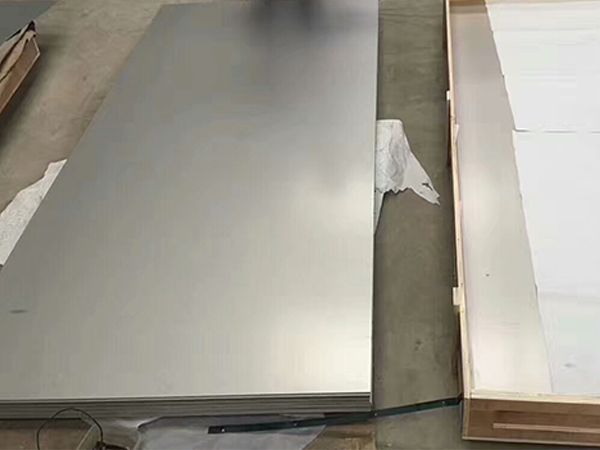
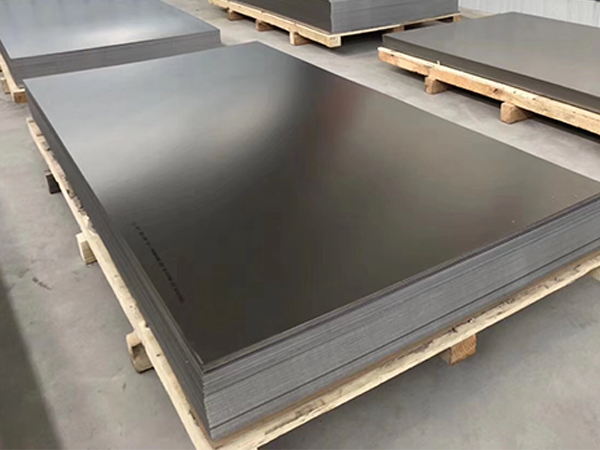
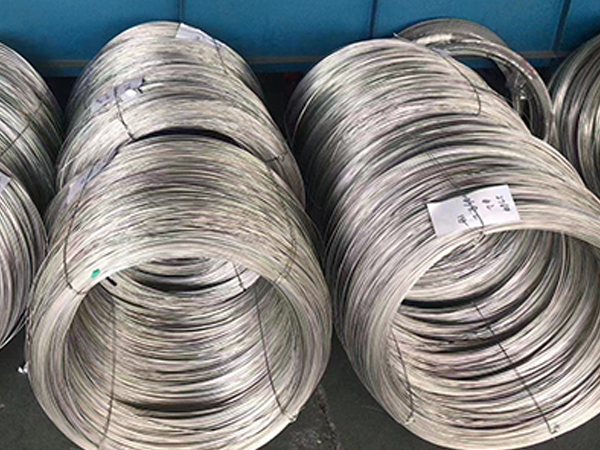
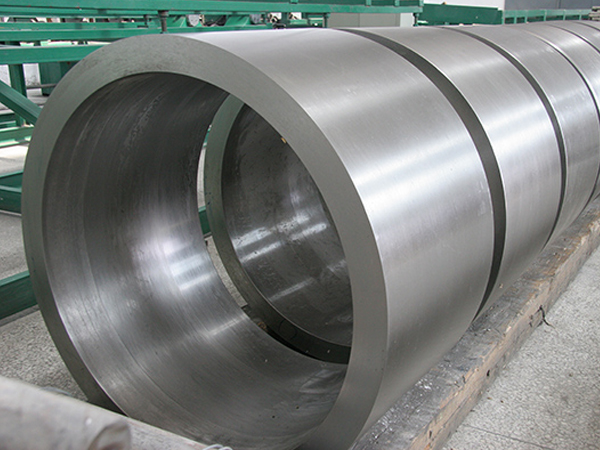
Shanghai Hangbo Alloy Group supplies Hastelloy B-3 plate, sheet, strip, round bar, pipe, tube, and forgings to ASTM B333 (plate, sheet, and strip) and ASTM B335 (rod, bar, and wire), with matching ASME SB333/SB335 coverage for pressure-boundary work. Every heat is solution annealed, PMI-verified, and shipped with EN 10204 3.1 documentation. This guide explains the metallurgy behind B-3's stability advantage, quantifies where it differs from B-2, and shows the specifying engineer exactly when the B-3 premium pays for itself.
Design Evolution: Fixing the B-2 Achillean Weakness
The failure mode that B-3 addresses is subtle but well characterized. In B-2, exposure in the approximate range 538–1,093 °C — which includes the entire multi-pass welding thermal cycle and any hot-forming or improper stress-relief excursion — promotes the nucleation and growth of molybdenum-rich intermetallic phases, principally of the Ni₃Mo and Ni₇Mo₆ types, at grain boundaries. Two consequences follow. First, the precipitates themselves are brittle, so heavily precipitated material loses ductility and impact toughness. Second, and far worse for corrosion service, the regions immediately adjacent to the grain-boundary precipitates become depleted in molybdenum. Because hydrochloric acid corrosion of Ni-Mo alloys is controlled precisely by that molybdenum enrichment, the depleted zones corrode at rates many times that of the unaffected matrix. In an HCl environment the result is a knife-line groove alongside the weld, or preferential etching of the coarse-grained HAZ — damage invisible to the naked eye in the early stages and catastrophic within months.
B-3 attacks the problem compositionally rather than procedurally. Small, carefully balanced additions of chromium (1.0–3.0%), iron (1.5–3.0%), and other trace elements within the UNS N10675 specification alter the thermodynamics and kinetics of the Ni-Mo precipitation reactions so dramatically that the alloy can tolerate thermal exposure for hours where B-2 tolerates minutes. Time-temperature-sensitization (T-T-S) testing demonstrates the point: B-3 must be held at its most critical aging temperature for a far longer period than B-2 before grain-boundary precipitation becomes sufficient to produce significant preferential attack in boiling hydrochloric acid testing. This is the metallurgical foundation of the alloy's reputation as the "thermal-stable" member of the B family.
Chemical Composition
The composition limits below apply to B-3 mill products supplied to ASTM B333/B335 and ASME SB333/SB335. Nickel is the balance element.
| Element | Min % | Max % |
|---|---|---|
| Nickel (Ni) | Balance | — |
| Molybdenum (Mo) | 27.0 | 32.0 |
| Chromium (Cr) | 1.0 | 3.0 |
| Iron (Fe) | 1.5 | 3.0 |
| Tungsten (W) | — | 3.0 |
| Cobalt (Co) | — | 3.0 |
| Manganese (Mn) | — | 3.0 |
| Carbon (C) | — | 0.01 |
| Silicon (Si) | — | 0.10 |
| Aluminum (Al) | — | 0.50 |
| Titanium (Ti) | — | 0.20 |
| Copper (Cu) | — | 0.20 |
| Phosphorus (P) | — | 0.03 |
| Sulfur (S) | — | 0.01 |
Two observations matter to buyers. First, B-3 tolerates somewhat broader impurity ranges (higher cobalt, manganese, and tungsten allowances) than B-2, which is possible only because the alloy's design already accounts for those elements — they do not degrade its stability. Second, the critical controlled elements remain austere: carbon is capped at 0.01% and silicon at 0.10%, exactly as in B-2. Hangbo Alloy's production heats typically certify carbon in the 0.002–0.005% range, which is the practical foundation of weldability.
Corrosion Resistance: Hydrochloric Acid and Beyond
The Core Envelope
B-3 delivers essentially the same corrosion performance envelope as B-2 in the environments for which the B family is specified. In reagent-grade hydrochloric acid it exhibits excellent resistance at all concentrations and temperatures up to and including the boiling point. It performs well in sulfuric acid within the reducing region (up to roughly 60% concentration at moderate temperatures), in phosphoric acid at all concentrations, in acetic and formic acids, and in hot reducing organic chloride streams. And, like B-2, it must be kept away from oxidizing species — ferric and cupric salts, nitric acid, aerated acid, wet chlorine, and hypochlorites destroy its protective film.
The differentiating advantage of B-3 is not a higher ceiling in pure-acid tests; it is the retention of that performance after real-world fabrication and thermal exposure. In comparative weld-joint and aged-material testing, B-3 consistently shows:
| Condition | B-2 Behavior | B-3 Behavior |
|---|---|---|
| As-welded, low heat input | Good — acceptable in HCl service | Good — acceptable in HCl service |
| Multi-pass weld, uncontrolled interpass | Risk of HAZ precipitation and attack | Minimal risk; precipitation kinetics strongly slowed |
| Thermal excursion into 538–1,093 °C | Rapid sensitization (minutes at critical temperature) | Long incubation; sensitization only after extended hold |
| Post-weld solution anneal needed? | Recommended after heavy thermal exposure | Rarely required; anneal only for maximum assurance |
| Knife-line attack resistance | Moderate — requires process control | Excellent — the design intent of the alloy |
| Uniform corrosion in HCl | Excellent | Excellent (equivalent envelope) |
For the specifying engineer, the practical meaning is this: B-3 lets a fabricator weld in positional joints, repair defects, and hot-form with conventional discipline, and still deliver an HCl vessel whose welded regions corrode no faster than the parent plate. That is a warranty no B-2 fabricator can honestly give.
Localized and Stress Corrosion
Because B-3's molybdenum content is the same order as B-2's and its chromium remains low, the alloy is effectively immune to chloride-induced stress-corrosion cracking in the reducing environments where it is applied. It also shows no meaningful susceptibility to pitting or crevice attack in pure reducing chloride service, since those mechanisms, too, require an oxidizing potential that the B family never encounters in its design envelope. Where process upsets can introduce oxidizing conditions, the correct conversation shifts to the C family — C-276, C-22, or C-2000 — and Hangbo Alloy's technical team routinely helps customers draw that line at the correct point on the process flow sheet.
Physical and Mechanical Properties
Typical annealed values for B-3 are summarized below. Actual heat-specific values appear on the EN 10204 3.1 certificate supplied with every Hangbo Alloy shipment.
| Property | Typical Value (Annealed) |
|---|---|
| Density | 9.22 g/cm³ (0.333 lb/in³) |
| Melting range | ≈ 1,370 – 1,430 °C |
| Modulus of elasticity (RT) | ≈ 216 – 217 GPa |
| Mean coefficient of thermal expansion (RT–100 °C) | ≈ 10.3 µm/m·°C |
| Thermal conductivity | ≈ 11 W/m·K |
| Tensile strength (RT, typical) | ≈ 840 – 880 MPa |
| 0.2% yield strength (RT, typical) | ≈ 380 – 420 MPa |
| Elongation in 50 mm | ≈ 50 – 60% |
| Hardness (typical) | ≈ 95 – 100 HRB |
In the annealed condition B-3 is slightly stronger than B-2 while retaining the ductility and toughness needed for forming and impact service. As with all Ni-Mo alloys it work-hardens readily, so cold forming should be planned with intermediate anneals and a final solution anneal where deformation has exceeded roughly 7% outer-fiber strain.
Fabrication and Welding: Where B-3 Earns Its Keep
Heat Treatment
B-3 is supplied solution annealed at approximately 1,060–1,090 °C followed by rapid cooling (water quench for heavier sections, accelerated air cooling acceptable for light sheet). The anneal dissolves any incipient precipitation and restores full corrosion resistance and ductility. Because the alloy's precipitation kinetics are slow, minor deviations in anneal temperature or cooling rate that would be harmful in B-2 are tolerated comfortably in B-3.
Welding
B-3 is readily welded by GTAW (TIG), GMAW (MIG), and SMAW (stick). Matching low-carbon nickel-molybdenum filler of B-3 composition should be used; consumable manufacturers publish the equivalent AWS-classed products for this alloy. Welding guidance follows conventional nickel-alloy practice: clean joint preparation free of sulfur and lead contamination, argon shielding with trailing and backing gas where appropriate, stringer beads, and modest heat input. The decisive difference from B-2 is that interpass temperature control, while still recommended, is no longer a life-or-death parameter: B-3's T-T-S behavior means the practical risk of HAZ sensitization during multipass welding is negligible. The alloy may be used in the as-welded condition for hydrochloric acid service without post-weld heat treatment — a genuine scheduling and cost advantage in field-erected and repair work.
Hot and Cold Working
B-3 hot works cleanly in the approximate range 1,230–950 °C with reheating between passes, and is re-annealed after completion. It can be cold rolled, spun, pressed, and drawn with conventional equipment, remembering only that nickel-molybdenum alloys are stiffer and work-harden faster than austenitic stainless steel.
Applications
B-3 is the specification of choice wherever the process is reducing and the fabrication is demanding. Typical installations served by Hangbo Alloy include:
- Hydrochloric acid absorbers, strippers, and distillation columns, including field-erected vessels where weld quality control is inherently more difficult than in the shop.
- Reactors and piping in chlorination, hydrochlorination, and organic synthesis processes generating hot HCl as a by-product.
- Catalyst-handling and acid-regeneration systems exposed to hot reducing chlorides.
- Evaporators and reboilers in chloride-laden organic acid service (acetic, formic, and mixtures).
- Equipment requiring repeated weld repair or in-service modification, where B-2's sensitivity would make every repair a corrosion gamble.
- Pharmaceutical and agrochemical reactors processing chlorinated intermediates under reducing conditions.
B-3 versus B-2: A Decision Framework
Choosing between B-2 and B-3 is an economic question dressed in metallurgical clothing. If components are shop-fabricated with rigorous interpass control, simple joint geometry, and no field welding or future modification, B-2 delivers identical corrosion performance at lower alloy cost. If any of the following conditions apply, the B-3 premium is the cheapest insurance available: multi-pass or positional welding; welding without continuous interpass monitoring; field erection; anticipated in-service weld repairs; hot forming without perfectly controlled post-forming anneal; or any risk that the vessel will see excursions into the 538–1,093 °C window during fabrication or commissioning. Hangbo Alloy's engineers routinely assist customers in this analysis and can supply both grades with full documentation so that the final decision is made on certificate-verified data rather than supplier claims.
Hangbo Alloy Supply Program
| Product Form | Specification | Typical Size Range |
|---|---|---|
| Plate / Sheet / Strip | ASTM B333 / ASME SB333 | 0.5 – 80 mm thickness |
| Round Bar / Rod / Wire | ASTM B335 / ASME SB335 | 6 – 400 mm diameter |
| Seamless Pipe & Tube | ASTM B622 | 6 – 219 mm OD |
| Welded Pipe & Tube | ASTM B619 / B626 | 60 – 610 mm OD |
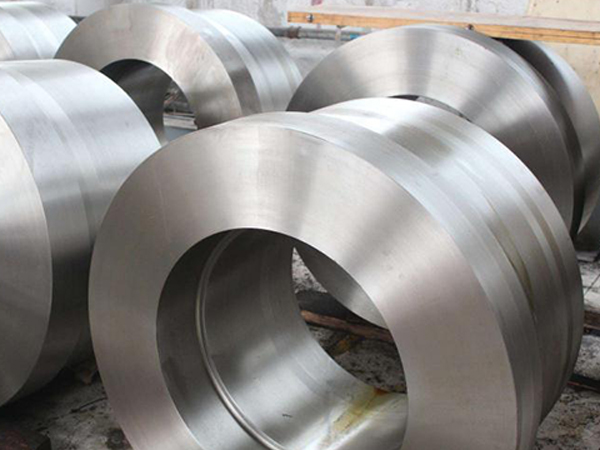
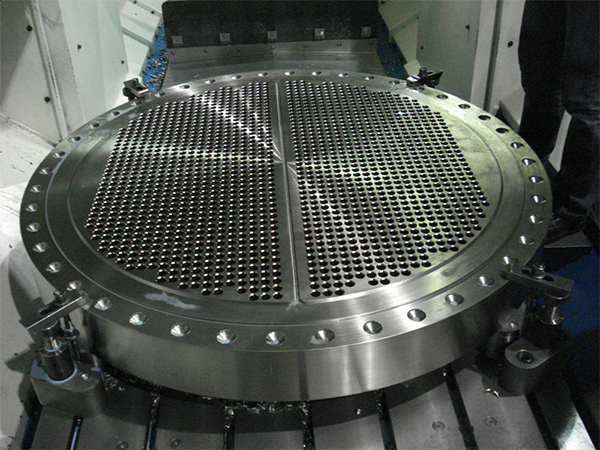
| Forgings & Flanges | ASTM B564 | Custom |
| Fittings | ASTM B366 | 1/2" – 24" |
All B-3 material is PMI-checked for Mo, Cr, Fe, and Ni balance before dispatch, and Hangbo Alloy can supply ASTM G28 Method B corrosion-test evidence and intergranular-corrosion documentation where project specifications demand it.
Technical FAQ
1. What is the difference between Hastelloy B-2 and B-3 in practical terms?
B-3 (UNS N10675) is a rebalanced version of B-2 (UNS N10665) with small chromium, iron, and trace-element additions that dramatically slow the grain-boundary precipitation of Ni-Mo second phases. Practically: B-3 tolerates multi-pass welding, field repairs, and thermal excursions into the 538–1,093 °C window that would sensitize B-2 and cause knife-line/HAZ attack in HCl service.
2. Is B-3 as corrosion resistant as B-2 in hydrochloric acid?
Yes. B-3 matches B-2's performance envelope in reagent-grade hydrochloric acid — excellent resistance at all concentrations up to and including boiling — as well as in reducing sulfuric acid, phosphoric acid, and hot organic acids. Its advantage is retention of that resistance after fabrication, not a higher ceiling in pure-acid tests.
3. What exactly is knife-line attack?
Knife-line attack is preferential corrosion of a narrow band of metal immediately adjacent to a weld, caused by precipitation of molybdenum-rich phases at grain boundaries during welding followed by molybdenum depletion beside those boundaries. In HCl the depleted zone corrodes rapidly while the weld and parent plate remain intact. B-3's chemistry suppresses the precipitation that causes it.
4. Can B-3 be used in the as-welded condition?
Yes. B-3 is specifically designed for as-welded service in hydrochloric acid. Its slow sensitization kinetics mean HAZ precipitation does not reach harmful levels under normal welding conditions, so post-weld heat treatment is not required. A final solution anneal is reserved for maximum assurance after severe thermal exposure.
5. What welding consumables are used for B-3?
Matching low-carbon nickel-molybdenum filler of N10675 composition, available from major consumable producers as bare wire and coated electrodes. Joint preparation must be free of grease, sulfur, and lead; argon shielding with backing gas is recommended for the root pass in tube and pipe work.
6. What maximum service temperature applies to B-3 in HCl?
Corrosion service is bounded by the boiling curve of the acid at system pressure — approximately 108 °C at the atmospheric azeotrope. Structurally, B-3, like B-2, is not a high-temperature alloy: continuous service in the second-phase precipitation range should be avoided, although B-3 tolerates brief excursions far better than B-2.
7. Can B-3 handle oxidizing acids such as nitric acid?
No. B-3 has no meaningful chromium content and is destroyed by oxidizing media — nitric acid, ferric chloride, cupric chloride, wet chlorine, and hypochlorites. For oxidizing or mixed oxidizing/reducing services, the C-family alloys (C-276, C-22, C-2000) or high-chromium grades such as G-30/G-35 are the correct selection.
8. Why does B-3 allow higher cobalt, manganese, and tungsten than B-2?
The UNS N10675 specification tolerates up to 3% each of cobalt, manganese, and tungsten because the alloy's stability design accounts for them; in the balanced B-3 chemistry they neither destabilize the microstructure nor degrade corrosion resistance. This broader tolerance also simplifies melting and keeps the alloy cost-effective.
9. Is B-3 approved under ASME for pressure vessels?
Yes. B-3 is covered by ASME SB333 and SB335 and is recognized for pressure-boundary construction, with allowable stresses assigned in the ASME Boiler and Pressure Vessel Code. Hangbo Alloy supplies plate and bar with full 3.1/3.2 certification for Code stamping.
10. When should I pay the premium for B-3 instead of buying B-2?
Choose B-3 when fabrication involves multi-pass or positional welding, field erection, in-service weld repairs, hot forming, or any credible risk of excursions into the 538–1,093 °C window — conditions under which B-2's corrosion resistance in HCl can be silently destroyed. For simple, tightly controlled shop fabrication of B-2-compatible components, B-2 remains the economical choice, and Hangbo Alloy can supply both.
This page is part of the technical guide series published by Hangbo Alloy (Shanghai Hangbo Alloy Group, nickel-alloy.com). Data presented are typical engineering values compiled from recognized industry and producer sources and are provided for material selection guidance; the governing documents for any purchase are the applicable ASTM/ASME/AMS specifications and the certified mill test report. Contact Hangbo Alloy for current stock, mill certificates, PMI verification, and application engineering support.