

Excerpt:
Hastelloy X (UNS N06002) technical guide from Hangbo Alloy: the Ni-Cr-Fe-Mo solid-solution alloy resisting oxidation and carburization to about 1200°C while retaining strength at 650-900°C. Excellent formability and weldability for gas-turbine combustors and furnace hardware; ASTM B572/B435 and AMS 5754 specifications covered.
Hastelloy X (UNS N06002): The High-Temperature Workhorse for Oxidation Resistance and Gas Turbine Hardware | Hangbo Alloy
Introduction
Hastelloy X, designated UNS N06002 and Werkstoff Nr. 2.4665, is a nickel-chromium-iron-molybdenum solid-solution alloy that occupies a unique position among high-temperature materials. It combines outstanding resistance to oxidation and carburization at temperatures up to about 1,200 °C with useful load-bearing strength at 650–900 °C, and — unusually for a high-temperature alloy — it retains excellent formability and weldability in the annealed condition. That combination is why Hastelloy X has been, for more than half a century, the default sheet alloy for gas turbine engine combustors, transition ducts, afterburner liners, and spray bars, as well as for industrial furnace muffles, retorts, radiant tubes, and petrochemical cracking hardware.
The alloy's design is deliberately balanced. Nickel provides the austenitic base and resistance to stress-corrosion cracking and sigma-phase embrittlement at high temperatures; chromium supplies the oxidation and hot-corrosion resistance that keeps a protective Cr2O3 scale intact through thousands of thermal cycles; molybdenum and tungsten give solid-solution strengthening that holds yield strength and creep resistance at elevated temperature; and iron, present at 17–20 %, lowers raw-material cost and improves fabricability without compromising high-temperature behavior. The result is an alloy that resists the two great enemies of furnace hardware — oxidation and thermal fatigue — while remaining as formable as an austenitic stainless steel in the shop.
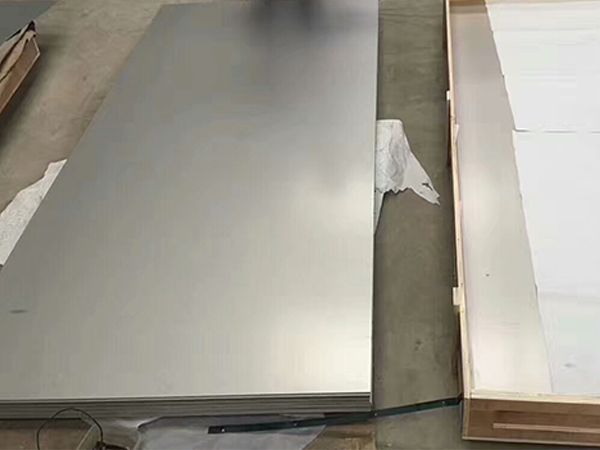
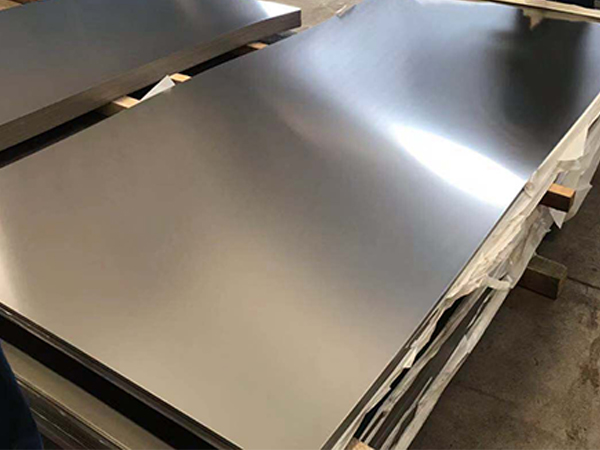
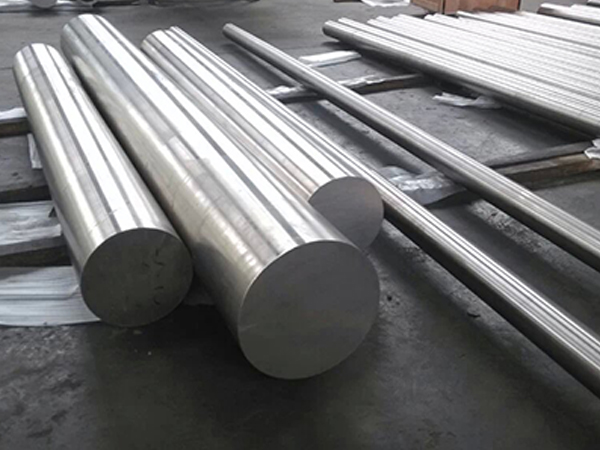
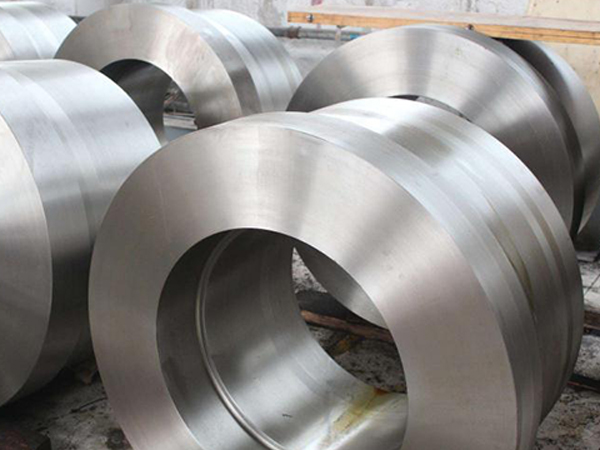
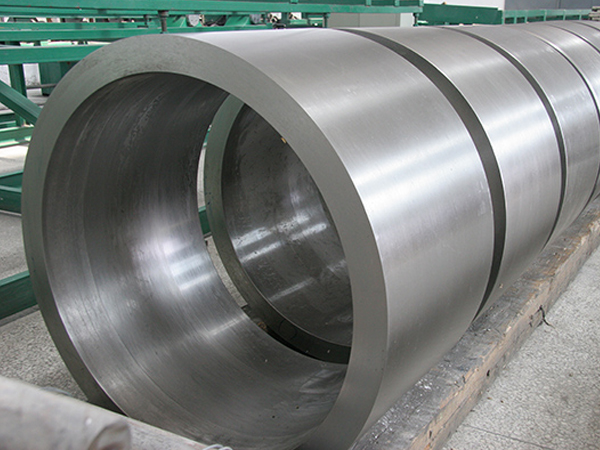
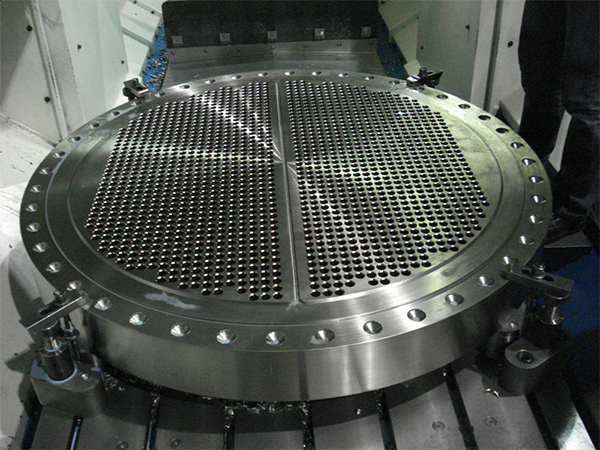
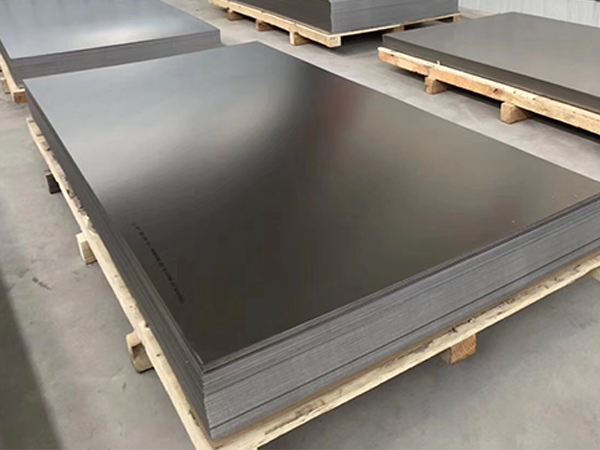
Hangbo Alloy produces Hastelloy X as plate, sheet, strip, rod, bar, and forgings to ASTM B435 (plate, sheet, and strip) and ASTM B572 (rod and bar), with companion fittings specifications and AMS equivalents for aerospace procurement. This article provides a full technical review of the metallurgy, mechanical properties, oxidation behavior, fabrication practice, and applications of Hastelloy X.
Chemical Composition
| Element | Composition Limit (wt. %) |
|---|---|
| Nickel (Ni) | 47.0 min. (balance) |
| Chromium (Cr) | 20.5 – 23.0 |
| Iron (Fe) | 17.0 – 20.0 |
| Molybdenum (Mo) | 8.0 – 10.0 |
| Cobalt (Co) | 0.5 – 2.5 |
| Tungsten (W) | 0.2 – 1.0 |
| Carbon (C) | 0.05 – 0.15 |
| Manganese (Mn) | 1.0 max. |
| Silicon (Si) | 1.0 max. |
| Phosphorus (P) | 0.04 max. |
| Sulfur (S) | 0.03 max. |
| Boron (B) | 0.008 max. |
Two composition details deserve emphasis. First, the deliberate carbon range of 0.05–0.15 % is unusual for a modern nickel alloy — most corrosion grades push carbon as low as possible. In Hastelloy X, a controlled carbon content stabilizes the microstructure and contributes modest carbide strengthening at high temperature without sacrificing weldability. Second, cobalt is allowed up to 2.5 % because it behaves much like nickel in this alloy system; aerospace buyers who require lower cobalt for nuclear or cross-contamination reasons can specify tighter limits by agreement. The molybdenum plus tungsten content (roughly 9–10 % combined) is the backbone of the alloy's elevated-temperature strength.
Metallurgical Design and Microstructure
Hastelloy X is a face-centered cubic (FCC) solid-solution alloy — there is no precipitation-hardening phase, and its strength comes from solute atoms (molybdenum, tungsten, chromium, and iron) distorting the nickel lattice and impeding dislocation motion. Because strengthening is intrinsic to the matrix rather than dependent on a metastable precipitate, the alloy does not overage or lose strength during long service exposures: the properties that leave the mill are essentially the properties that remain after 50,000 hours at 700–900 °C.
In service, the microstructure develops fine secondary carbides (primarily M6C and M23C6 types) at grain boundaries. Contrary to the experience with sensitized stainless steels, this carbide network is generally beneficial in Hastelloy X: it pins grain boundaries, improves creep resistance, and does not degrade corrosion performance because the alloy is not used in aqueous sensitization-sensitive service. The precipitation of topologically close-packed phases such as sigma and mu is possible after very long exposure in the 650–900 °C range, and modern low-iron, controlled-cobalt heats are formulated to suppress it.
Mechanical Properties (Annealed Condition)
| Property | ASTM B435 Minimum (Sheet/Plate) | Typical (Annealed) |
|---|---|---|
| Tensile Strength, Rm | 690 MPa (100 ksi) | 730 – 790 MPa |
| Yield Strength, Rp0.2 | 310 MPa (45 ksi) | 340 – 400 MPa |
| Elongation (2 in / 50 mm) | 30 % | 40 – 48 % |
| Hardness | — | ~88 HRB |
| Elastic Modulus (RT) | — | ~205 GPa |
The room-temperature numbers are respectable but unremarkable; the alloy's value appears when temperature rises. Hastelloy X retains a large fraction of its room-temperature strength at 650 °C and still offers useful design allowables at 870 °C and above, where austenitic stainless steels have effectively surrendered. Because it is supplied in the solution-annealed condition (typically 1,175 °C followed by rapid cooling), the fabricator receives a fully soft, ductile material that work-hardens slowly — ideal for the rolled, spun, and welded sheet constructions used in combustors and furnace muffles.
Elevated-Temperature Properties (Typical, Annealed Sheet)
| Temperature | Tensile Strength | 0.2 % Yield Strength | Stress for 100-h Rupture |
|---|---|---|---|
| 650 °C | ~540 MPa | ~230 MPa | ~200 MPa |
| 760 °C | ~420 MPa | ~200 MPa | ~110 MPa |
| 870 °C | ~290 MPa | ~160 MPa | ~55 MPa |
| 980 °C | ~170 MPa | ~110 MPa | ~25 MPa |
Creep and rupture resistance are the properties that actually size gas turbine combustor components, and the table above shows why Hastelloy X is chosen: at 870 °C it still sustains roughly 55 MPa for 100 hours, and even at 980 °C — above the useful ceiling of most sheet alloys — it retains measurable rupture strength. When combined with the alloy's oxidation resistance, this permits thin-gauge combustor liners that run red-hot yet survive tens of thousands of flight cycles.
Oxidation and Hot-Corrosion Resistance
Hastelloy X forms a protective, adherent chromium-oxide scale in oxidizing atmospheres. The scale is exceptionally resistant to spallation under thermal cycling — a critical requirement for combustor liners that swing between ambient and flame temperatures in seconds. The alloy's resistance to cyclic oxidation is superior to that of many higher-chromium cast alloys because of the scale's adherence and the alloy's low thermal-expansion mismatch stress.
The alloy also resists carburization in carbon-rich atmospheres and shows good tolerance to the sulfidizing conditions found in some combustion environments, although highly sulfidizing fuel-ash environments will attack any iron-nickel alloy and call for aluminide coatings or specialized grades. In practice, Hastelloy X hardware operates continuously in air and combustion products at 980–1,150 °C for sheet applications (with life depending on gauge and thermal cycling), and industrial muffles and retorts routinely exceed 10 years of service at 1,000 °C and above.
| Environment | Service Experience |
|---|---|
| Air / combustion products, cyclic | Excellent to ~1,150 °C for thin sections |
| Steam | Excellent resistance to steam oxidation |
| Carburizing atmospheres | Good — outperforms austenitic stainless steels |
| Sulfidizing (fuel ash) | Moderate — coating recommended for severe duty |
| Nitriding atmospheres | Limited — nickel alloys are not nitriding-resistant |
Fabrication and Welding
Hastelloy X was developed with sheet-metal fabrication in mind, and it behaves creditably in every shop operation:
- Forming: In the annealed condition the alloy is ductile and work-hardens at a rate comparable to 316 stainless steel, allowing severe cold forming, spinning, and roll forming. Hot forming is performed at 1,000 – 1,200 °C when required, with a final solution anneal.
- Welding: GTAW, GMAW (spray transfer), and resistance welding are all standard. Matching filler metals of the AWS ERNiCrMo-2 classification are used for maximum joint strength and oxidation resistance; where weld-metal cracking resistance is the priority, some fabricators use ERNiCrMo-3 (625-type) filler, which has excellent crack resistance at some sacrifice in high-temperature strength. Autogenous TIG welding of thin sheet is common for combustor skins. Preheating is not required, and post-weld heat treatment is normally neither required nor recommended, since the annealed properties are restored simply by the rapid cooling of the weld.
- Machining: Hastelloy X is tougher and more gummy than stainless steel; rigid tooling, positive rake angles, and generous coolant are the standard remedies. The alloy's slow work-hardening rate, however, makes it one of the more machinable nickel alloys.
- Cleaning: Scale and heat-tint from hot working are removed by abrasive blasting followed by pickling; embedded iron must be avoided to prevent high-temperature oxidation initiation.
Standards, Specifications, and Product Forms
| Specification | Scope |
|---|---|
| ASTM B435 | Plate, sheet, and strip |
| ASTM B572 | Rod and bar |
| ASTM B366 | Welded and seamless fittings (grades WX / WX2) |
| ASTM B619 / B626 | Welded pipe and tube |
| AMS 5536 | Sheet, strip, and plate (aerospace) |
| AMS 5754 | Bar and forgings (aerospace) |
| DIN W.Nr. 2.4665 | European equivalent |
Applications Overview
| Industry | Representative Applications |
|---|---|
| Aerospace gas turbines | Combustor liners and cases, transition ducts, afterburner liners, flame holders, spray bars, turbine frames, ducting |
| Industrial gas turbines | Can-annular and annular combustors, transition pieces, hot-gas path sheet metal |
| Furnace hardware | Muffles, retorts, radiant tubes, baskets, fixtures, and conveyor belts for heat treating |
| Petrochemical | Cracking tubes and internals in pyrolysis furnaces, reformer hardware |
| Power generation | Burner components, pilot tubes, igniter housings |
| Chemical processing | High-temperature reactors, calciner internals, catalyst grid supports |
In the gas turbine, Hastelloy X sheet typically forms the entire combustion chamber assembly — the component that sees the highest metal temperature, the most severe thermal cycling, and the most corrosive combustion products in the engine. Its combination of oxidation resistance, thermal-fatigue tolerance, and formability into complex double-walled cooling constructions is precisely what that duty demands.
Why Choose Hangbo Alloy
Hangbo Alloy melts Hastelloy X with tight control of carbon, cobalt, and residual elements using vacuum induction melting followed by electroslag remelting, ensuring clean, homogeneous ingots for sheet and bar alike. Rolling and solution annealing at 1,175 °C with rapid quench produce the fully softened, uniform-grain microstructure that formability and creep performance depend on. Hangbo Alloy supplies plate, sheet, strip, rod, and bar with EN 10204 3.1 certification, supports AMS and customer-specific aerospace requirements, and serves engine builders and furnace fabricators worldwide through nickel-alloy.com.
Technical FAQ
Q1: What is the maximum service temperature of Hastelloy X? For oxidation resistance in thin sheet, continuous service to about 1,150 °C is practical. For load-bearing components, creep strength governs: design allowables are meaningful to about 900–980 °C, depending on stress and life.
Q2: Is Hastelloy X precipitation-hardenable? No. It is a solid-solution alloy and cannot be age-hardened. Its strength comes from molybdenum and tungsten in solid solution, which is why its properties are stable through long high-temperature exposure.
Q3: What filler metal is used to weld Hastelloy X? AWS ERNiCrMo-2 is the matching filler. ERNiCrMo-3 (625-type) filler is also widely used when maximum weld crack resistance is required, at some reduction in elevated-temperature strength relative to the parent alloy.
Q4: Is Hastelloy X suitable for aqueous corrosion service? It was designed for high temperature, and its aqueous corrosion resistance is modest compared with dedicated grades. For chemical-process service at ambient and moderate temperatures, Hastelloy C-276 or C-22 is the appropriate selection.
Q5: Does Hastelloy X require post-weld heat treatment? No. Welding is performed without preheat, and no PWHT is required or recommended. The weld and heat-affected zone develop acceptable properties as-cooled.
Q6: Why is Hastelloy X used for combustors rather than stainless steel? Combustor skins run at 800–1,100 °C, where stainless steels lose strength rapidly and spall their oxide scales under cycling. Hastelloy X holds strength and keeps a protective scale at those temperatures.
Q7: Is Hastelloy X magnetic? No. The nickel-base austenitic structure is essentially non-magnetic.
Q8: Can Hastelloy X be supplied as thin sheet for aerospace? Yes. Hangbo Alloy supplies sheet and strip down to light gauges with AMS 5536 compliance, flatness, and surface finish suitable for combustor fabrication.
Q9: What causes sigma-phase formation, and is it a concern? Very long exposure in the 650–900 °C range can precipitate sigma or mu phases in some high-iron heats, reducing ductility. Modern controlled-composition heats and service-proven heat treatments minimize this risk.
Q10: What forms does Hangbo Alloy offer in Hastelloy X? Plate, sheet, strip, rod, bar, forgings, and fittings, with full chemistry, mechanical, and dimensional certification per heat, exported worldwide.