

Excerpt:
Hastelloy C-4 (UNS N06455, W.Nr. 2.4610) technical guide from Shanghai Hangbo Alloy Group. Low-carbon, low-iron Ni-Cr-Mo alloy (about 16% Cr / 16% Mo) balancing oxidizing and reducing acid resistance; ASTM B574/B575; immune to sensitization after welding and aging (ASTM G28A), CPT above 100 C and 1000+ hour SCC survival in boiling MgCl2.
Hastelloy C-4 (UNS N06455) Technical Guide: Microstructural Stability, Intergranular-Corrosion Resistance After Aging, and High-Temperature Performance | Hangbo Alloy
Introduction
Most corrosion alloys are specified for what they resist at room temperature. Hastelloy C-4 (UNS N06455, W.Nr. 2.4610) is more interestingly specified for what it remains after being heated. C-4 belongs to the nickel–chromium–molybdenum (Ni-Cr-Mo) family and is frequently introduced as a lower-iron cousin of Hastelloy C-276 — but that description misses the alloy's reason for existing. C-4 was developed in the early 1970s to solve a specific, expensive problem: the intergranular corrosion that appeared in C-276 weldments and in equipment that had been aged or improperly heat treated in the approximate range 650–1,090 °C. In those conditions, C-276's grain boundaries precipitate carbides and second phases, and the adjacent metal loses chromium and molybdenum. Aggressive acids then etch a preferential path along the grain boundaries, and a vessel that passed acceptance testing fails in service through metal that looks perfectly sound to the naked eye.
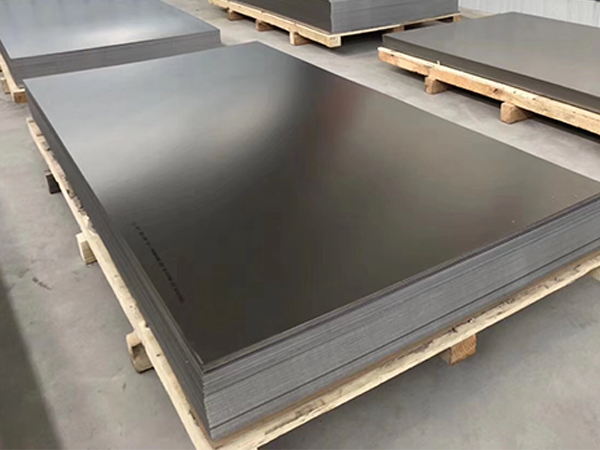
C-4 answers that failure mode with chemistry discipline rather than process prayer. By holding carbon to a maximum of 0.015% and silicon to 0.08%, and by balancing chromium and molybdenum near 16% each, C-4 achieves a microstructure so stable that it can be welded, aged, or inadvertently overheated without losing its corrosion resistance. Haynes International's own time-temperature-sensitization (T-T-S) data make the point starkly: C-4 must be held at its most critical temperature, approximately 825 °C, for about two hours before grain-boundary precipitation is sufficient to produce significant preferential attack in the boiling ASTM G28A test solution — whereas C-276 becomes susceptible after only about three minutes in the 925–1,050 °C range. That single paragraph is the whole commercial story of C-4, and it explains why Shanghai Hangbo Alloy Group supplies C-4 plate, sheet, strip, bar, pipe, and fittings to ASTM B574 (rod and bar) and ASTM B575 (plate, sheet, and strip) for projects where weld integrity and thermal history are the governing risks.
Metallurgy: What "Microstructural Stability" Actually Means
In Ni-Cr-Mo alloys, the equilibrium at high temperature is a solid solution, but on cooling or reheating the material tries to precipitate carbides and intermetallic phases at grain boundaries. In C-276, residual carbon forms chromium-rich carbides (M₆C and M₂₃C₆ types), and molybdenum plus tungsten promote µ-phase and P-phase intermetallics. Each precipitate type drains chromium or molybdenum from the immediately adjacent matrix. Chromium is what protects the alloy in oxidizing acids; molybdenum is what protects it in reducing acids. When both are depleted locally, the grain-boundary neighborhood becomes corrodible in nearly every acid that the alloy otherwise survives, and intergranular corrosion follows.
C-4 starves these reactions of their raw materials. Carbon is capped at 0.015%, which limits carbide formation; silicon, a known accelerator of intermetallic precipitation, is capped at 0.08%; iron, which in C-276 sits near 5–6% and shifts phase equilibria toward precipitation, is capped at 3.0%. The result is an alloy whose grain boundaries remain clean after welding and after long aging, so it does not need the "as-quenched luck" that C-276 sometimes depends on. This is why C-4 is described as the most microstructurally stable of the widely used Ni-Cr-Mo alloys — a phrase that appears in producer literature because it is measurable, not because it is marketing.
Chemical Composition
The limits below are those applicable to C-4 mill products supplied to ASTM B574/B575 (ASME SB574/SB575). Nickel is the balance element; copper is a producer-controlled impurity maximum.
| Element | Min % | Max % |
|---|---|---|
| Nickel (Ni) | Balance | — |
| Chromium (Cr) | 14.0 | 18.0 |
| Molybdenum (Mo) | 14.0 | 17.0 |
| Iron (Fe) | — | 3.0 |
| Cobalt (Co) | — | 2.0 |
| Titanium (Ti) | — | 0.7 |
| Manganese (Mn) | — | 1.0 |
| Silicon (Si) | — | 0.08 |
| Carbon (C) | — | 0.015 |
| Copper (Cu) | — | 0.5 |
| Phosphorus (P) | — | 0.04 |
| Sulfur (S) | — | 0.03 |
Titanium is present in small amounts as a carbide stabilizer and deoxidizer. The practical chemistry that Hangbo Alloy certifies is even tighter than the limits shown: production heats typically deliver carbon below 0.009% and silicon below 0.05%, which is why the alloy's as-welded and post-aged corrosion performance is so reproducible.
Corrosion Resistance
Resistance to Intergranular Corrosion After Aging
The definitive acceptance test for C-4's design intent is ASTM G28 Method A — boiling 50% sulfuric acid with ferric sulfate — applied to material that has been aged or welded. Whereas a sensitized C-276 weldment can show dramatic intergranular attack and weight loss in this test after only minutes of exposure in the critical range, C-4 weldments and aged coupons pass with corrosion rates close to those of the annealed parent metal. For the specifying engineer the translation is direct: C-4 components can be welded, stress relieved by mistake, or operated with local hot spots — and the grain boundaries will not become the weak link.
General Corrosion Performance
C-4 is a genuinely dual-environment alloy: its ~16% chromium serves oxidizing acids and its ~16% molybdenum serves reducing acids, so it stands between the stainless steels and the specialized Ni-Mo alloys across a broad map of industrial chemicals. Representative performance:
| Environment | Concentration / Condition | C-4 Performance |
|---|---|---|
| Sulfuric acid | Up to ~40–50% | Excellent at moderate temperature; good to ~80 °C depending on concentration |
| Hydrochloric acid | Up to ~10% | Good at moderate temperature (below the B-family ceiling) |
| Phosphoric acid | All concentrations | Good, especially with chloride contamination |
| Acetic acid | All concentrations | Excellent |
| Seawater / chloride brines | — | Excellent resistance to pitting and crevice attack |
| Chloride stress-corrosion media | Boiling MgCl₂, etc. | No cracking after 1,000+ hours |
| Oxidizing acid mixtures | HNO₃/HF, HNO₃/HCl | Good within concentration limits |
Localized Corrosion: Quantified
Because nickel alloys are frequently chosen to escape the pitting and crevice failures of stainless steel, C-4's localized-corrosion credentials matter. In the standard ASTM G48 6% ferric-chloride tests, published critical temperatures place C-4 at or above 100 °C for pitting and about 50 °C for crevice attack — a full performance tier above the 6%-molybdenum stainless steels and comparable to alloy 625 in pitting resistance, with superior crevice numbers to many of its peers. In chloride stress-corrosion testing (boiling 45% MgCl₂ per ASTM G36), C-4 samples survive more than 1,000 hours without cracking while 316L cracks in about two hours. For heat-exchanger tubing in seawater and polluted cooling waters, that combination — pitting immunity plus SCC immunity — is precisely the specification driver.
Physical and Mechanical Properties
Typical annealed values for C-4 are given below. Mill certificates from Hangbo Alloy document the measured values of the actual heat supplied.
| Property | Typical Value (Annealed) |
|---|---|
| Density | 8.64 g/cm³ (0.312 lb/in³) |
| Melting range | ≈ 1,330 – 1,380 °C |
| Modulus of elasticity (RT) | ≈ 212 GPa (30.8 × 10⁶ psi) |
| Mean coefficient of thermal expansion (24–100 °C) | 10.9 µm/m·°C |
| Thermal conductivity (RT) | ≈ 10.1 W/m·K |
| Tensile strength (sheet, RT, typical) | ≈ 768 MPa (111 ksi) |
| 0.2% yield strength (sheet, RT, typical) | ≈ 416 MPa (60 ksi) |
| Elongation in 50 mm | ≈ 52% |
| Impact strength, Charpy V-notch (RT) | ≈ 280 – 380 J |
| ASME Section VIII Div. 1 recognition | To 427 °C (800 °F) |
C-4 retains useful strength well above room temperature — at 538 °C the tensile strength is still on the order of 640 MPa with elongation above 50% — which is why it is also considered for hot, aggressive services where the process fluid is both corrosive and hot.
Fabrication, Welding, and Heat Treatment
C-4 is supplied in the mill-annealed condition. The recommended solution anneal is approximately 1,066 °C with water quenching (accelerated air cooling is acceptable for sections thinner than about 10 mm); hold time of 10–30 minutes depending on thickness dissolves any prior precipitation and restores optimum corrosion resistance and ductility. After hot forming, or after cold forming exceeding about 7% outer-fiber strain, the component should be re-annealed.
Welding is where C-4 shows its character. It is weldable by GTAW, GMAW, and SMAW using matching filler: ERNiCrMo-7 bare wire to AWS A5.14 and ENiCrMo-7 coated electrodes to AWS A5.11. Because the alloy cannot be practically sensitized by welding heat, heat-input control is a quality nicety rather than a corrosion necessity, and the alloy is used in the as-welded condition without post-weld heat treatment in essentially all corrosive services. This is the single largest fabrication-cost difference between C-4 and less stable alloys, and it is the reason C-4 has displaced C-276 on many heat-exchanger and reactor programs where weldment corrosion was historically the failure mode. Hot working is performed in the approximate range 1,180–950 °C with reheating, followed by full re-annealing; cold forming follows conventional nickel-alloy practice with allowance for higher strength and work-hardening rate than stainless steel.
Applications
C-4 is specified wherever three conditions coincide: an aggressive chemical environment, a demanding thermal history, and an intolerance for weldment failure. Representative service includes:
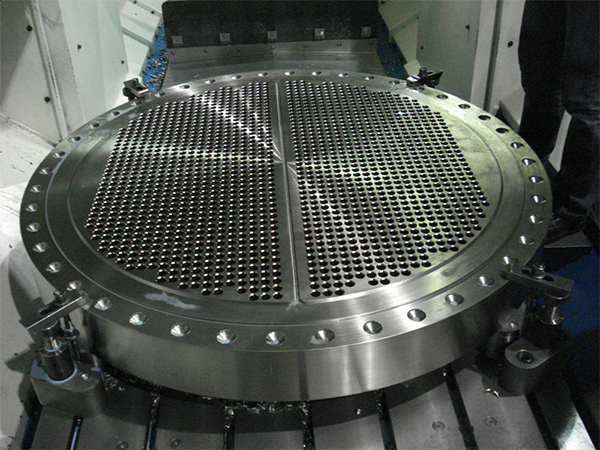
- Sulfuric and phosphoric acid heat exchangers and reactors, including units that must survive chloride-contaminated acid without crevice attack under gaskets and tube sheets.
- Chemical process piping and vessels handling hot organic and inorganic acids with halide impurities.
- Flue-gas and incineration scrubber internals where condensates cycle between oxidizing and reducing character.
- Picking and acid-recovery equipment in steel mills.
- Pharmaceutical and fine-chemical reactors requiring repeatable, certifiable corrosion performance in welded construction.
- Seawater-cooled exchangers and marine process equipment where chloride SCC of stainless steel is unacceptable.
- High-temperature chemical service to roughly 540 °C where hot corrosion and fabrication stability both matter.
C-4 versus the C-Family Alternatives
Against C-276, C-4 trades a little breadth in the most oxidizing environments (C-276's tungsten and higher iron give it an edge in strongly oxidizing chlorides) in exchange for decisive superiority in thermal stability, weldment corrosion resistance, and resistance to intergranular attack after aging. Against C-22 and C-2000, which are broader-spectrum alloys for mixed-acid duty, C-4 remains the reference when the governing risk is sensitization and when the environment is well characterized. Hangbo Alloy's technical team regularly maps customer process conditions against iso-corrosion data for C-4, C-276, C-22, and C-2000 to ensure the specification matches the true oxidizing/reducing balance of the stream — the single most common source of mis-specification in this alloy family.
Hangbo Alloy Supply Program
| Product Form | Specification | Typical Size Range |
|---|---|---|
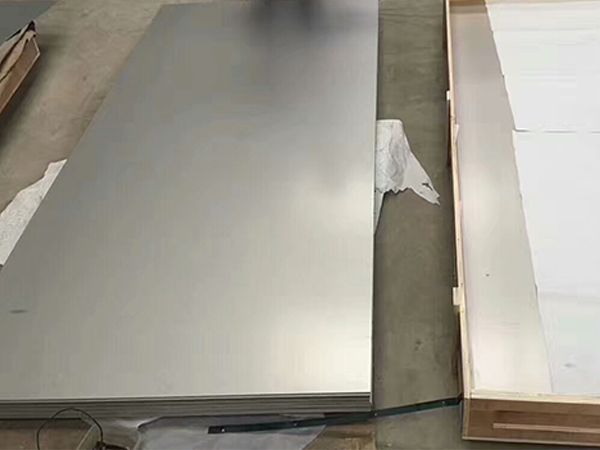
| Plate / Sheet / Strip | ASTM B575 / ASME SB575 | 0.5 – 60 mm thickness |
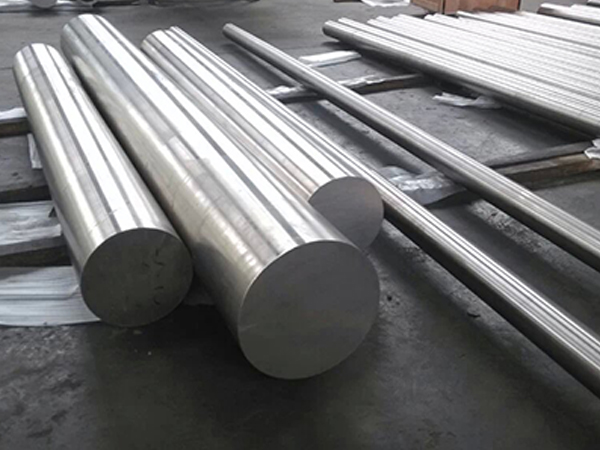
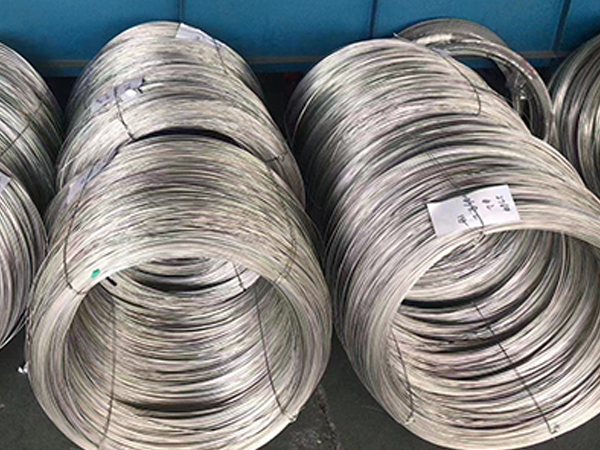
| Round Bar / Rod / Wire | ASTM B574 / ASME SB574 | 5 – 350 mm diameter |
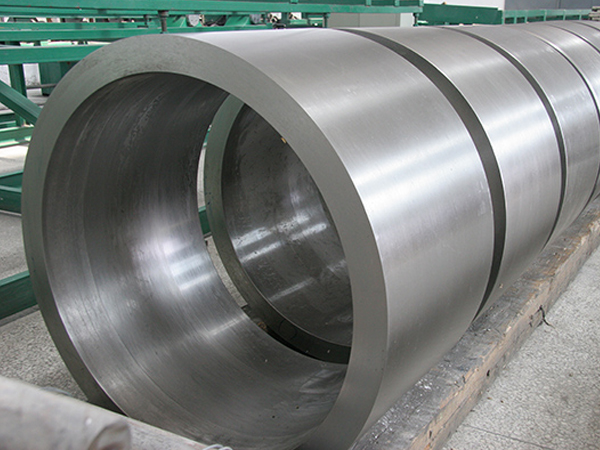
| Seamless Pipe & Tube | ASTM B622 | 6 – 219 mm OD |
| Welded Pipe & Tube | ASTM B619 / B626 | 60 – 610 mm OD |
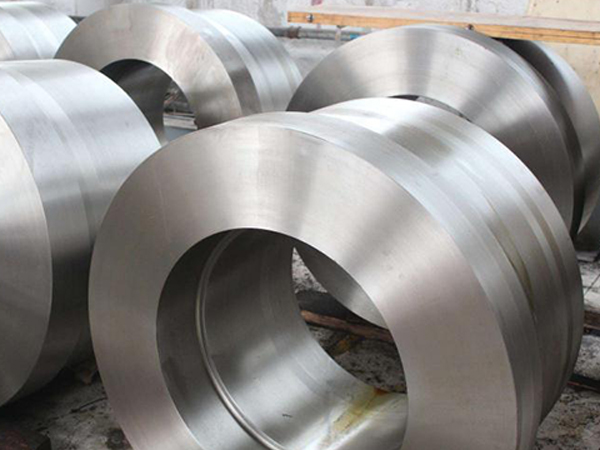
| Forgings & Flanges | ASTM B564 | Custom |
| Fittings | ASTM B366 | 1/2" – 24" |
Material is supplied solution annealed and pickled, PMI-verified, with EN 10204 3.1 certificates; ASTM G28 Method A intergranular-corrosion test documentation is available for qualification programs.
Technical FAQ
1. What does "microstructurally stable" mean for Hastelloy C-4?
It means C-4's grain boundaries do not precipitate harmful carbides and intermetallic phases during welding or thermal aging. Producer T-T-S testing shows C-4 needs roughly two hours at its most critical aging temperature (≈825 °C) to develop measurable grain-boundary attack, versus about three minutes for C-276 — so C-4 weldments stay corrosion resistant in the as-welded condition.
2. Does C-4 require post-weld heat treatment?
No. C-4 is designed to be used as-welded in corrosive service. Because it cannot be practically sensitized by welding heat, PWHT is unnecessary and would only add cost and schedule risk. This is one of the alloy's principal fabrication advantages over less stable Ni-Cr-Mo grades.
3. What is the difference between C-4 and C-276?
Both are Ni-Cr-Mo alloys, but C-4 lowers carbon to ≤0.015%, silicon to ≤0.08%, and iron to ≤3%, trading away some performance in strongly oxidizing chloride media for dramatically better resistance to intergranular corrosion after welding and aging. C-276 has broader tolerance for highly oxidizing contaminants; C-4 wins wherever weldment stability and SCC resistance govern.
4. Which filler metals are used to weld C-4?
ERNiCrMo-7 bare wire per AWS A5.14 and ENiCrMo-7 coated electrodes per AWS A5.11 — both matching C-4 chemistry. GTAW is preferred for tube and sheet work; GMAW and SMAW are acceptable for heavier sections with conventional nickel-alloy joint preparation.
5. What is the maximum service temperature of C-4?
ASME Section VIII Division 1 recognizes C-4 plate, sheet, bar, pipe, and fittings for pressure service to 427 °C (800 °F), and the alloy retains useful corrosion resistance and mechanical strength to roughly 540 °C. Above that range, oxidation and long-term microstructural evolution begin to limit service life.
6. How does C-4 compare with 316L stainless steel in chloride service?
In boiling 45% MgCl₂ SCC testing, 316L cracks within hours while C-4 survives beyond 1,000 hours without cracking. In ASTM G48 ferric-chloride testing, C-4's critical pitting temperature is above 100 °C versus about 15 °C for 316L. Where chloride pitting or SCC has caused stainless failures, C-4 is a field-proven replacement.
7. Can C-4 handle hydrochloric acid?
C-4 resists hydrochloric acid in the dilute range at moderate temperatures — useful where traces of HCl contaminate other process streams. For hot, concentrated, or boiling HCl, the nickel-molybdenum B family (B-2/B-3) is the correct specification, and Hangbo Alloy can advise on the crossover concentration for any given temperature.
8. What heat treatment does C-4 require after hot forming?
A full solution anneal at approximately 1,066 °C with water quenching (or accelerated air cooling for light sections), with 10–30 minutes at temperature depending on thickness. This dissolves any precipitation from hot working and restores optimum corrosion resistance, ductility, and impact toughness.
9. How is intergranular-corrosion resistance of C-4 verified?
The standard method is ASTM G28 Method A — boiling 50% H₂SO₄ + ferric sulfate — applied to annealed, aged, and welded coupons. Hangbo Alloy can supply G28 documentation on request, which is commonly required for qualification of welded heat exchangers and reactors.
10. Is C-4 suitable for seawater and marine heat exchangers?
Yes. With critical pitting temperatures above 100 °C, strong crevice resistance, and immunity to chloride SCC, C-4 tube is an established material for seawater-cooled exchangers, particularly where fouling deposits create crevice conditions that defeat stainless steels and where the higher cost is justified by service life.
This page is part of the technical guide series published by Hangbo Alloy (Shanghai Hangbo Alloy Group, nickel-alloy.com). Data presented are typical engineering values compiled from recognized industry and producer sources and are provided for material selection guidance; the governing documents for any purchase are the applicable ASTM/ASME/AMS specifications and the certified mill test report. Contact Hangbo Alloy for current stock, mill certificates, PMI verification, and application engineering support.