

Inconel 713C: A High‑Performance Nickel‑Based Cast Superalloy
Date: 2026年5月20日 Categories: News Views: 30
Introduction
Inconel 713C (UNS N07713, Alloy 713C) is a precipitation‑hardened nickel‑chromium cast superalloy designed for extreme high‑temperature service conditions. Developed mainly for investment casting applications, this alloy stands out for its outstanding creep resistance, thermal fatigue performance, oxidation stability, and excellent castability, making it one of the most widely used superalloys for hot‑section components in aerospace and power‑generation industries. Unlike many wrought nickel‑based alloys, Inconel 713C is typically applied in the as‑cast state, with optional hot isostatic pressing (HIP) and heat treatment to further improve ductility and long‑term service reliability.
Chemical Composition & Microstructure
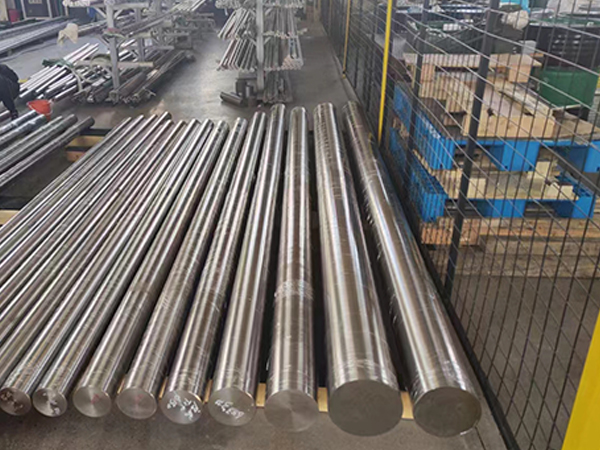
The nominal composition of Inconel 713C consists of nickel as the base matrix, with chromium (12–14 %), aluminum (5.5–6.5 %), molybdenum (4–5 %), niobium (1.5–2.5 %), and controlled carbon content, without cobalt addition. Its high‑temperature strength mainly comes from uniformly distributed coherent gamma‑prime (γ′, Ni₃Al‑type) precipitates in the nickel matrix, together with grain‑boundary carbides that stabilize grain boundaries and resist creep deformation. Even after long‑term aging at 800 °C, minor sigma‑phase precipitation occurs but has little negative impact on overall mechanical properties.
Key Physical & Mechanical Properties
Inconel 713C maintains stable high strength at temperatures up to 980 °C (1800 °F). At room temperature, its tensile strength reaches around 1280 MPa, yield strength about 1035 MPa, and elongation 8–12 %. At 800 °C, tensile strength remains above 600 MPa, and creep resistance is excellent under sustained thermal‑mechanical loading between 700 °C and 850 °C. The alloy features a melting range of 1290–1350 °C, density of 7.8 g/cm³, and good resistance to high‑temperature oxidation, sulfidation, and thermal cycling fatigue.
Main Advantages
- Superior high‑temperature creep strength and long‑term structural stability under continuous high‑temperature stress.
- Excellent oxidation and hot‑corrosion resistance in combustion gas and high‑pressure thermal environments.
- Good fluidity and castability, suitable for complex‑shaped precision investment castings.
- Low density compared with cobalt‑containing superalloys, helping reduce component weight in aero‑engine applications.
- Performance recoverability via HIP treatment for service‑degraded parts.
Industrial Applications
Inconel 713C is primarily used for components operating below 900 °C with strict high‑temperature reliability requirements:
- Aerospace: Turbine blades, vanes, nozzle segments and integral turbine wheels of jet engines and gas turbines.
- Power generation: Hot‑gas‑path castings for industrial gas turbines.
- Automotive: Turbocharger wheels and hot‑end exhaust parts.
- Other high‑temperature precision cast structural components in energy and marine systems.
Limitations
Due to high aluminum and gamma‑prime content, Inconel 713C has poor weldability and limited hot workability, so it is mostly produced by casting rather than forging or rolling. It is also less resistant to severe aqueous corrosion than corrosion‑focused nickel alloys such as Inconel 625, limiting its use in wet chemical environments.
Conclusion
As a classic cast nickel‑based superalloy, Inconel 713C balances high‑temperature strength, castability and economic efficiency perfectly. It remains an irreplaceable material for critical hot‑section components in modern aviation, energy and automotive industries, supporting safe and long‑life operation under extreme thermal and mechanical conditions.