

Excerpt:
Incoloy 330 (UNS N08330, W.Nr. 1.4886) technical guide from Shanghai Hangbo Alloy Group. 34-37% Ni, 17-20% Cr, 0.75-1.50% Si furnace alloy resisting carburization, green rot and cyclic oxidation to about 1095 C; ASTM B536/B535/B511 forms, AMS 5716 forgings; includes the Incoloy 330 vs Incoloy 800H selection framework.
Incoloy 330 (UNS N08330 / W.Nr. 1.4886) Technical Guide: Carburization and Oxidation Resistance in Thermal Processing | Hangbo Alloy
1. Introduction
Furnace hardware is the most demanding materials assignment in thermal processing. Carburizing boxes and baskets must absorb the punishment of repeated quenching cycles; radiant tubes must survive decades of burner flame impingement on one side and protective-atmosphere flow on the other; muffles and retorts must seal process gases at 950 °C while transmitting heat through thin walls. In every one of those components two failure mechanisms dominate: carburization — the inward diffusion of carbon from CO/H₂/CH₄-rich furnace atmospheres, which precipitates brittle chromium carbides and destroys ductility — and high-temperature oxidation, which consumes the metal surface by scaling and spallation, accelerated under thermal cycling.
For over half a century, Incoloy 330 (UNS N08330, W.Nr. 1.4886) has been the industry's workhorse answer to that combined threat. A nickel-iron-chromium-silicon solid-solution alloy with nominally 35% nickel, 18–20% chromium and an intentional silicon addition of 0.75–1.50%, alloy 330 was engineered for exactly the environment that defeats ordinary austenitic stainless steel: hot, carbon-saturated, repeatedly cycled furnace atmospheres. Its 34–37% nickel content suppresses carbon solubility and diffusivity in the austenite lattice, its chromium builds a protective Cr₂O₃ scale, and its controlled silicon forms a self-healing SiO₂ subscale that dramatically slows both oxygen and carbon transport. The result is an alloy that resists carburization, oxidation, nitriding, chloride stress-corrosion cracking, and sigma-phase embrittlement simultaneously — and stays fully austenitic, tough, and weldable from cryogenic temperatures to beyond 1,000 °C.
Shanghai Hangbo Alloy Group (Hangbo Alloy) manufactures and supplies Incoloy 330 plate, sheet and strip to ASTM B536, seamless pipe and tube to ASTM B535, bar, rod and shapes to ASTM B511, and companion product forms to the ASME SB-equivalents, with every heat documented by EN 10204 3.1 certification, 100% PMI verification and full melt traceability. This guide explains the metallurgy behind the alloy's carburization and oxidation resistance, quantifies its mechanical and creep-rupture behavior, compares it with its nearest high-temperature rival — Incoloy 800H (UNS N08810) — and shows where each alloy earns its keep in real thermal-processing equipment.
2. Why Furnace Atmospheres Destroy Ordinary Alloys
Carburization is not surface soot. At the 850–1,050 °C operating temperatures of gas carburizing, carbonitriding, and many annealing furnaces, carbon from carbon monoxide, methane, or endothermic carrier gas dissolves into the metal surface and diffuses inward along grain boundaries and through the lattice. Chromium — the same element the alloy needs for oxidation resistance — has a powerful affinity for carbon, so it precipitates as grain-boundary Cr₂₃C₆ and Cr₇C₃ carbides. Three consequences follow. The matrix adjacent to the carbides is stripped of chromium, so it can no longer form a protective scale and oxidizes preferentially when the component later meets air. The carburized case becomes hard, brittle and voluminous, generating stresses that crack under thermal cycling. And in atmospheres that alternate between carburizing and oxidizing — the classic condition inside carburizing furnaces and above molten salt baths — the damage mode known as "green rot" appears: chromium carbides form internally, chromium is locally depleted, and penetrating green Cr₂O₃ oxidation follows the carbides along grain boundaries until the metal crumbles.
Three alloy-design levers defeat this sequence, and Incoloy 330 pulls all three:
- Nickel, at 34–37%. Carbon is far less soluble in nickel-rich austenite and diffuses through it far more slowly than through the iron-rich austenite of 309/310 stainless. Nickel also raises the carbon activity at which carbide precipitation begins. This is why high-nickel alloys are intrinsically carburization-resistant, and why 330 — with roughly double the nickel of 310S — is in a different performance class from the heat-resisting stainless steels.
- Chromium, at 17–20%. Chromium provides the primary Cr₂O₃ surface scale that resists oxidation to roughly 1,100 °C and gives the alloy its "stainless" character. The 17–20% range is deliberately balanced: high enough for protective scaling, low enough — with the nickel present — to make the alloy immune to the sigma-phase embrittlement that plagues high-chromium 310S during long 600–900 °C exposures.
- Silicon, at 0.75–1.50%. This is alloy 330's signature. Silicon segregates beneath the chromium oxide and forms a continuous, slow-growing SiO₂ subscale. That silica layer blocks cation and anion diffusion, anchors the outer scale so it resists spallation during thermal cycling, and acts as a physical barrier that carbon cannot easily cross. Comparative testing published by the alloy producers shows N08330-type material picks up roughly 50–70% less carbon than 310S after 500 hours in a carburizing atmosphere at 980 °C.
| Design lever | Role in carburization resistance | Role in oxidation resistance | Typical level in Incoloy 330 |
|---|---|---|---|
| Nickel (Ni) | Lowers carbon solubility and diffusivity in austenite | Stabilizes austenite; prevents sigma; anchors scale | 34.0–37.0% |
| Chromium (Cr) | Carbide formers keep carbon bound near surface | Forms protective Cr₂O₃ surface scale | 17.0–20.0% |
| Silicon (Si) | SiO₂ subscale blocks carbon ingress | Forms SiO₂ subscale; stops spallation and internal oxidation | 0.75–1.50% |
| Iron (Fe) | Balance matrix | Balance matrix | Balance |
3. Chemical Composition
The composition limits below apply to Incoloy 330 mill products supplied by Hangbo Alloy to ASTM B536 (plate, sheet and strip), ASTM B535 (seamless pipe and tube) and ASTM B511 (bar and shapes). Iron is the balance element.
| Element | Min % | Max % | Metallurgical function |
|---|---|---|---|
| Nickel (Ni) | 34.0 | 37.0 | Carburization resistance; austenite stability; sigma immunity |
| Chromium (Cr) | 17.0 | 20.0 | Oxidation resistance via Cr₂O₃ scale |
| Iron (Fe) | Balance | Balance | Matrix; low-cost carrier of Ni and Cr |
| Silicon (Si) | 0.75 | 1.50 | SiO₂ subscale; oxidation and carburization barrier |
| Carbon (C) | — | 0.08 | Held low to minimize carbide precipitation in service |
| Manganese (Mn) | — | 2.00 | Deoxidation; hot workability |
| Copper (Cu) | — | 1.00 | Solid-solution strengthening; aqueous corrosion |
| Phosphorus (P) | — | 0.030 | Residual; restricted |
| Sulfur (S) | — | 0.030 | Residual; restricted for hot workability and scale adhesion |
Two details deserve emphasis. First, carbon is capped at 0.08% for the standard grade, because pre-existing chromium carbides would act as internal carbon sinks and carbon-diffusion highways during carburizing service; where maximum creep strength is required, the controlled-carbon variant UNS N08332 (nominally 0.05–0.10% C) is available — the same metallurgical trick used to convert alloy 800 into 800H. Second, the sulfur and phosphorus ceilings are tighter than in many stainless specifications, which matters because sulfur degrades oxide-scale adhesion and hot workability in a furnace alloy. Hangbo Alloy certifies the full ladle analysis on every EN 10204 3.1 document and confirms key elements by PMI on every delivered piece.
4. Product Forms and Governing Standards
Incoloy 330 is a wrought B-series nickel alloy. The standards landscape for UNS N08330 is straightforward, and Hangbo Alloy routinely certifies product to all of the following designations:
| Product form | ASTM standard | ASME equivalent | Typical size range supplied by Hangbo Alloy |
|---|---|---|---|
| Plate, sheet and strip | ASTM B536 | ASME SB-536 | 0.5–50 mm thickness |
| Seamless pipe and tube | ASTM B535 | ASME SB-535 | 6–219 mm OD, 1.0–30 mm wall |
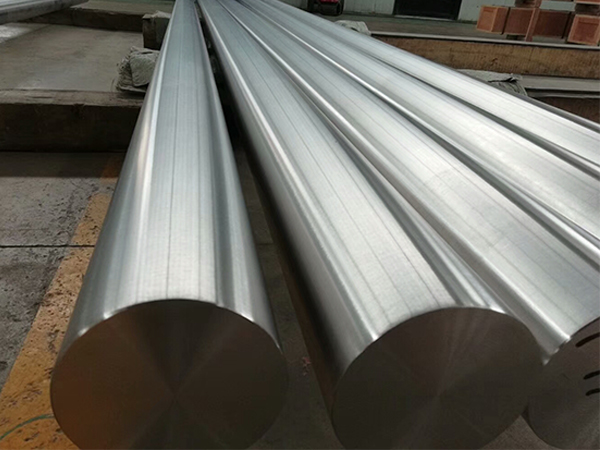
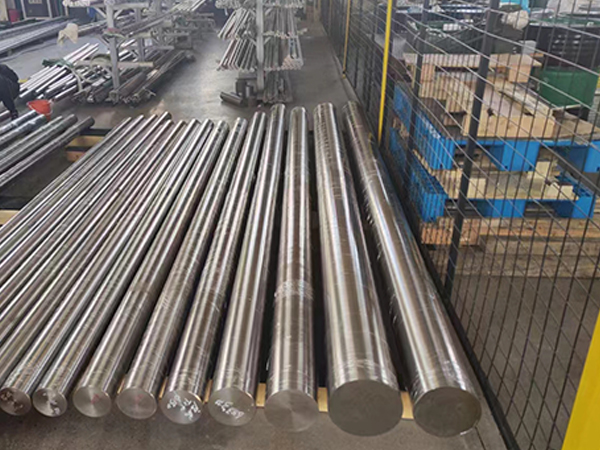
| Bar, rod and shapes | ASTM B511 | ASME SB-511 | 6–300 mm diameter |
| Welded pipe and tube | ASTM B710 / B739 | ASME SB-710 | 60–610 mm OD |
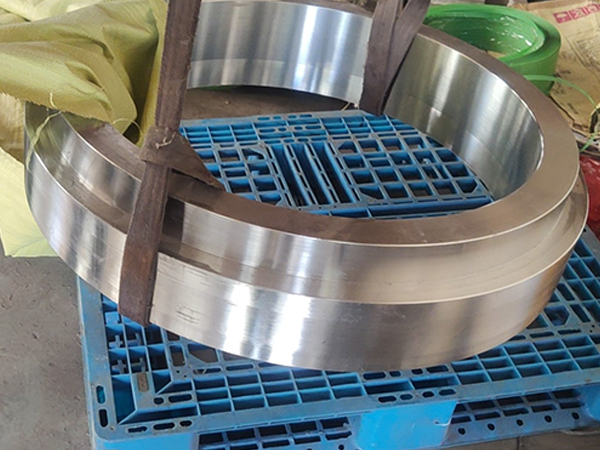
| Forgings and rings | AMS 5716 | — | Custom, per drawing |
| Fittings | ASTM B366 | ASME SB-366 | 1/2–24 in. |
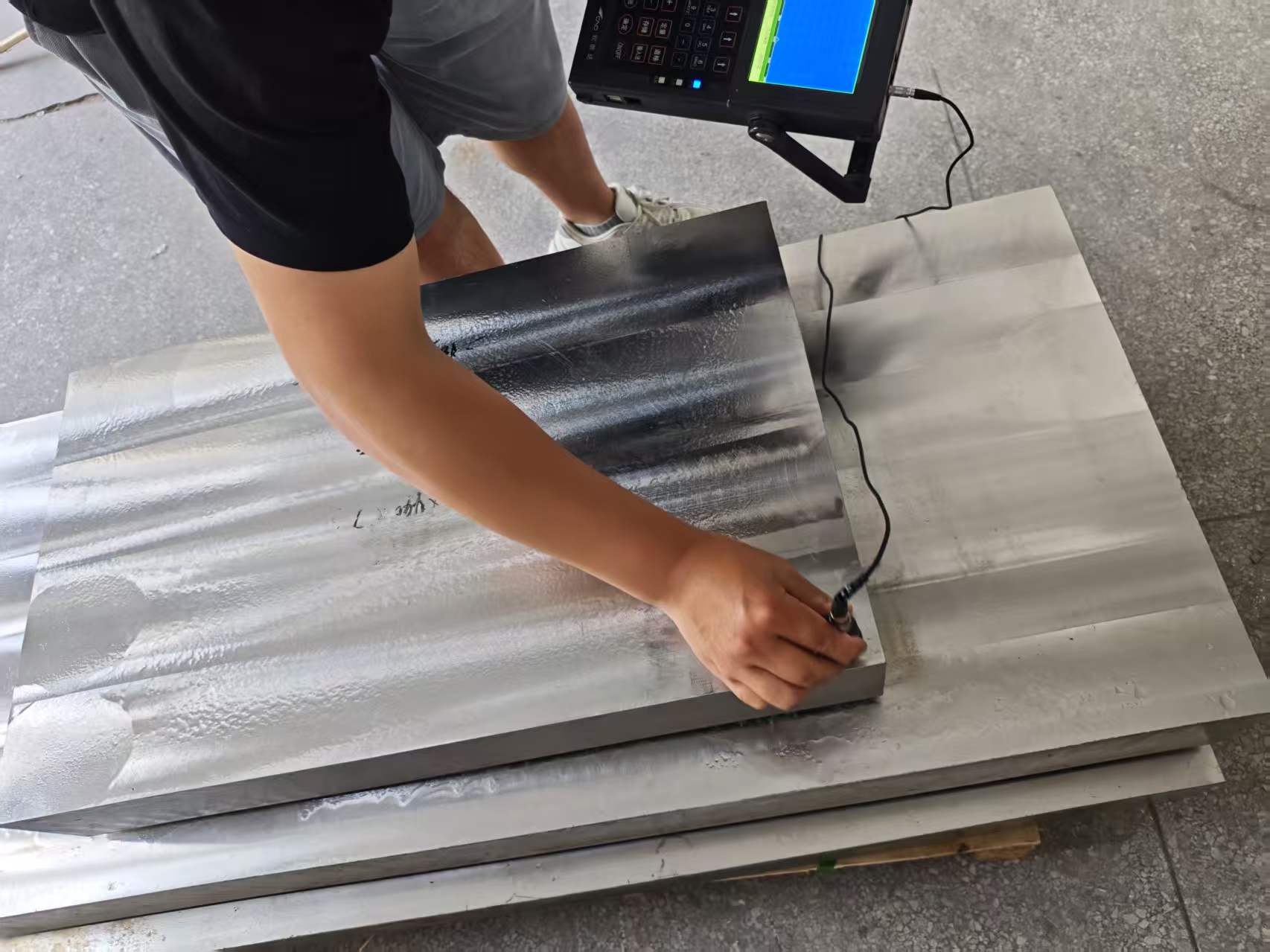
Because N08330 is supplied in the solution-annealed condition under these specifications, buyers should always request the annealed temper designation and confirm grain size and hardness on the certificate; Hangbo Alloy supplies annealed and descaled product as standard, with ultrasonic examination available for plate and forgings where project specifications require it.
5. Physical Properties
The physical properties below are typical values for annealed Incoloy 330 (producer literature and Hangbo Alloy test data). The fully austenitic, non-magnetic structure gives the alloy moderate thermal expansion — lower than many austenitic stainless steels, which reduces thermal stress in welded furnace fabrications — and thermal conductivity that rises usefully with temperature, helping muffles and radiant tubes transmit heat efficiently.
| Property | Value |
|---|---|
| Density | ≈ 8.0 g/cm³ (0.289 lb/in³) |
| Melting range | ≈ 1,370–1,420 °C (2,500–2,590 °F) |
| Specific heat (20 °C) | 460 J/kg·K |
| Mean coefficient of thermal expansion, 21–538 °C | 16.0 μm/m·K |
| Mean coefficient of thermal expansion, 21–871 °C | 17.2 μm/m·K |
| Thermal conductivity, 100 °C | 12.5 W/m·K |
| Thermal conductivity, 500 °C | 17.2 W/m·K |
| Thermal conductivity, 800 °C | 22.0 W/m·K |
| Electrical resistivity (20 °C) | 1.02 μΩ·m |
| Modulus of elasticity (20 °C) | 197 GPa |
| Magnetic permeability (200 oersteds) | ≈ 1.02 — essentially non-magnetic |
6. Mechanical Properties
6.1 Room-Temperature Mechanical Properties
Incoloy 330 is not age-hardenable; its strength comes entirely from solid-solution strengthening by nickel, chromium and silicon. In the annealed condition it exhibits moderate strength with exceptional ductility and toughness — precisely the combination a furnace component needs to survive handling, welding and thousands of thermal cycles. The table lists both the ASTM B536 specification minimums and typical mill-annealed values observed by Hangbo Alloy on production plate and bar.
| Property | ASTM B536 minimum (annealed) | Typical annealed value |
|---|---|---|
| Tensile strength | 517 MPa (75 ksi) | 552–655 MPa (80–95 ksi) |
| 0.2% yield strength | 205 MPa (30 ksi) | 240–310 MPa (35–45 ksi) |
| Elongation in 50 mm | 30% | 40–47% |
| Reduction of area | — | 55–65% |
| Hardness | — | 70–90 HRB (130–185 HB) |
| Charpy V-notch impact, room temperature | — | 80–120 J |
Actual heat-specific values are certified on the EN 10204 3.1 documents supplied with every Hangbo Alloy shipment; the typical values above are for preliminary design and material selection only.
6.2 Elevated-Temperature (Short-Time) Tensile Properties
As with all solid-solution alloys, strength falls steadily with temperature while ductility remains high — a signature of an alloy that will distort rather than fracture under thermal strain. The short-time tensile data below (typical values for mill-annealed product, published producer data for UNS N08330) show the alloy retaining useful load-carrying capacity well beyond 800 °C.
| Temperature °F (°C) | Tensile strength MPa (ksi) | 0.2% yield strength MPa (ksi) | Elongation % |
|---|---|---|---|
| 1000 (538) | 490 (71) | 172 (25) | 46 |
| 1200 (649) | 391 (56.7) | 152 (22) | 43 |
| 1300 (704) | 305 (44.3) | 145 (21) | 69 |
| 1400 (760) | 248 (35.9) | 143 (20.7) | 78 |
| 1500 (816) | 185 (26.8) | 119 (17.3) | 56 |
| 1600 (871) | 145 (21.1) | 106 (15.4) | 79 |
| 1800 (982) | 72 (10.4) | 59 (8.5) | 79 |
| 2000 (1093) | 22 (3.2) | 14 (2.0) | 28 |
The practical reading: above roughly 980 °C, creep rather than tensile strength governs component life, and design stresses for furnace fixtures must come from creep-rupture data, not from these short-time figures.
7. Creep-Rupture Data
For furnace fixtures, baskets, radiant tubes and conveyors the loads are modest — typically self-weight plus a few hundred kilograms of work — but the temperatures are high and the operating hours accumulate relentlessly. The relevant design data are therefore stress-to-rupture and minimum creep rate. The table below gives representative published values for UNS N08330 (solution-annealed, producer data) at three rupture temperatures:
| Temperature °F (°C) | Minimum creep rate stress, 0.0001%/h MPa (ksi) | 10,000-hour rupture strength MPa (ksi) |
|---|---|---|
| 1400 (760) | 25 (3.6) | 30 (4.3) |
| 1600 (871) | 14.5 (2.1) | 12 (1.7) |
| 1800 (982) | 3.4 (0.5) | 4.3 (0.63) |
| 2000 (1093) | — | 1.9 (0.28) |
Three engineering conclusions follow from this data set. First, the 10,000-hour rupture strength of 4.3 ksi at 760 °C corresponds to a mean design stress well below 1 ksi for 100,000-hour furnace campaigns after the usual factor-of-safety is applied — confirming that alloy 330 components should be designed as corrosion-limited, not creep-limited, thin-section hardware. Second, the alloy's creep-rupture resistance degrades in the same smooth, predictable way as its tensile strength, with no inflection from microstructural instability — the fully austenitic matrix simply does not transform or embrittle over time, so rupture data generated at 10,000 hours can be extrapolated to longer lives with reasonable confidence using Larson-Miller parameter methods. Third, where a furnace component genuinely is creep-limited — a heavily loaded tube hanger, a pressurized radiant tube, or a pyrolysis coil — the controlled-carbon variant UNS N08332 or the precipitation-strengthened approach of Incoloy 800H (discussed below) should be evaluated, because deliberate carbide precipitation gives those grades a real rupture-strength advantage over standard N08330 in the 600–950 °C band.
Hangbo Alloy recommends that design for critical furnace components be confirmed by rupture testing of the actual heat where the safety case demands it; our mill can supply test-extension documentation and works with third-party laboratories for project-specific creep verification.
8. Incoloy 330 versus Incoloy 800H: The Engineering Comparison
Incoloy 800H (UNS N08810) is the most common alternative specified for high-temperature furnace and petrochemical hardware, and the two alloys are frequently confused because both are Fe-Ni-Cr austenitics with roughly 30–37% nickel. They are, however, designed for different primary threats. 800H is a creep-optimized alloy: its controlled carbon (0.05–0.10%) and deliberate aluminum-plus-titanium additions (0.15–0.60% each) precipitate fine, stable carbides and nitrides that block dislocation movement, giving it markedly higher creep-rupture strength than 330 in the 600–950 °C range — which is why it dominates pressure-retaining petrochemical service and is an ASME code-approved material. Incoloy 330 is a corrosion-and-thermal-shock-optimized alloy: it trades some high-temperature strength for roughly 35% nickel plus a mandatory silicon addition that 800H does not carry, buying superior resistance to carburization, green rot, and oxide spallation under thermal cycling.
| Element / feature | Incoloy 330 (N08330) | Incoloy 800H (N08810) | Consequence of the difference |
|---|---|---|---|
| Nickel | 34.0–37.0% | 30.0–35.0% | 330 more carburization-resistant (higher Ni) |
| Chromium | 17.0–20.0% | 19.0–23.0% | 800H marginally better in clean oxidizing air |
| Silicon | 0.75–1.50% (mandatory) | 1.0% max | 330 forms SiO₂ subscale; key carburization barrier |
| Carbon | 0.08% max | 0.05–0.10% (controlled) | 800H carbide-strengthened for creep |
| Aluminum + titanium | Not specified | 0.15–0.60% each | 800H precipitation hardening at service temperature |
| Creep-rupture strength, 600–950 °C | Moderate | High | 800H for stressed, load-bearing, code service |
| Carburization resistance | Excellent | Good | 330 preferred for carburizing atmospheres |
| Resistance to green rot | Excellent | Moderate | 330's Si + Ni combination is decisive |
| Thermal-shock / quench resistance | Excellent | Excellent | Both suitable for quench fixtures |
| Sigma-phase risk | Negligible | Low | Both safe where 310S embrittles |
| Typical furnace role | Fixtures, baskets, muffles, retorts, radiant tubes | Reformer/pyrolysis tubes, tube hangers, heat exchangers | |
| Typical supply standards | B536 plate; B535 pipe/tube; B511 bar | B409 plate; B407 pipe/tube; B408 bar | |
| Relative alloy cost | Typically 15–25% lower than 800H at equivalent form | Higher | 330 is cost-competitive for corrosion-limited duty |
The selection rule Hangbo Alloy applies with customers is simple and defensible. If the component is pressure-retaining or load-bearing — a pyrolysis tube, a reformer header, a high-pressure exchanger — and creep strength is the design driver, specify Incoloy 800H (or 800HT for the highest temperatures). If the component is atmosphere-exposed furnace hardware — carburizing fixtures, baskets, grids, muffles, retorts, radiant tubes, fans, conveyors, salt pots — and the life-limiting threats are carburization, green rot, or cyclic-oxidation spallation, Incoloy 330 will typically outlast 800H at a lower alloy cost, because 330 attacks the actual failure mechanism while 800H's extra creep strength is never mobilized at fixture stress levels.
9. Application Examples: Furnace Components in Thermal Processing
The following case-style examples reflect typical industrial experience with N08330 equipment; service life depends on atmosphere, temperature, work mass and cycling severity, so Hangbo Alloy always recommends validating selection against prior basket or coupon history.
Carburizing boxes, baskets and grids. Gas carburizing at 900–980 °C in endothermic carrier gas enriched with natural gas exposes fixtures to carbon potentials that carburize 309/310 hardware within months. Incoloy 330 baskets and grids exploit both the nickel-driven slowdown of carbon diffusion and the SiO₂ barrier; commercial heat treaters typically report 2–3 times the service life of 310S equivalents, with the dominant end-of-life mode being mechanical distortion rather than carburization embrittlement. The alloy's resistance to green rot is what makes it suitable for fixtures that move between the carburizing chamber and the air-cooled vestibule — the alternating carburizing/oxidizing cycle that destroys lower-nickel alloys.
Muffles and retorts. Annealing, brazing and sintering furnaces seal the protective atmosphere inside welded N08330 muffles or retorts that run at 950–1,100 °C. The inside face sees H₂/N₂ atmospheres (in which only the oxide scale prevents decarburization and internal oxidation), while the outside face sees burner products; the thin wall transmits heat and must resist sagging and scale spallation. Incoloy 330's combination of creep resistance adequate for a lightly stressed shell, excellent cyclic-oxidation behavior, and weldability (full-penetration GTAW with matching filler) has made it a default muffle material for six decades.
Radiant tubes. Single-ended and U-tube radiant heaters in continuous furnaces operate with combustion on the inside and process atmosphere on the outside at metal temperatures of 980–1,050 °C. The governing failure mode is not general scaling but localized hot spots, thermal fatigue at the burner end, and carburization where process gas leaks past seals. N08330 radiant tubes offer a long, predictable life where atmosphere integrity is maintained; where internal pressure and creep dominate the design, 800H or centrifugally cast HK/HP tubes remain the alternatives.
Salt bath pots. Neutral and cyanide salt bath furnaces cycle pots between ambient and 850–1,000 °C while the pot wall contacts both molten salt and the oxidizing bath surface line. The surface line is where green rot classically attacks, and N08330 pots are specified there for their combined hot-salt and alternating-atmosphere resistance.
Furnace fans, shafts, conveyors and hearth hardware. Recirculating fans, conveyor belts, rails and hearth plates see moderate stress, high temperature, and continuous atmosphere exposure. Incoloy 330's retention of ductility and toughness over years of service, plus immunity to sigma embrittlement in the critical 600–900 °C window, makes it a reliable, inspectable material for rotating and sliding furnace hardware where a brittle failure would be catastrophic.
| Component | Typical service | Primary threat | Why Incoloy 330 |
|---|---|---|---|
| Carburizing baskets / boxes / grids | 900–980 °C, endothermic atmosphere, quench cycling | Carburization, green rot, distortion | High Ni slows carbon ingress; SiO₂ subscale barrier; 2–3× the life of 310S |
| Muffles and retorts | 950–1,100 °C, H₂/N₂ inside, combustion outside | Cyclic oxidation, sag, atmosphere leakage | Thin-section creep adequacy; spall-resistant scale; weldability |
| Radiant tubes | 980–1,050 °C metal temperature | Hot spots, thermal fatigue, carburization | Predictable oxidation life; thermal-fatigue resistance |
| Salt pots (neutral and cyanide) | 850–1,000 °C, molten salt | Green rot at bath surface line | Ni + Si defeat alternating carburizing/oxidizing attack |
| Furnace fans and shafts | Continuous, atmosphere-exposed | High-temperature fatigue, embrittlement | Tough, sigma-immune, inspectable |
| Conveyors, rails, hearth plates | 800–1,000 °C continuous | Wear, distortion, scaling | Ductile, stable, cost-effective |
| Tube hangers (boilers, crude heaters) | 700–900 °C, flue-gas exposed | Creep, sulfidation | Good balance where load is low and atmosphere harsh |
10. Fabrication, Heat Treatment and Welding
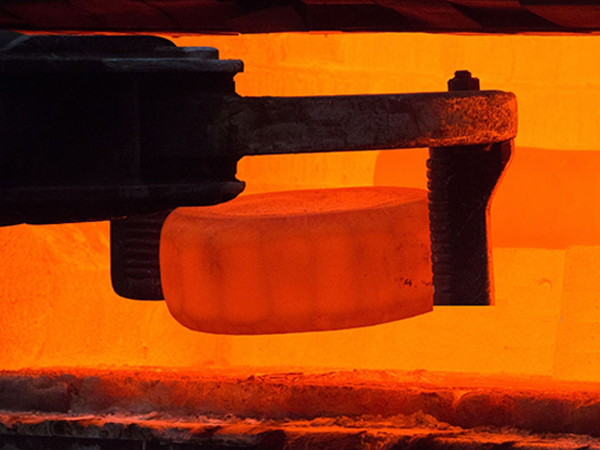
Incoloy 330 is supplied solution-annealed (1,120–1,175 °C, rapid air cool or water quench, approximately 1 hour per 25 mm of section). It work-hardens at a rate comparable to austenitic stainless steel, so cold forming follows stainless practice. Hot forming should start at 1,120–1,180 °C and finish above 950 °C; the alloy must not be worked or bent in the 650–870 °C range, where austenitic alloys exhibit low ductility and intergranular tearing. Because most furnace hardware is used in the as-welded condition, annealing after fabrication is normally unnecessary.
The alloy welds readily by GTAW, GMAW, SMAW and plasma arc processes. Matching-composition filler (e.g., the RA330-04 class) is preferred for maximum carburization resistance and thermal-expansion compatibility; over-alloyed AWS ERNiCr-3 (filler metal 82) is an established alternative for weld-metal toughness. Preheat is not required, interpass temperature should be held below 150 °C, and stringer beads with minimal weaving are recommended. For severe cyclic service, a post-weld stress relief at 900–950 °C can be beneficial, though it is not mandatory. Cleaning discipline matters: dedicated stainless/nickel brushes, no iron contamination, and removal of all oil and marking compounds before welding — residual sulfur and hydrocarbons are the enemies of scale adhesion in service.
11. Hangbo Alloy Supply Program
Shanghai Hangbo Alloy Group supplies Incoloy 330 (UNS N08330) across the full range of product forms used by furnace builders, heat-treatment shops and petrochemical contractors:
| Product form | Standard | Size range | Condition |
|---|---|---|---|
| Plate / sheet / strip | ASTM B536 / ASME SB-536 | 0.5–50 mm thickness | Solution annealed, descaled |
| Seamless pipe and tube | ASTM B535 / ASME SB-535 | 6–219 mm OD | Solution annealed, pickled |
| Bar, rod and shapes | ASTM B511 / ASME SB-511 | 6–300 mm diameter | Annealed, turned or bright |
| Welded pipe and tube | ASTM B710 / B739 | 60–610 mm OD | Annealed, weld-examined |
| Forgings, rings, flanges | AMS 5716 | Custom | Annealed, ultrasonically tested on request |
| Fittings | ASTM B366 | 1/2–24 in. | Annealed |
| Welding wire and filler | AWS A5.14 (ERNiCr-3, ER330 types) | 0.8–5.0 mm | Layer-wound, vacuum packed |
Every Hangbo Alloy delivery is backed by EN 10204 3.1 material certification, 100% PMI (XRF/arc-OES) verification of nickel, chromium, silicon and trace elements, tensile and hardness testing, and full traceability to the melt. Third-party inspection by SGS, TÜV or Bureau Veritas, ultrasonic examination to ASTM A578/E114, and grain-size documentation can be provided where projects require independent verification. Hangbo Alloy also supplies the controlled-carbon UNS N08332 grade, Incoloy 800H/800HT, and cast-equivalent heat-resistant alloys, so furnace fabricators can consolidate their high-temperature alloy purchases under one quality system. Quotations, material certificates and technical consultation are available from the Hangbo Alloy team at nickel-alloy.com.
12. Technical FAQ
1. What is Incoloy 330, and how does it differ from 310S stainless?
Incoloy 330 (UNS N08330 / W.Nr. 1.4886) is a nickel-iron-chromium-silicon austenitic alloy with 34–37% nickel — roughly double the nickel of 310S — plus a mandatory 0.75–1.50% silicon addition that 310S does not carry. The higher nickel slows carbon diffusion and prevents sigma embrittlement; the silicon forms a protective SiO₂ subscale. In carburizing furnace service, N08330 components typically last 2–3 times longer than 310S equivalents.
2. Which ASTM standards cover Incoloy 330 plate, pipe and bar?
Plate, sheet and strip are governed by ASTM B536 (ASME SB-536); seamless pipe and tube by ASTM B535 (ASME SB-535); bar, rod and shapes by ASTM B511 (ASME SB-511). Welded tube is covered by ASTM B710/B739, fittings by ASTM B366, and forgings by AMS 5716. Hangbo Alloy certifies to all of these with EN 10204 3.1 documentation.
3. Why is alloy 330 so resistant to carburization?
Carburization is controlled by carbon solubility and diffusivity in the metal, and both fall steeply as nickel content rises. At 34–37% nickel, N08330 absorbs carbon far more slowly than iron-rich austenitic stainless. The silicon addition adds a second defense: a continuous SiO₂ subscale that physically blocks carbon ingress and suppresses the internal chromium-carbide precipitation that causes green rot.
4. What is "green rot," and why is 330 resistant to it?
Green rot is the failure mode produced by atmospheres that alternate between carburizing and oxidizing. Carbon diffuses in and precipitates chromium carbides; the chromium-depleted matrix then oxidizes internally along grain boundaries as green Cr₂O₃, and the metal disintegrates. Alloy 330 resists it because high nickel minimizes carbide formation and silicon reinforces the protective oxide, breaking the carburize-then-oxidize cycle.
5. How does Incoloy 330 compare with Incoloy 800H for furnace service?
800H (N08810) is creep-optimized — controlled carbon plus aluminum/titanium give it higher creep-rupture strength, making it the choice for pressure-retaining and load-bearing high-temperature service. 330 is corrosion- and thermal-shock-optimized — higher nickel and mandatory silicon give it better carburization and green-rot resistance, making it the longer-lived, lower-cost choice for atmosphere-exposed furnace fixtures and muffles.
6. What is the maximum service temperature of Incoloy 330?
In air and oxidizing atmospheres the alloy is rated to approximately 1,095–1,150 °C (2,000–2,100 °F) for lightly loaded components, and its oxidation resistance to about 1,095 °C (2,000 °F) is well documented. Above roughly 980 °C, creep becomes the controlling design factor, and stressed components must be engineered from creep-rupture data.
7. Does Incoloy 330 require post-weld heat treatment?
No. The alloy is used in the as-welded condition for the great majority of furnace applications. Where severe thermal cycling is expected, a stress relief at 900–950 °C may be applied, but it is not mandatory. Matching-composition filler is preferred; AWS ERNiCr-3 is an established alternative.
8. Can Incoloy 330 handle thermal shock and liquid quenching?
Yes — it was designed for it. The fully austenitic structure undergoes no phase transformations during heating and cooling, so there are no volumetric changes to generate stress, and the high nickel content preserves ductility and toughness down to cryogenic temperatures. Quench fixtures and baskets that cycle between 950 °C and quench oil or water are a signature N08330 application.
9. When should I choose the controlled-carbon variant UNS N08332 instead?
N08332 carries nominally 0.05–0.10% carbon, which promotes the stable carbide dispersion that improves creep-rupture strength — the same logic that distinguishes 800H from alloy 800. Choose N08332 where a fixture is genuinely creep-limited; choose standard N08330 where carburization and cyclic oxidation dominate. Hangbo Alloy supplies both grades.
10. How is quality verified on Hangbo Alloy Incoloy 330 deliveries?
Every shipment includes EN 10204 3.1 mill certification with full ladle and product analysis, 100% PMI verification of key elements, tensile and hardness testing, and melt traceability. Optional services include ultrasonic examination, grain-size certification, and third-party inspection by SGS, TÜV or Bureau Veritas. Request current stock sizes and quotations directly from Hangbo Alloy at nickel-alloy.com.
Note on data: property values in this guide are typical or specification values drawn from ASTM B536/B535/B511 and published producer data for UNS N08330, and are intended for material selection and preliminary design. Final design should use heat-certified values from the EN 10204 3.1 documentation supplied with each Hangbo Alloy shipment, verified against the governing code for the specific application.
This page is part of the technical guide series published by Hangbo Alloy (Shanghai Hangbo Alloy Group, nickel-alloy.com). Data presented are typical engineering values compiled from recognized industry and producer sources and are provided for material selection guidance; the governing documents for any purchase are the applicable ASTM/ASME/AMS specifications and the certified mill test report. Contact Hangbo Alloy for current stock, mill certificates, PMI verification, and application engineering support.