


Excerpt:
Incoloy 926 (UNS N08926) technical whitepaper from Shanghai Hangbo Alloy Group. 6% molybdenum super-austenitic stainless steel with PREN 42-47 for chloride pitting, crevice and stress-corrosion resistance in seawater, offshore, desalination and FGD service; NACE MR0175 compatible; ASTM G48 pitting verified.
Technical Whitepaper: Incoloy 926 (UNS N08926 / 6% Moly) — Combatting Chloride Pitting and Crevice Corrosion | Hangbo Alloy
Introduction
Incoloy 926 (UNS N08926) is a super-austenitic 6% molybdenum stainless steel designed for use in aggressive chloride-bearing environments where standard stainless steels like 316L and even 904L reach their limits. With its increased molybdenum content and nitrogen addition, 926 offers exceptional resistance to pitting, crevice corrosion, and stress corrosion cracking (SCC). Shanghai Hangbo Alloy Group supplies Incoloy 926 to critical offshore, desalination, and chemical processing projects where material failure is not an option.
1. Chemical Composition
The high resistance of 926 comes from its unique balance of Nickel, Chromium, Molybdenum, and Nitrogen.
| Element | Min % | Max % | Function in Incoloy 926 |
|---|---|---|---|
| Nickel (Ni) | 24.0 | 26.0 | Base for austenite stability and SCC resistance |
| Chromium (Cr) | 19.0 | 21.0 | Primary corrosion and oxidation resistance |
| Molybdenum (Mo) | 6.0 | 7.0 | Superior pitting and crevice corrosion resistance |
| Nitrogen (N) | 0.15 | 0.25 | Enhances strength and resists Mo-driven phase precipitation |
| Copper (Cu) | 0.5 | 1.5 | Improves resistance to sulfuric and phosphoric acids |
| Carbon (C) | - | 0.02 | Ultra-low level to prevent intergranular corrosion |
2. PREN Comparison: 926 vs. 316L and 904L
The Pitting Resistance Equivalent Number (PREN = %Cr + 3.3x%Mo + 16x%N) is the standard metric for comparing chloride resistance.
| Alloy | PREN (Typical) | Performance Level |
|---|---|---|
| Stainless Steel 316L | 24 - 26 | Standard / Commercial |
| Stainless Steel 904L | 32 - 34 | High-Corrosion Industrial |
| Incoloy 926 (N08926) | 42 - 47 | Super-Austenitic / Critical |
With a PREN value >40, Incoloy 926 is classified as a "Sea Water Resistant" alloy.
3. Physical and Mechanical Properties
Despite its complex chemistry, Incoloy 926 maintains excellent formability and ductility, making it suitable for complex piping and vessel fabrication.
| Property | Value (Metric) | Value (Imperial) |
|---|---|---|
| Density | 8.1 g/cm³ | 0.293 lb/in³ |
| Yield Strength (0.2%) | 300 MPa min | 43.5 ksi min |
| Tensile Strength | 650 MPa min | 94 ksi min |
| Elongation | 35% min | 35% min |
| Hardness (Brinell) | 160 - 200 HB | 160 - 200 HB |
4. Corrosion Performance Benchmarks
Incoloy 926 excels in:
- Critical Pitting Temperature (CPT): Maintains integrity in sea water up to 70°C (158°F).
- Sulfuric Acid Service: Resistance is superior to 904L in the concentration range of 40-70%.
- Stress Corrosion Cracking: The 25% Nickel content provides a significant barrier against SCC in hot chloride environments.
5. Typical Applications
- Offshore Platforms: Sea water cooling systems and fire-fighting mains.
- Desalination Plants: Brine heaters and high-pressure pumps.
- Flue Gas Desulfurization (FGD): Scrubber liners and dampers.
- Chemical Processing: Production of phosphoric acid and inorganic salts.
Hangbo Alloy Supply Advantage
Shanghai Hangbo Alloy Group ensures Incoloy 926 quality through:
- Nitrogen Control: Precise monitoring of N levels to ensure PREN targets are hit without impacting ductility.
- Clean Melting: Utilization of VOD or AOD refining to achieve the ultra-low carbon levels (≤0.02%).
- Surface Quality: 100% inspection of plates and tubes to ensure no crevices are present before shipping.
Technical FAQ
Q1. Why use 926 over 904L?
A: While 904L is good for many acids, its molybdenum is only ~4%. Incoloy 926's 6.5% Mo and nitrogen addition make it significantly better in hot sea water and concentrated chlorides.
Q2. Is Incoloy 926 difficult to weld?
A: No, it has excellent weldability. However, we recommend using over-alloyed fillers like Inconel 625 or C-276 to prevent molybdenum depletion in the weld zone.
Q3. Does Incoloy 926 satisfy NACE MR0175?
A: Yes, it is widely used in H2S-containing environments in the oil and gas industry under NACE standards.
Q4. What is the maximum service temperature for 926?
A: For corrosion resistance, it is typically used up to 400°C (750°F). For high-temperature oxidation, other Incoloy alloys like 800H are better suited.
Q5. Can 926 be used in pure phosphoric acid?
A: Yes, it shows excellent resistance, especially in "wet process" phosphoric acid where fluoride and chloride impurities are present.
Q6. How does the price of 926 compare to Hastelloy C-276?
A: Incoloy 926 is generally more cost-effective than Hastelloy C-276, making it the preferred "middle ground" for large-scale sea water projects.
Q7. Does Hangbo Alloy provide 3rd party testing for 926?
A: Absolutely. We regularly work with SGS, BV, and TUV for pitting tests (ASTM G48) to verify performance before dispatch.
Q8. What forms is 926 available in?
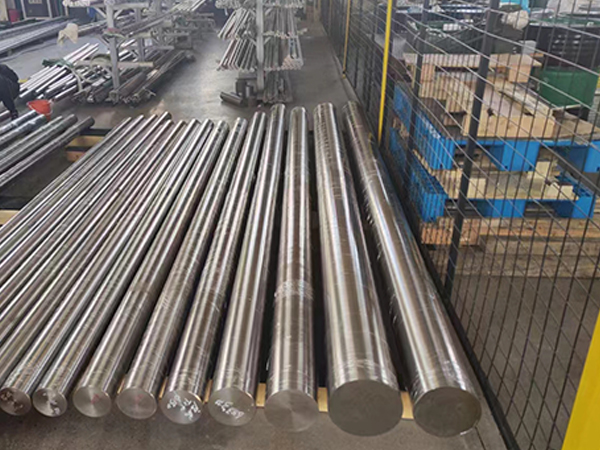
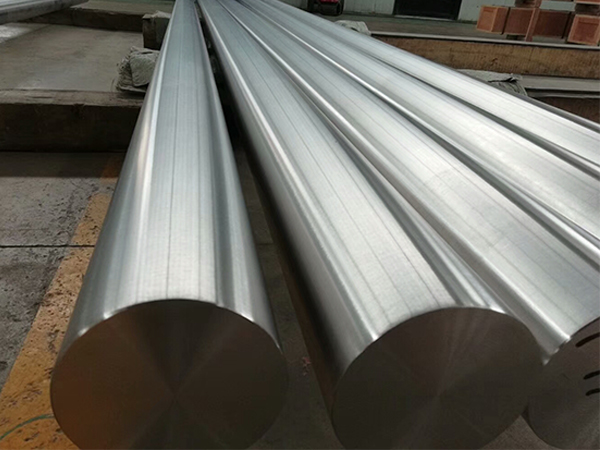
A: We stock 926 in seamless pipe, heavy plate, and large diameter round bars.
Q9. Is Incoloy 926 magnetic?
A: It is fully austenitic and remains non-magnetic even after heavy cold working.
Q10. Why choose Hangbo Alloy Group as your 926 supplier?
A: Our expertise in 6% Moly stainless steels ensures you get material that meets the tight chemical windows required for "Sea Water Resistant" certification.
This page is part of the technical guide series published by Hangbo Alloy (Shanghai Hangbo Alloy Group, nickel-alloy.com). Data presented are typical engineering values compiled from recognized industry and producer sources and are provided for material selection guidance; the governing documents for any purchase are the applicable ASTM/ASME/AMS specifications and the certified mill test report. Contact Hangbo Alloy for current stock, mill certificates, PMI verification, and application engineering support.