

Excerpt:
Incoloy 800H (UNS N08810) high-temperature technical guide from Hangbo Alloy. Explains how controlled carbon (0.05–0.10%) and a coarse ASTM-grain-size-5+ solution anneal separate 800H from plain alloy 800, gives 10,000–100,000-hour creep-rupture data from 650–980 °C, details ethylene-cracker pigtail and furnace manufacture per ASTM B409/B408/B407, and provides an import verification checklist plus technical FAQ.
Incoloy 800H (UNS N08810) — High-Temperature Creep Performance, Cracker-Furnace Pigtails, and Grade Integrity | Hangbo Alloy
Alloy Import Pitfalls Series — Technical Bulletin for Petrochemical, Refining, and Heat-Treatment Buyers
The Design Basis No Mill Certificate Ever States Directly
Most "alloy 800" confusion in the importing world comes down to one letter — the H. Alloy 800 (UNS N08800), alloy 800H (UNS N08810), and alloy 800HT (UNS N08811) share the same nickel-chromium-iron base, yet they are profoundly different materials above 540 °C. The difference is not in tensile strength at room temperature — it is in creep and rupture strength after 10,000 to 100,000 hours at 600–980 °C. If your ethylene cracker pigtails, reformer headers, or furnace hangers were designed on 800H data and your supplier ships plain 800 — or worse, a "hybrid" heat that meets no H specification — the failure mode is not a quick break. It is slow, silent, cross-sectional thinning and bulging that shows up in a scheduled outage, years later.
Hangbo Alloy (Shanghai Hangbo Alloy Group, nickel-alloy.com) supplies 800H plate, bar, pipe, and finished pigtail assemblies with full metallurgical verification of the parameters that actually control creep life: carbon, aluminum + titanium, and grain size. This page explains what those parameters do, what the creep-rupture numbers mean, and how to buy 800H so the certificate actually proves what the design assumed.
1. The 800 Family: What the Letters Control
All three grades share the same nominal base: nickel 30.0–35.0%, chromium 19.0–23.0%, iron balance (39.5% min). They are austenitic, single-phase solid-solution alloys — no deliberate precipitation hardening. Strength at temperature comes from carbon in solution, a controlled population of titanium/vanadium carbides, and a deliberately coarse grain structure that minimizes grain-boundary sliding during creep.
| Element / Attribute | Alloy 800 (N08800) | Alloy 800H (N08810) | Alloy 800HT (N08811) |
|---|---|---|---|
| Carbon | 0.10 max (typical lower) | 0.05–0.10 (controlled) | 0.06–0.10 (controlled) |
| Aluminum | 0.15–0.60 | 0.15–0.60 | 0.25–0.60 |
| Titanium | 0.15–0.60 | 0.15–0.60 | 0.25–0.60 |
| Al + Ti (combined) | 0.30–1.20 | 0.30–1.20 (special order 0.40–0.70 for 540–760 °C service) | 0.85–1.20 (tightened) |
| Grain size (final anneal) | Fine or mixed allowed | ASTM 5 or coarser (average) | ASTM 5 or coarser |
| Final heat treatment | Annealed per product spec | High-temp solution anneal ≈ 2100 °F (1150 °C) to dissolve carbon and coarsen grain | High-temp solution anneal + tight Al/Ti window |
| Primary design intent | General corrosion / moderate temperature | Creep-rupture service 540–980 °C | Highest creep strength at the top of the range (800H-allowable-plus) |
Why the carbon window matters. Carbon is the workhorse strengthener of the 800 family at temperature. At 0.05–0.10% (800H) the carbon is put into solid solution by the high-temperature anneal; during service it precipitates as fine chromium carbides that stabilize the structure against creep. Plain 800 is frequently supplied at lower carbon and finer grain — ideal for aqueous corrosion and fabricability, but measurably weaker in 100,000-hour rupture. 800HT tightens Al+Ti to 0.85–1.20% so that the fine Ti(C,N) and carbide dispersion carries even more of the load near 980 °C. ASME recognizes the hierarchy: 800HT material always meets 800H requirements, but 800H material does not automatically meet 800HT — and neither H-grade is proven by an 800 certificate.
2. Governing Specifications and Product Forms
| Product Form | ASTM | ASME | Hangbo Alloy Notes |
|---|---|---|---|
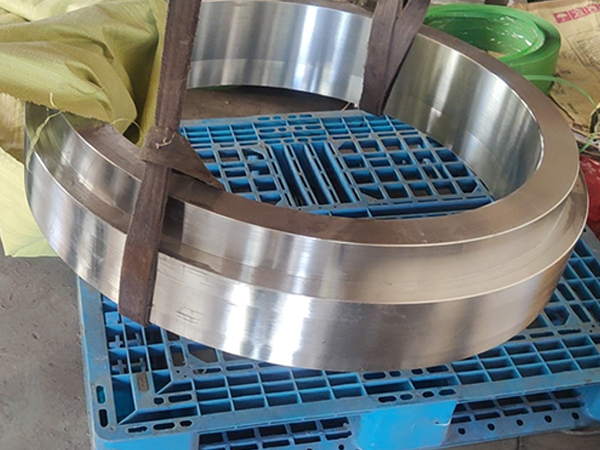
| Plate, sheet, strip | ASTM B409 | ASME SB-409 | Pressure-vessel plate to 100+ mm; descaled & pickled |
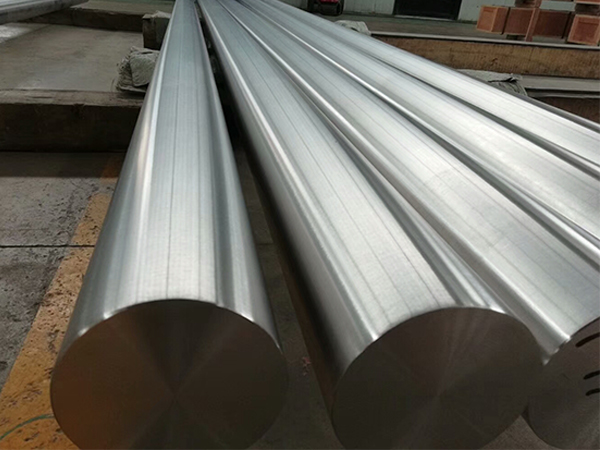
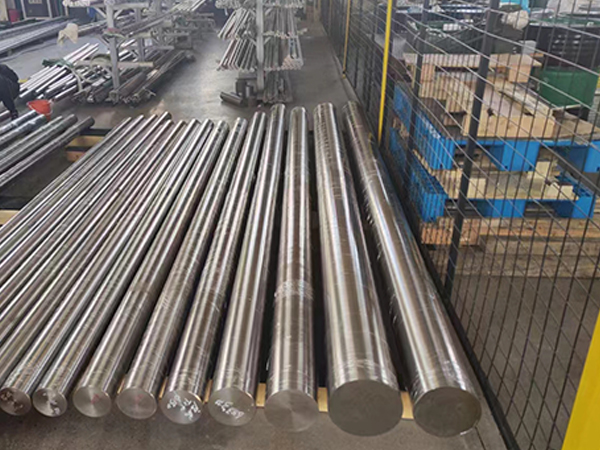
| Rod and bar | ASTM B408 | ASME SB-408 | Rounds, flats, forging-quality bar |
| Seamless pipe & tube | ASTM B407 | ASME SB-407 | Pipe 1/8"–24" NB; also B163 for heat-exchanger tube |
| Fittings / flanges | B366 (WP-grade equivalents) | SB-366 | Wrought fittings per MSS/ASME |
| Pigtails & furnace assemblies | Customer spec + B407/B163 | — | Bent, welded, and hydro-tested per project |
For pressure-boundary design, 800H is recognized by the ASME Boiler and Pressure Vessel Code: Section I and Section VIII Division 1 construction is permitted to 1500 °F (816 °C) (with Code Case history extending coverage), and Division 1 coverage to 1800 °F (982 °C) exists via Code Case 1983. Always confirm the edition year and code case your project engineer is citing — allowable stresses are temperature-and-code-case dependent.
3. Creep and Rupture: Reading the 10,000–100,000 Hour Table
Creep is time-dependent plastic strain under sustained stress at elevated temperature. Designers of fired equipment use rupture strength — the stress that causes failure at a given temperature and life (e.g., 100,000 hours ≈ 11.4 years of continuous operation). The table below gives typical average rupture stresses for 800H established from long-time testing and reproduced in the alloy's engineering literature.
| Temperature | 10,000 h | 30,000 h | 50,000 h | 100,000 h |
|---|---|---|---|---|
| °F / °C | ksi | MPa | ksi | MPa |
| 1200 / 650 | 17.5 | 121 | 15.0 | 103 |
| 1300 / 705 | 11.0 | 76 | 9.5 | 66 |
| 1400 / 760 | 7.3 | 50 | 6.3 | 43 |
| 1500 / 815 | 5.2 | 36 | 4.4 | 30 |
| 1600 / 870 | 3.5 | 24 | 3.0 | 21 |
| 1700 / 925 | 1.9 | 13 | 1.6 | 11 |
| 1800 / 980 | 1.2 | 8.3 | 1.0 | 6.9 |
How to read this table like a design engineer:
- At 650 °C, 800H holds 90 MPa for 100,000 hours — roughly the stress in a moderately pressurized tube wall.
- At 870 °C and above, allowable stresses collapse toward single-digit MPa; this is why heavy-wall, low-stress furnace components (pigtails, outlet manifolds, radiant tubes) are sized on creep rather than on tensile data.
- The 980 °C row is the practical ceiling for 800H in load-bearing pyrolysis duty; above this, designers move to 800HT or higher-alloy systems.
Larson–Miller parameter plotting (and its refined Graham–Walles variants) is how manufacturers extrapolate 10,000-hour test data out to 100,000-hour design lives. When Hangbo Alloy qualifies a heat of 800H, we verify the coarse-grain anneal and carbon level that make those extrapolations valid for your heat — because rupture data are statistical averages, and heat-to-heat scatter is real.
4. Why Grain Size Is a Purchase Specification, Not a Curiosity
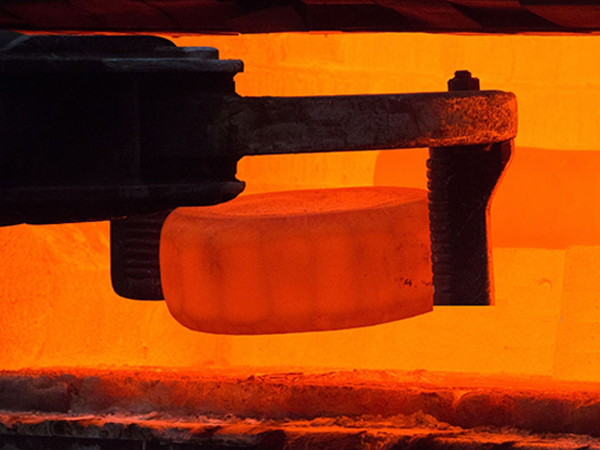
The high-temperature solution anneal (on the order of 2100 °F / 1150 °C) that produces ASTM grain size 5 or coarser is the single most inspected feature of 800H bar and tube. Fine grains maximize short-term tensile strength and fatigue life; coarse grains minimize grain-boundary sliding and maximize creep resistance. The two requirements conflict, which is exactly why 800H cannot be made by "annealing 800 a little hotter." Hangbo Alloy's mill procedure locks the final anneal temperature, soak time, and cooling practice per heat, and reports the resulting grain size on the certificate.
5. Cracker-Furnace Pigtail Manufacture: Where Creep Data Meets Fabrication Reality
Ethylene cracker furnaces pyrolyze ethane/naphtha at coil outlet temperatures of 850–900 °C. The pigtails — the small-bore return bends connecting radiant coils to the transfer-line exchanger — live in the hottest mechanical envelope of the furnace. They must resist creep deformation, thermal fatigue from decoking cycles, and carburization from the process gas, all in thin wall sections.
The manufacturing sequence Hangbo Alloy controls for pigtail supply:
| Stage | Critical Control | Why It Matters |
|---|---|---|
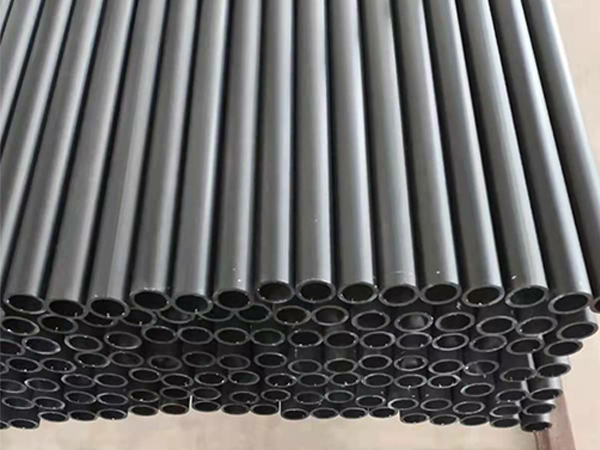
| Tube sourcing | B407/B163 seamless 800H, coarse grain verified | Creep life originates in the tube, not the bend |
| Hot bending | Temperature within 800H hot-forming range (870–1200 °C), no overheating, controlled finish temperature | Overheating coarsens grain beyond design; underheating cracks |
| Solution anneal after forming | Full high-temperature anneal restoring grain + dissolving work-induced carbide | Bends must match straight-tube creep properties |
| Welding | Matching 800H-class filler (ERNiCr-3 or 82-type as specified), low-heat-input technique | Weld HAZ must not become the weak link |
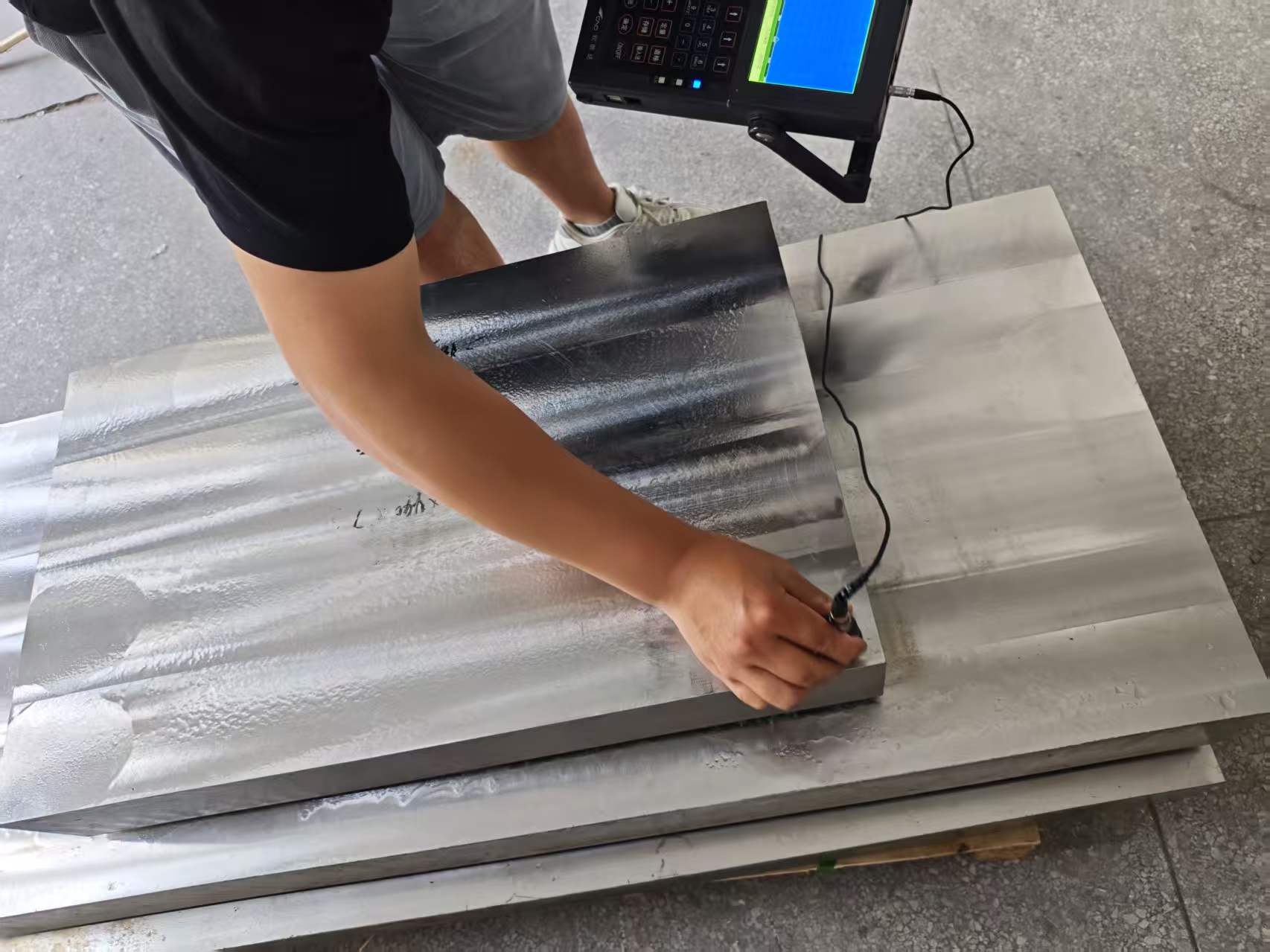
| Dimensional & NDT | Dye penetrant + radiography or ECT; wall-thickness survey at extrados | Thin extrados = early creep failure site |
| Hydro test & documentation | Pressure test, MTC, weld maps, heat-lot traceability | Owner/inspector sign-off requires full paper trail |
The import pitfall: cold-bent "800H" pigtails that skip the post-bend solution anneal retain a worked, partially recrystallized structure whose rupture strength at 900 °C is unpredictable. A cheap pigtail is the most expensive component in the furnace when it bulges into the refractory after 40,000 hours. Insist on the anneal record, the grain-size report, and bend-extrados wall-thickness readings.
6. Oxidation, Carburization, and Sulfidation Context
800H's high chromium content forms a protective Cr₂O₃ scale; nickel enhances scale adhesion under thermal cycling. The family resists internal oxidation far better than straight nickel-chromium alloys because the iron content (≈46%) suppresses the internal-oxidation embrittlement mechanism. Comparative furnace-exposure and gas-carburization testing positions 800H/800HT ahead of Type 310 and Type 330 stainless in carburizing environments, though behind higher-nickel alloys such as 600/601 in the most aggressive nitriding and sulfidizing services. For an ethylene cracker, that balance — creep strength, carburization resistance, thermal-fatigue tolerance, and code recognition — is precisely why 800H remains the default pigtail/header metallurgy.
7. Import Verification Checklist for 800H
| Check | Acceptance Criterion | Hangbo Alloy Practice |
|---|---|---|
| UNS and product spec | N08810 + B409/B408/B407 as applicable | Confirmed at quotation and again at dispatch |
| Carbon content | 0.05–0.10% (800H); 0.06–0.10% (800HT) | Reported per heat on EN 10204 3.1 MTC |
| Al + Ti | 800H: 0.30–1.20 (Al and Ti each 0.15–0.60); 800HT: 0.85–1.20 | Element-level reporting, not "balance" |
| Grain size | ASTM 5 or coarser after final anneal | Micrograph + report included |
| Solution-anneal temperature | ≈ 2100 °F (1150 °C) class, documented | Furnace logs archived by heat |
| Product form spec | B127-style confusion avoided — plate is B409, bar is B408, pipe is B407 | Cross-checked against PO line items |
| 800HT claim | Must also meet 800H — never the reverse | Grade verified, not assumed |
Technical FAQ — Incoloy 800H (UNS N08810)
1. What is the difference between Incoloy 800, 800H, and 800HT?
All three share the same Ni-Cr-Fe base, but 800H (N08810) and 800HT (N08811) add controlled carbon (0.05–0.10%) and a coarse-grain (ASTM 5+) solution anneal for creep strength. 800HT tightens the aluminum-plus-titanium range to 0.85–1.20% for the highest rupture strength near 980 °C. Plain 800 is a general-purpose grade and must not be substituted where 800H data were used in design.
2. What is the creep-rupture strength of Incoloy 800H at 600–980 °C?
Typical average 100,000-hour rupture stresses fall from about 90 MPa at 650 °C to roughly 5.5 MPa at 980 °C; intermediate values at 10,000/30,000/50,000/100,000 hours are tabulated in Section 3 of this page. These are average values — code allowable stresses include safety factors and are lower.
3. Which ASTM specification covers Incoloy 800H plate, bar, and pipe?
ASTM B409 (plate/sheet/strip), ASTM B408 (rod/bar), and ASTM B407 (seamless pipe/tube), with ASME SB parallels. Heat-exchanger tubing is commonly ordered to ASTM B163. Hangbo Alloy certifies each form to its own specification.
4. Why must Incoloy 800H have a coarse grain size for high-temperature service?
Creep deformation proceeds largely by grain-boundary mechanisms; coarse grains reduce the total boundary area available for sliding and diffusion-assisted cavitation, raising rupture life. The controlled-carbon chemistry plus a high-temperature solution anneal produces the ASTM 5-or-coarser structure that creep design data assume.
5. What are pigtail tubes in an ethylene cracker, and why is 800H used for them?
Pigtails are the small-bore return bends linking radiant coils to the transfer-line heat exchanger in pyrolysis furnaces. They operate near 850–900 °C under creep and thermal-fatigue loading in carburizing process gas — a combination 800H's creep strength, oxidation resistance, and code recognition handle cost-effectively. Manufacturing must preserve the solution-annealed microstructure after bending.
6. Can Incoloy 800 be upgraded to 800H by heat treatment alone?
No. 800H requires a controlled carbon content (0.05–0.10%) that an ordinary 800 heat may not have, plus the coarse-grain anneal. Heat-treating low-carbon 800 stock cannot create 800H chemistry. Verify the UNS on the MTC, not the name in the email.
7. Is Incoloy 800H resistant to carburization in furnace atmospheres?
It has good carburization resistance — better than 310/309/304 stainless in high-temperature methane-hydrogen exposures — because of its high nickel content. For the most severe carburizing or nitriding duties, higher-nickel alloys (600, 601) may still be preferred.
8. What temperature limit applies to Incoloy 800H pressure parts?
ASME Section VIII Division 1 construction is permitted to 1500 °F (816 °C) with extended coverage to 1800 °F (982 °C) available through code case; Section I rules and code cases (e.g., the 1325 series) govern boiler applications. Confirm the applicable code case and edition with your engineer.
9. Does 800HT automatically meet 800H requirements?
Yes. Material supplied as 800HT (N08811) meets the ASME definition of 800H (N08810), so it can substitute upward. The reverse is not true: ordinary 800H lacks the tightened Al+Ti window, and 800 lacks both the carbon control and grain-size requirement.
10. How does Hangbo Alloy verify that a heat of 800H will actually perform in creep service?
We verify the three metallurgical drivers on every heat — carbon within 0.05–0.10%, Al+Ti per grade, and ASTM grain size 5 or coarser after the documented high-temperature anneal — and retain furnace logs and micrographs per heat number. Combined with the EN 10204 3.1 certificate and third-party inspection, this gives your design engineer the assurance that the tabulated rupture data apply to your material.
Alloy Import Pitfalls Series — Hangbo Alloy (Shanghai Hangbo Alloy Group, nickel-alloy.com). Rupture and property data are typical engineering values from recognized industry literature and are intended for material selection; final design must use code-allowable stresses from the governing ASME/ASTM documents. Contact Hangbo Alloy for 800H/800HT stock, pigtail fabrication services, and certified mill documentation.