


Excerpt:
Nimonic 95 (UNS N13021) supplier — high cobalt content for maximum creep strength above 900°C. Gas turbine blades, vanes, nozzle guide vanes in demanding aerospace engines.
Grade & Introduction
Nimonic 95 (UNS N07095) is a high-performance precipitation-hardenable nickel-cobalt-chromium superalloy, representing an advanced evolution of the Nimonic 90 series. Through controlled additions of Cobalt (~16%), Aluminum, and Titanium, this alloy is specifically designed for structural components in gas turbine engines that demand exceptional creep-rupture strength and fatigue resistance at operating temperatures up to 900°C (1650°F). Shanghai Hangbo Alloy Group supplies Nimonic 95 as precision-machined bars, seamless tubes, and custom forgings, primarily for aerospace and power generation sectors where structural integrity under extreme thermal load is non-negotiable.
Applicable Standards
Our Nimonic 95 products are produced to meet stringent aerospace and industrial requirements, including:
- BS HR 502: British Standard for nickel-cobalt-chromium-titanium-aluminium heat-resisting alloy
- ASTM B622: Standard Specification for Seamless Nickel and Nickel-Cobalt Alloy Pipe and Tube
- ASTM B621: Standard Specification for Nickel-Iron-Chromium-Molybdenum-Columbium Alloy Rod
- ASME Section IX: Qualification standards for specialized superalloy welding
- ISO 15156: Requirements for materials in H2S-containing environments (where applicable)
Chemical Composition
The chemical profile of Nimonic 95 is balanced to maximize the gamma-prime (γ') volume fraction for superior high-temperature performance.
| Element | Ni | Cr | Co | Ti | Al | Fe | C |
|---|---|---|---|---|---|---|---|
| Min (%) | Bal. | 18.0 | 15.0 | 2.3 | 1.5 | -- | 0.12 |
| Max (%) | -- | 21.0 | 20.0 | 2.9 | 2.1 | 3.0 | 0.20 |
Mechanical & Physical Properties
Nimonic 95 is characterized by its high hardness and remarkable creep strength; typical/reference values (fully aged) are provided:
| Tensile Strength (RT) | ≥ 1100 MPa (160 ksi) |
| Yield Strength (0.2% Offset) | ≥ 780 MPa (113 ksi) |
| Hardness (Aged) | 300 – 380 HV |
| Density | 8.14 g/cm³ (0.294 lb/in³) |
| Melting Range | 1330 – 1390 °C |
| 100h Rupture Stress (at 800°C) | Typical ~300 MPa |
Material Characteristics
- Superior Creep Resistance: Advanced γ' precipitation hardening ensures the alloy maintains structural form under sustained high stress at elevated temperatures.
- High Fatigue Life: Exceptional resistance to thermal and mechanical fatigue, critical for cyclic loading in engine components.
- Good Oxidation Resistance: Chromium and Aluminum additions form a tenacious protective scale that resists hot gas corrosion.
- Excellent Structural Stability: Resists microstructural coarsening even during long-term exposure to operating temperatures up to 900°C.
Manufacturing / Processing
At Shanghai Hangbo Alloy Group, Nimonic 95 is produced using Vacuum Induction Melting (VIM) followed by Vacuum Arc Remelting (VAR) or Electroslag Refining (ESR). This double-melt process ensures ultra-clean material free from trace contaminants. The material requires a multi-stage heat treatment: solution treatment at ~1150°C to dissolve precipitates, followed by dual-stage aging (typically at 850°C and 700°C) to develop the optimal γ' distribution for maximum strength.
Testing & Quality Control
Nimonic 95 orders undergo the most rigorous quality verification in our laboratory:
- Creep-Rupture Testing: Verification of time-to-rupture at elevated temperatures per individual project requirements.
- Microstructural Evaluation: Confirmation of grain size and γ' precipitate morphology via high-resolution microscopy.
- Ultrasonic Testing (UT): 100% scanning of all bars and forgings to detect internal discontinuities.
- Chemistry Control: Precise interstitial and trace element analysis via ICP-OES to ensure compliance with BS HR 502.
Applications
- Aerospace Engines: Turbine blades, discs, and rings where maximum creep resistance is mandatory.
- Industrial Gas Turbines: High-stress hot-section components for land-based power generation.
- Nuclear Reactors: Structural supports and internal components in high-temperature gas-cooled reactors.
- High-Performance Fasteners: Bolts and nuts for turbine assembly requiring zero relaxation at 800°C+.
Pros & Cons
| Pros | Cons |
|---|---|
| One of the strongest wrought Nimonic grades at 800°C+. | Extremely difficult to machine due to high work-hardening rates. |
| Excellent long-term microstructural stability. | Requires complex, multi-stage heat treatment to reach full properties. |
| Reliable fatigue performance in harsh thermal environments. | High production cost due to Cobalt content and specialized melting. |
6 Professional FAQs
Q1: How does Nimonic 95 differ from Nimonic 90?
A: Nimonic 95 has higher Cobalt and Titanium additions, which provide superior creep-rupture properties at temperatures roughly 50°C higher than Nimonic 90.
Q2: Is Nimonic 95 weldable?
A: Welding is difficult due to the high γ' volume fraction, making it prone to strain-age cracking. It is generally joined by friction welding or electron beam welding in specialized facilities.
Q3: What is the maximum service temperature for Nimonic 95?
A: It is designed for peak structural performance up to 900°C (1650°F), with short-term excursions possible depending on the stress level.
Q4: Can Nimonic 95 be used for automotive valves?
A: Yes, it is used for ultra-high-performance racing exhaust valves where Nimonic 80A or 90 do not provide sufficient strength.
Q5: What is the typical grain size for Nimonic 95 forgings?
A: At Shanghai Hangbo, we typically target an ASTM grain size of 4-6 to balance creep resistance and fatigue strength, depending on the component geometry.
Q6: Is MTC provided with Nimonic 95 orders?
A: Absolutely. Every shipment is accompanied by a full Mill Test Certificate per EN 10204 3.1, including chemistry, mechanical properties, and heat treatment logs.
Related Product Supply List
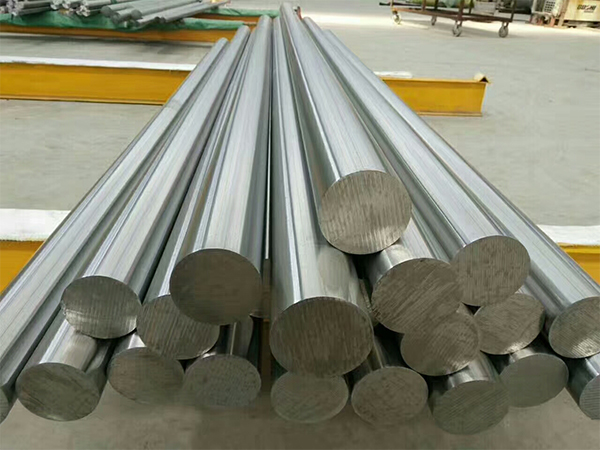
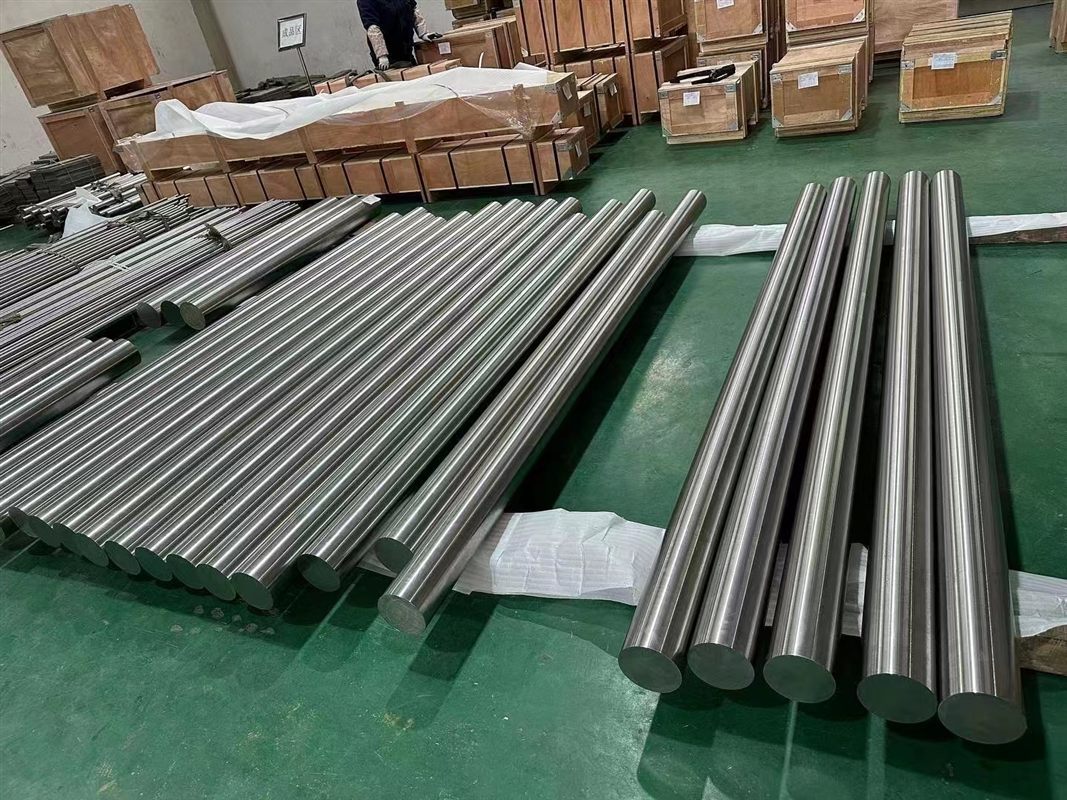
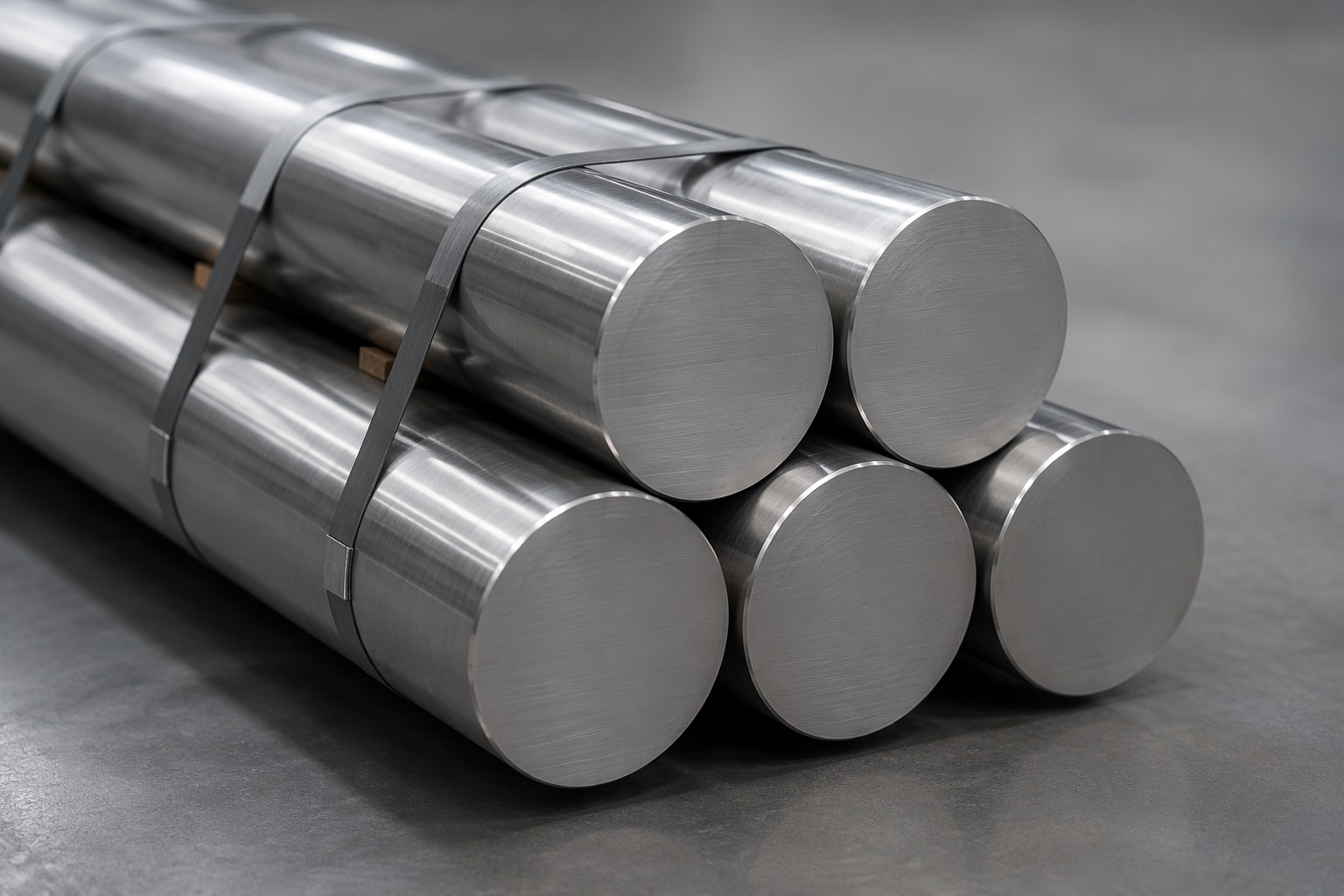
- Precision Bars: Diameter 10mm – 200mm, centerless ground and polished.
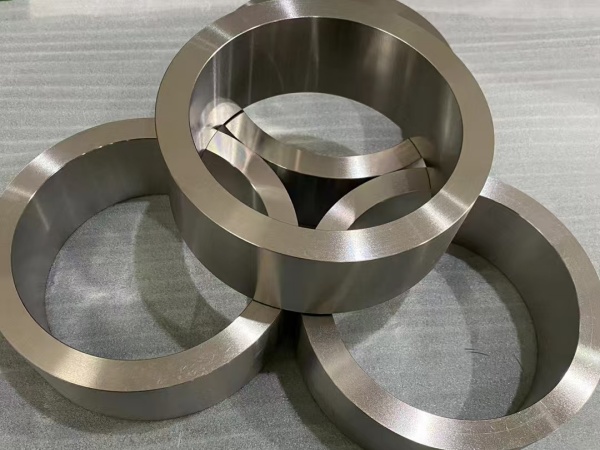
- Custom Forgings: Turbine discs, shaft ends, and rings per blueprint.
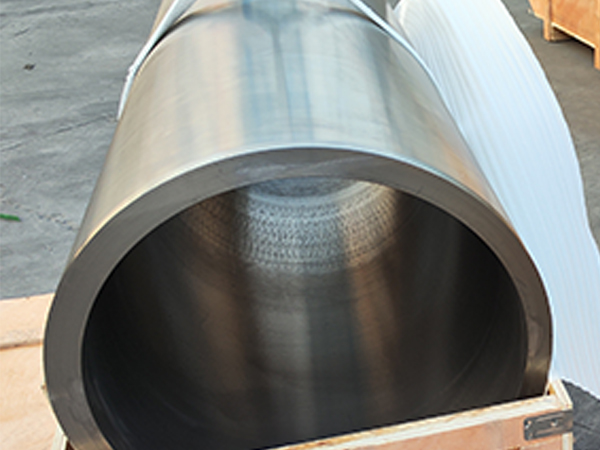
- Seamless Tubes: Small diameter instrumentation or fuel tubes.
- Cold-Drawn Wire: For specialized spring and fastener manufacturing.
- Machined Components: Finished parts according to aerospace tolerances.