

Excerpt:
Incoloy 800 (UNS N08800) technical guide from Hangbo Alloy: the founding nickel-iron-chromium alloy (32% Ni, 21% Cr) combining elevated-temperature strength, creep resistance and oxidation stability. ASTM B409/B408/B407 plate, bar and tube with DIN equivalents, plus fabrication and heat-treatment guidance for petrochemical service.
Incoloy 800 (UNS N08800): The Proven Baseline of High-Temperature Nickel-Iron-Chromium Alloys | Hangbo Alloy
Introduction
Incoloy 800, UNS N08800, is the founding member of the Incoloy family and the reference point for the entire nickel-iron-chromium class of high-temperature alloys. With roughly 32 % nickel, 21 % chromium, and an iron balance, the alloy occupies a deliberate position between stainless steel and the high-nickel Inconel grades: it delivers the elevated-temperature strength, creep resistance, and oxidation resistance required by petrochemical furnaces and power-plant heat exchangers, while remaining far more economical than alloys with nickel contents above 50 %.
Incoloy 800 was introduced in the 1950s and quickly became the standard material for high-temperature heat-exchanger tubing, furnace hardware, and process piping. Its metallurgical descendants, Incoloy 800H (UNS N08810) and Incoloy 800HT (UNS N08811), refined through carbon control and grain-size engineering, became the premier materials of the ammonia, methanol, and hydrogen industries, where reformer outlet manifolds and pigtails operate at 800–900 °C under internal hydrogen pressure for design lives of 100,000 hours and more. This article explains the metallurgy of Incoloy 800, its properties and corrosion behavior, its relationship to the 800H and 800HT variants, and its fabrication, with reference to ASTM B407 and ASTM B408.
Hangbo Alloy manufactures Incoloy 800, 800H, and 800HT in pipe, tube, plate, sheet, strip, bar, and forgings, exporting worldwide through nickel-alloy.com.
Chemical Composition
| Element | Incoloy 800 (N08800) | Incoloy 800H (N08810) | Incoloy 800HT (N08811) |
|---|---|---|---|
| Nickel (Ni) | 30.0 – 35.0 | 30.0 – 35.0 | 30.0 – 35.0 |
| Chromium (Cr) | 19.0 – 23.0 | 19.0 – 23.0 | 19.0 – 23.0 |
| Iron (Fe) | 39.5 min. | 39.5 min. | 39.5 min. |
| Carbon (C) | 0.10 max. | 0.05 – 0.10 | 0.06 – 0.10 |
| Aluminum + Titanium | 0.15 – 0.60 | 0.15 – 0.60 | 0.85 – 1.20 |
| Manganese (Mn) | 1.5 max. | 1.5 max. | 1.5 max. |
| Sulfur (S) | 0.015 max. | 0.015 max. | 0.015 max. |
| Silicon (Si) | 1.0 max. | 1.0 max. | 1.0 max. |
| Copper (Cu) | 0.75 max. | 0.75 max. | 0.75 max. |
| Aluminum (Al) | 0.15 – 0.60 | 0.15 – 0.60 | 0.25 – 0.60 |
| Titanium (Ti) | 0.15 – 0.60 | 0.15 – 0.60 | 0.60 – 1.20 |
Why Nickel and Chromium at These Levels?
The composition of Incoloy 800 is optimized for a specific engineering problem: components that must carry load at 600–900 °C in oxidizing or mildly carburizing process gases for decades. Nickel provides the austenitic matrix, high-temperature strength, resistance to thermal fatigue, and immunity to chloride stress-corrosion cracking in the aqueous portions of service; it also suppresses sigma-phase embrittlement. Chromium at 19–23 % forms the protective chromia scale that gives the alloy its oxidation resistance, and provides internal-oxidation resistance in steam and hydrogen service. Iron — over 39 % — is the economical balance that distinguishes Incoloy from the Inconel grades, and its high level does not degrade the alloy's oxidation performance at the intended service temperatures.
The 800H and 800HT Refinements
Standard Incoloy 800 serves superheater and heat-exchanger duty to roughly 600–650 °C. When design temperatures rise into the creep range, the microstructure must be engineered. Creep resistance in austenitic alloys is maximized by a coarse, stable grain size because grain boundaries slide and cavitate under creep loading. The 800H grade therefore restricts carbon to 0.05–0.10 % (enough to pin boundaries with carbides but not enough to embrittle) and is supplied after a high-temperature solution anneal (typically above 1150 °C) that guarantees an ASTM grain size of 5 or coarser. Incoloy 800HT goes further, raising the aluminum-plus-titanium content to 0.85–1.20 % so that fine titanium-carbide and gamma-prime-type precipitates provide additional long-term strengthening, again with the mandatory coarse grain size. These three grades are thus one alloy family engineered to a temperature ladder: 800 for moderate heat, 800H for creep-dominated service, and 800HT for the most demanding combination of creep and oxidation.
Mechanical and Physical Properties
| Property | Incoloy 800 (Annealed) |
|---|---|
| Tensile Strength, Rm | 517 MPa (75 ksi) min. |
| Yield Strength, Rp0.2 | 207 MPa (30 ksi) min. |
| Elongation in 50 mm | 30 % min. |
| Density | 7.94 g/cm³ |
| Melting Range | 1357 – 1385 °C |
| Modulus of Elasticity (RT) | 196.5 GPa |
| Thermal Conductivity (RT) | 11.5 W/(m·K) |
| Coefficient of Expansion (20 – 100 °C) | 14.4 µm/(m·K) |
| Electrical Resistivity | 0.99 µΩ·m |
| Magnetic Permeability | < 1.02 (non-magnetic) |
| Maximum Continuous Service (oxidation) | ~980 °C (800), higher for short excursions |
Per ASTM B407, the hot-finished-or-annealed minimums for 800H pipe and tube are lower in tensile and yield (448 MPa and 172 MPa respectively) because of the deliberately coarse grain, while stress-rupture strength is substantially higher — the property that actually matters in furnace service.
Stress-to-Rupture Comparison (typical values)
| Temperature (°C) | Stress for 10,000 h Rupture, Incoloy 800 (MPa) | Incoloy 800H / 800HT (MPa) |
|---|---|---|
| 650 | 110 | 130 |
| 700 | 70 | 95 |
| 760 | 42 | 60 |
| 815 | 25 | 38 |
| 870 | 15 | 22 |
| 980 | 6 | 9 |
The coarse-grained 800H/800HT grades show roughly 30–50 % higher creep-rupture strength than standard 800 at the same temperature — the metallurgical justification for specifying them in reformer and pyrolysis service.
Elevated-Temperature Tensile (typical, 800)
| Test Temperature (°C) | Tensile Strength (MPa) | Yield Strength (MPa) | Elongation (%) |
|---|---|---|---|
| 20 | 590 – 660 | 240 – 310 | 40 – 50 |
| 540 | 520 – 580 | 180 – 220 | 35 – 45 |
| 650 | 450 – 520 | 160 – 200 | 35 – 45 |
| 760 | 320 – 400 | 120 – 160 | 45 – 60 |
| 870 | 200 – 260 | 80 – 110 | 55 – 75 |
Oxidation and Corrosion Resistance
High-Temperature Oxidation
Incoloy 800 resists oxidation in air and combustion gases continuously to approximately 980 °C, with useful behavior to 1090 °C for light sections and short exposure. The chromia scale is adherent and reheals readily; the moderate nickel content also confers good resistance to the alternating oxidation/carburization seen in steam-hydrocarbon service. In steam, the alloy forms a protective, slow-growing oxide and is extensively used for superheater and reheater tubing in conventional and nuclear power plants, where 800H/HT also bring code-approved creep strength at 700 °C and above.
Carburization and Nitriding
In the ethylene-pyrolysis furnaces that operate at 900–1100 °C coil-metal temperatures, Incoloy 800H and 800HT resist carburization better than the heat-resistant stainless castings of the HK and HP families, and they maintain higher ductility after long service, permitting coil life extension and decoking without embrittlement failure. Where carburization is extreme or the metal temperature exceeds ~1050 °C, the chromium-rich Inconel 600/601 family or centrifugally cast HP-modified alloys are typically preferred.
Aqueous Corrosion
In wet service, Incoloy 800's high nickel content gives immunity to chloride stress-corrosion cracking, allowing its use in heat exchangers with chloride-bearing cooling water where stainless steel tubes would fail. It resists nitric acid, organic acids, and high-purity water excellently (a long history in nuclear steam generators and feedwater heaters), but it is not intended for reducing acids such as hydrochloric or hot dilute sulfuric acid — for those, Hangbo Alloy supplies Incoloy 825 or the molybdenum-bearing grades.
Fabrication and Welding
- Welding: Incoloy 800 welds readily by all conventional processes. AWS A5.14 ERNiCr-3 (Filler Metal 82) wire and AWS A5.11 ENiCrFe-2/ENiCrFe-3 electrodes are the standard fillers, selected because their nickel content exceeds that of the base metal, maintaining strength and corrosion margins across the joint. For 800H/HT furnace components, welding must not destroy the coarse-grained creep-resistant structure of the base metal: heat input is controlled and post-weld solution annealing is generally avoided; design places welds in lower-temperature or lower-stress locations where possible.
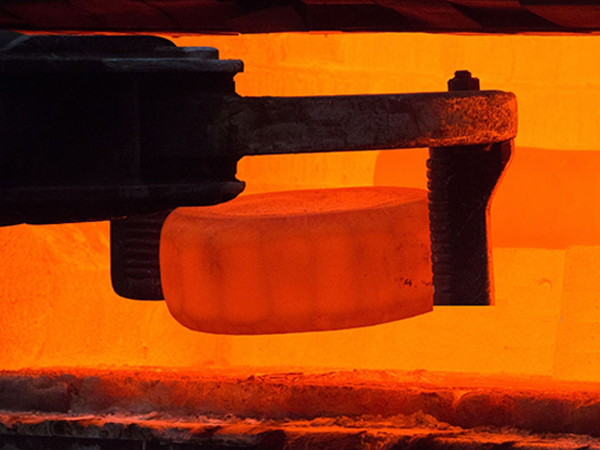
- Hot working: 927–1205 °C, with finishing above 927 °C. Because grain size governs 800H/HT creep life, hot forming of those grades is followed by the specification annealing treatment to restore the required coarse grain.
- Cold forming: The annealed alloy has excellent ductility for tube bending and coil forming; heavy cold work requires intermediate anneals.
- Machining: Conventional; the alloy is tougher than stainless steel but not gummy. Rigid setups, sharp tools, and coolant are recommended.
Standards and Product Forms
| Specification | Scope |
|---|---|
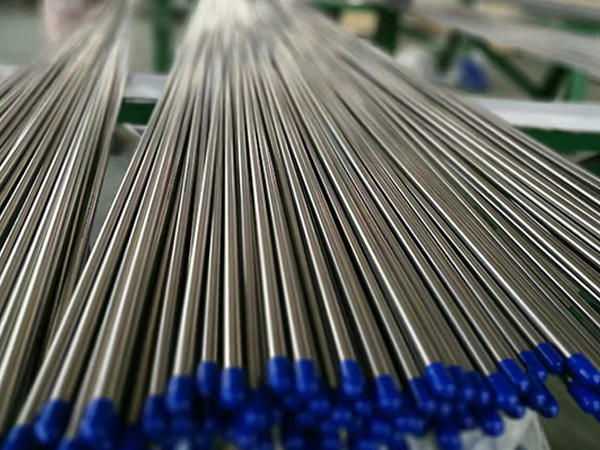
| ASTM B407 | Seamless and welded pipe and tube (800, 800H, 800HT) |
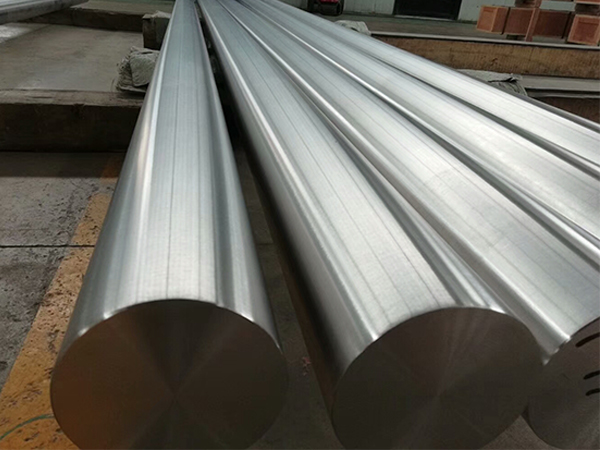
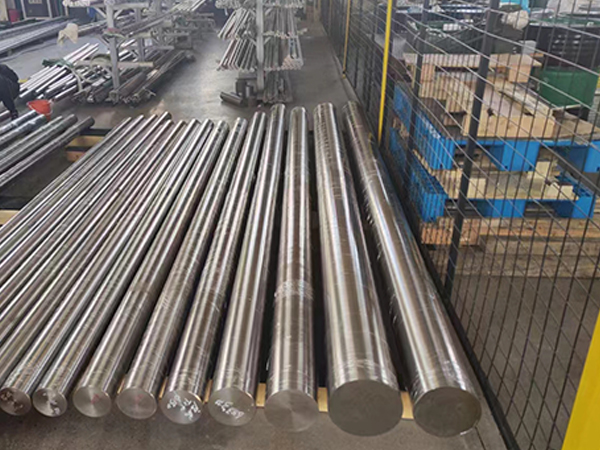
| ASTM B408 | Bar, rod, and forgings |
| ASTM B409 | Plate, sheet, and strip |
| ASTM B163 | Condenser and heat-exchanger tube |
| ASME SB-407 / SB-408 / SB-409 | Code versions |
| ASTM B366 | Welded fittings (WP800 / WP800H / WP800HT) |
| ISO 6208 / DIN 17460 | European equivalents |
| VdTÜV 431 | German pressure-vessel approval for 800H/HT |
Applications Overview
| Industry | Representative Applications |
|---|---|
| Petrochemical | Steam-hydrocarbon reformer outlet manifolds, pigtails, transfer lines; ethylene-pyrolysis furnace tubes (800H/HT) |
| Power generation | Superheater and reheater tubing, feedwater heaters, steam-generator tubing |
| Nuclear | Steam-generator tubes, pressurizer and feedwater hardware |
| Heat treating | Furnace fixtures, radiant tubes, retorts, baskets |
| Chemical | Nitric-acid plant coolers, heat exchangers, process piping |
| Food processing | Process vessels, steam-heated equipment |
Why Choose Hangbo Alloy
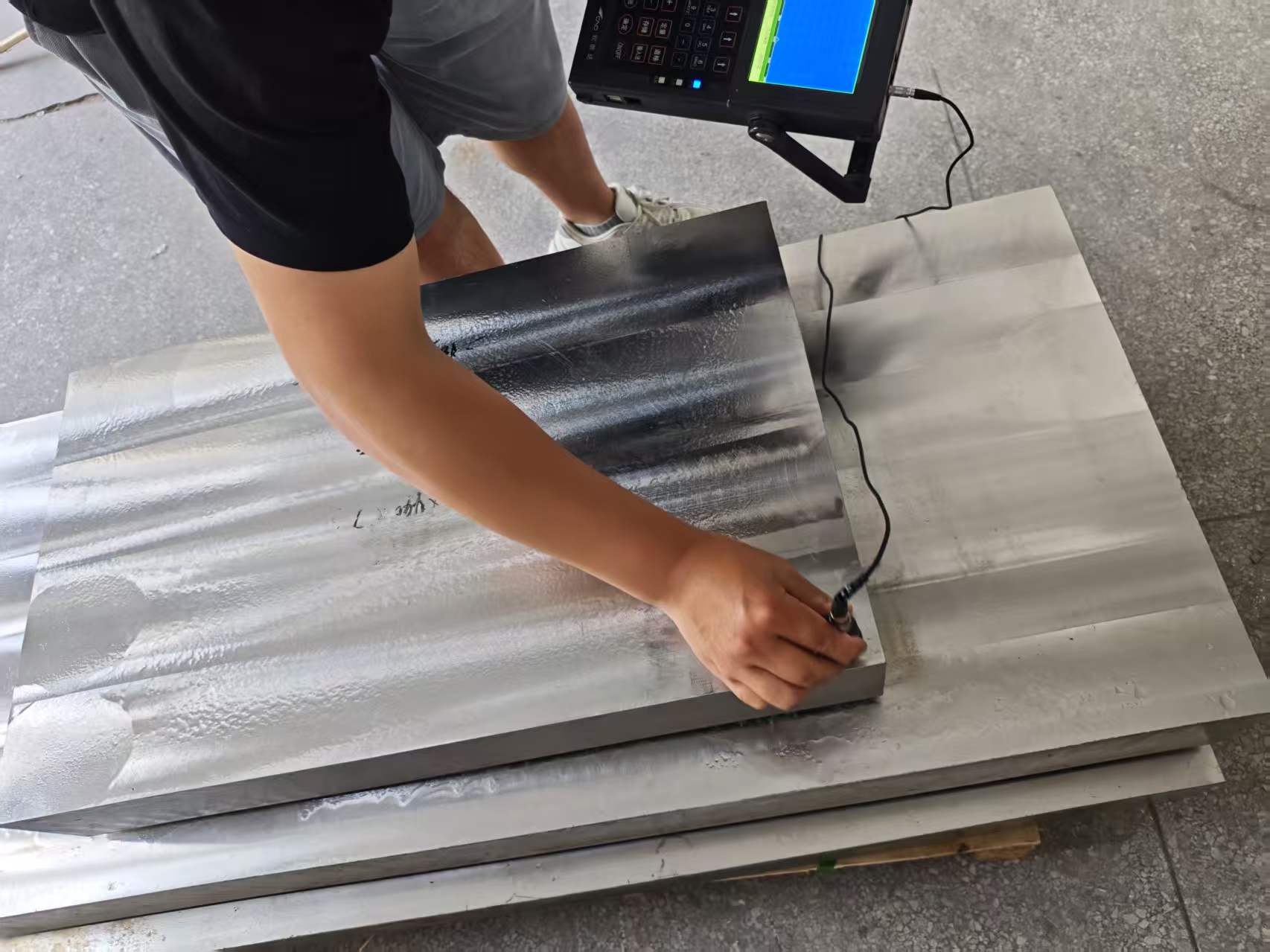
Hangbo Alloy controls the full Incoloy 800 manufacturing chain — melting with tight carbon and aluminum-plus-titanium targeting, hot rolling, seamless tube processing, and heat treatment with recorded furnace cycles. For 800H and 800HT, grain-size verification is performed on every lot to confirm the ASTM 5-or-coarser requirement. Hangbo Alloy supplies pipe, tube, bar, plate, and forgings with EN 10204 3.1 certification and supports third-party inspection by classification societies and engineering contractors worldwide through nickel-alloy.com.
Technical FAQ
Q1: What is the difference between Incoloy 800, 800H, and 800HT? Incoloy 800 is the standard grade for service to ~650 °C. 800H restricts carbon to 0.05–0.10 % and is annealed for a coarse grain (ASTM 5 or coarser), raising creep-rupture strength. 800HT additionally raises aluminum-plus-titanium to 0.85–1.20 % for the highest creep and oxidation performance.
Q2: What is the maximum service temperature of Incoloy 800? For oxidation resistance, about 980 °C continuously. For load-bearing service, creep controls: standard 800 suits ~650 °C and below, while 800H/HT carry design stresses at 800–900 °C in reformer service.
Q3: Why is Incoloy 800H coarse-grained? Creep damage accumulates at grain boundaries. A coarse grain minimizes boundary area and sliding, sharply increasing rupture life — the reason specifications mandate ASTM grain size 5 or coarser for 800H and 800HT.
Q4: Is Incoloy 800 resistant to stress-corrosion cracking? Yes, in chloride environments it is immune to SCC thanks to its 30–35 % nickel, making it a standard tube material where chloride-bearing cooling water meets hot process streams.
Q5: Can Incoloy 800 be welded without post-weld heat treatment? Yes. It is welded with nickel-based fillers (ERNiCr-3 family) and requires no PWHT for corrosion resistance. For 800H/HT creep service, welding procedure and joint location are engineered to protect the coarse-grained microstructure.
Q6: Is Incoloy 800 suitable for carburizing furnace atmospheres? It resists carburization better than heat-resistant stainless steels of equivalent cost, which is why 800H/HT tubes and manifolds are standard in ethylene pyrolysis and steam reforming. Extreme carburization duty may still demand chromium-rich or high-alloy options.
Q7: Can Incoloy 800 be used in hydrochloric acid? No. Like other chromium-only alloys it is unsuitable for reducing acids. Hangbo Alloy recommends Incoloy 825 or Hastelloy C-276 for hydrochloric acid service.
Q8: Is Incoloy 800 magnetic? No. The austenitic structure is essentially non-magnetic in all conditions.
Q9: Which specifications govern Incoloy 800? ASTM B407 (pipe and tube), ASTM B408 (bar and forgings), and ASTM B409 (plate, sheet, and strip) are the principal product standards, with ASME code versions for pressure service.
Q10: Does Hangbo Alloy supply all three grades? Yes — Hangbo Alloy produces Incoloy 800, 800H, and 800HT in seamless pipe and tube, plate, sheet, strip, bar, and forgings, with full chemistry and grain-size certification per lot.