

Excerpt:
Ti-13Nb-13Zr (UNS R58130) technical guide from Hangbo Alloy (Shanghai Hangbo Alloy Group, nickel-alloy.com). Near-beta niobium-zirconium implant alloy with a 79-84 GPa elastic modulus that limits stress shielding for load-bearing orthopedic longevity; manufactured to ASTM F1713 in bar and wire. Covers chemistry, the modulus advantage over Ti-6Al-4V ELI, corrosion resistance and biocompatibility.
Technical Whitepaper: Ti-13Nb-13Zr (UNS R58130) — Low Modulus Titanium Alloy for Advanced Medical Implants
Introduction
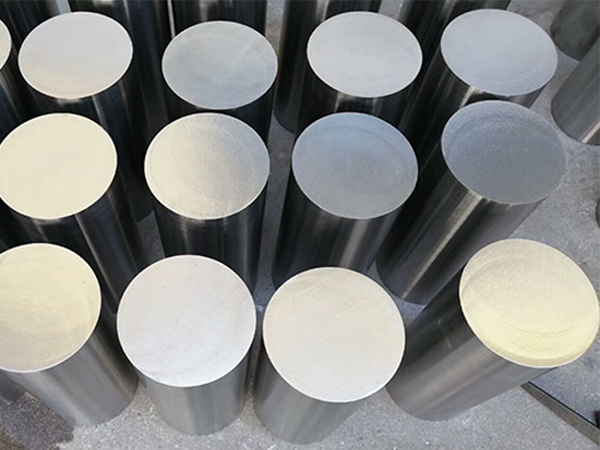
Ti-13Nb-13Zr (UNS R58130) is a near-beta titanium alloy specifically engineered for the medical device industry, particularly for load-bearing orthopedic implants. While standard alloys like Ti-6Al-4V have long been the industry workhorse, Ti-13Nb-13Zr addresses a critical limitation: the "stress shielding" effect. By offering a significantly lower modulus of elasticity that more closely mimics human bone, this alloy promotes healthier bone-to-implant integration and longevity. Shanghai Hangbo Alloy Group supplies Ti-13Nb-13Zr in various forms, including bar and wire, manufactured to the rigorous ASTM F1713 standard.
1. Chemical Composition
The alloy’s performance is derived from its high Niobium and Zirconium content, which stabilizes the beta phase and ensures complete biocompatibility by avoiding elements like Vanadium and Aluminum.
| Element | Min % | Max % | Function in Ti-13Nb-13Zr |
|---|---|---|---|
| Titanium (Ti) | Balance | Balance | Base matrix for biocompatibility and strength |
| Niobium (Nb) | 12.5 | 14.0 | Beta-stabilizer, lowers modulus, and enhances corrosion resistance |
| Zirconium (Zr) | 12.5 | 14.0 | Solid-solution strengthener and biocompatible grain refiner |
| Oxygen (O) | - | 0.15 | Controls strength and ductility (interstitial) |
| Iron (Fe) | - | 0.25 | Impurity control |
| Nitrogen (N) | - | 0.05 | Interstitial control |
2. Mechanical Properties and the "Modulus Advantage"
The defining characteristic of Ti-13Nb-13Zr is its Young's Modulus. A lower modulus reduces the stiffness of the implant, allowing the surrounding bone to share more of the mechanical load, which prevents bone resorption (stress shielding).
| Property | Ti-13Nb-13Zr (Aged) | Ti-6Al-4V (ELI) | Human Cortical Bone |
|---|---|---|---|
| Elastic Modulus (GPa) | 79 - 84 | 110 - 114 | 10 - 30 |
| Tensile Strength (MPa) | 860 - 1000 | 860 min | N/A |
| Yield Strength (MPa) | 725 - 900 | 795 min | N/A |
| Elongation (%) | 15% min | 10% min | N/A |
Ti-13Nb-13Zr offers a ~30% reduction in stiffness compared to 6Al-4V while maintaining comparable high-cycle fatigue strength.
3. Corrosion Resistance and Biocompatibility
The combination of Ti, Nb, and Zr creates an exceptionally stable passive oxide layer.
- Biocompatibility: 100% free of Al and V, which have been associated with long-term neurological and cytotoxic concerns.
- Corrosion Rate: Demonstrates superior resistance in simulated body fluids (Ringer's solution) compared to CP Titanium.
- Osseointegration: The low-modulus nature encourages faster bone apposition and a more secure biological fix.
4. Thermomechanical Processing
Achieving the desired near-beta microstructure requires precise thermal control during manufacturing at Hangbo Alloy:
1. Solution Treatment: Performed above the beta transus temperature to ensure a homogeneous structure.
2. Quenching: Rapid cooling to retain the beta phase or form martensitic alpha double-prime (α'').
3. Aging: Controlled precipitation of fine alpha phase to achieve the target strength-to-modulus ratio.
5. Typical Medical Applications
- Total Hip Arthroplasty (THA): Femoral stems and acetabular shells.
- Knee Replacements: Tibial trays and femoral components.
- Spinal Hardware: Pedicle screws, rods, and interbody cages.
- Dental Implants: For high-load posterior restorations.
- Trauma Fixation: Bone plates and intramedullary nails.
Hangbo Alloy Manufacturing Quality
Shanghai Hangbo Alloy Group ensures Ti-13Nb-13Zr performance through:
1. Vacuum Melting: Double or triple VAR (Vacuum Arc Remelting) to ensure ultra-low interstitial levels.
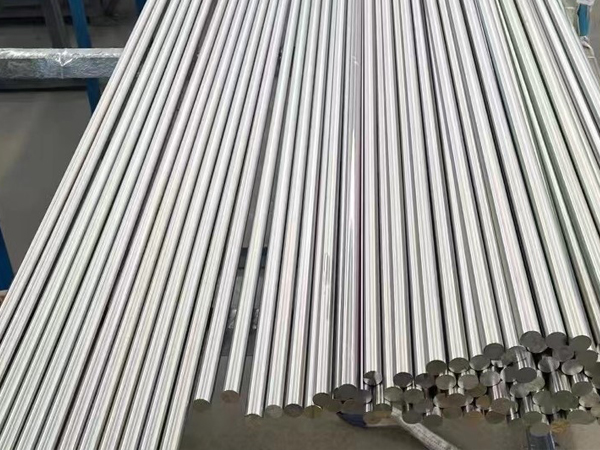
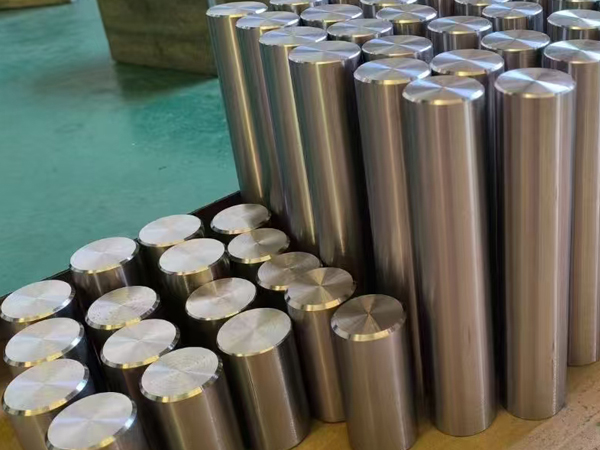
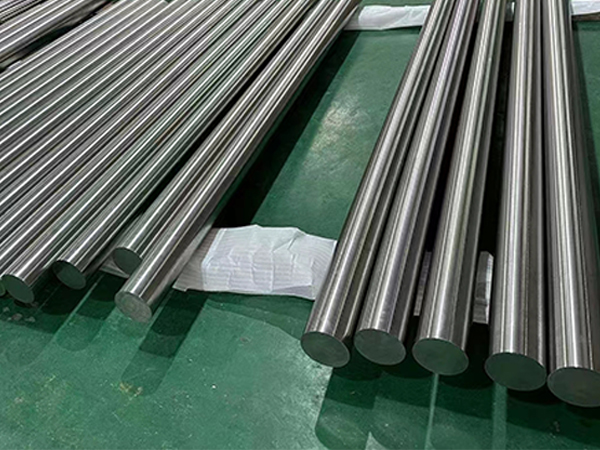
2. Surface Integrity: Centerless grinding of bars to remove any alpha-case or surface defects.
3. Certification: 100% compliance with ASTM F1713 and ISO 13485 quality systems.
Technical FAQ
-
Q: Why is Ti-13Nb-13Zr considered better than Ti-6Al-4V for implants?
A: It has a lower modulus (stiffness), which reduces bone loss due to stress shielding, and it is entirely free of potentially toxic elements like Aluminum and Vanadium. -
Q: What is the beta transus temperature for this alloy?
A: It is typically around 735°C (1355°F), significantly lower than Ti-6Al-4V, allowing for lower-temperature processing. -
Q: Can this alloy be used for aerospace applications?
A: While designed for medical use, its low modulus and high strength make it interesting for specific aerospace components where vibration damping or flexibility is required. -
Q: Is Ti-13Nb-13Zr difficult to machine?
A: It machines similarly to Ti-6Al-4V, though its lower modulus requires careful fixturing to prevent part deflection during precision cutting. -
Q: What welding techniques are suitable for R58130?
A: Laser welding and TIG welding in a high-purity argon chamber are preferred to prevent oxygen pick-up. -
Q: Does Hangbo Alloy provide Ti-13Nb-13Zr wire for 3D printing?
A: Yes, we provide high-purity wire suitable for Electron Beam Melting (EBM) and Directed Energy Deposition (DED) additive manufacturing. -
Q: How does the fatigue life compare to other medical alloys?
A: In the solution-treated and aged condition, its fatigue strength is comparable to Ti-6Al-4V ELI, typically exceeding 500 MPa in high-cycle tests. -
Q: What standard governs this material?
A: The primary standard is ASTM F1713: Standard Specification for Wrought Titanium-13Niobium-13Zirconium Alloy for Surgical Implant Applications. -
Q: Is the material available in a "super-elastic" state?
A: Depending on the cold-work and heat-treatment history, it can exhibit significant elastic recovery, though it is not a "shape memory" alloy like Nitinol. -
Q: Why choose Hangbo Alloy Group for Ti-13Nb-13Zr?
A: We specialize in small-batch, high-precision medical-grade titanium, ensuring that every bar comes with a complete MTR verified by independent lab testing.
This page is part of the Titanium Alloy Technical Reference series by Hangbo Alloy (Shanghai Hangbo Alloy Group, nickel-alloy.com). Data presented are typical engineering values compiled from recognized industry sources and are provided for material selection guidance; the governing documents for any purchase are the applicable ASTM/ISO specifications (F1713 and equivalents) and the certified mill test report. Contact Hangbo Alloy for current stock, mill certificates, and application engineering support.