

Excerpt:
Titanium Grade 15 (Ti-0.5Ni-0.05Ru, UNS R53415) technical guide from Hangbo Alloy (Shanghai Hangbo Alloy Group, nickel-alloy.com). The cost-effective ruthenium-bearing crevice-corrosion solution - 483 MPa minimum tensile with a nickel-ruthenium cathodic system replacing most of Grade 7's palladium premium. Covers ASTM B265/B348/B338 forms, chemistry, corrosion envelope and EN 10204 3.1 certified supply with PMI-verified Ru/Ni.
Titanium Grade 15 (Ti-0.5Ni-0.05Ru / UNS R53415) — Plate, Bar and Tube Technical Guide | Hangbo Alloy
Technical Bulletin for Chemical Process, Heat-Exchanger, and Seawater Engineering Procurement
Introduction
Commercially pure titanium is the reference material for chloride service, but every titanium specifier eventually meets the same wall: hot chloride crevices. Wherever a flange face, a tube-to-tubesheet joint, a gasket seat, or a weld backing ring creates a tight, oxygen-starved gap in brine above roughly 70 – 80 °C, the protective TiO₂ passive film on unalloyed titanium can break down, and localized attack follows. The classic remedy — adding 0.12–0.25% palladium, as in Grade 7 — works superbly but is expensive, because palladium is a precious metal whose price dominates the alloy premium. Titanium Grade 15 (UNS R53415) is the engineering answer built around that cost problem: a titanium alloy that keeps the crevice-corrosion logic of the palladium grades but replaces most of the precious-metal content with a much cheaper combination of nickel and ruthenium.
Grade 15 is the strongest member of the ruthenium-bearing titanium family that was developed in Japan in the 1980s and subsequently standardized in the ASTM system as Grades 13, 14, and 15. The family shares one design: a small nickel addition plus roughly 0.05% ruthenium, a platinum-group metal that costs a fraction of palladium per gram yet delivers the same fundamental benefit — cathodic modification of the titanium surface. Grade 13 is built on a soft, Grade 1-like strength base for maximum formability; Grade 14 on a Grade 2-like base; and Grade 15, with its nominally Ti-0.5Ni-0.05Ru composition, is specified to a higher annealed strength floor of 483 MPa minimum tensile — the strongest standard ruthenium grade — making it the preferred choice where the corrosion upgrade must be combined with real structural duty in pressure vessels, exchangers, and piping.
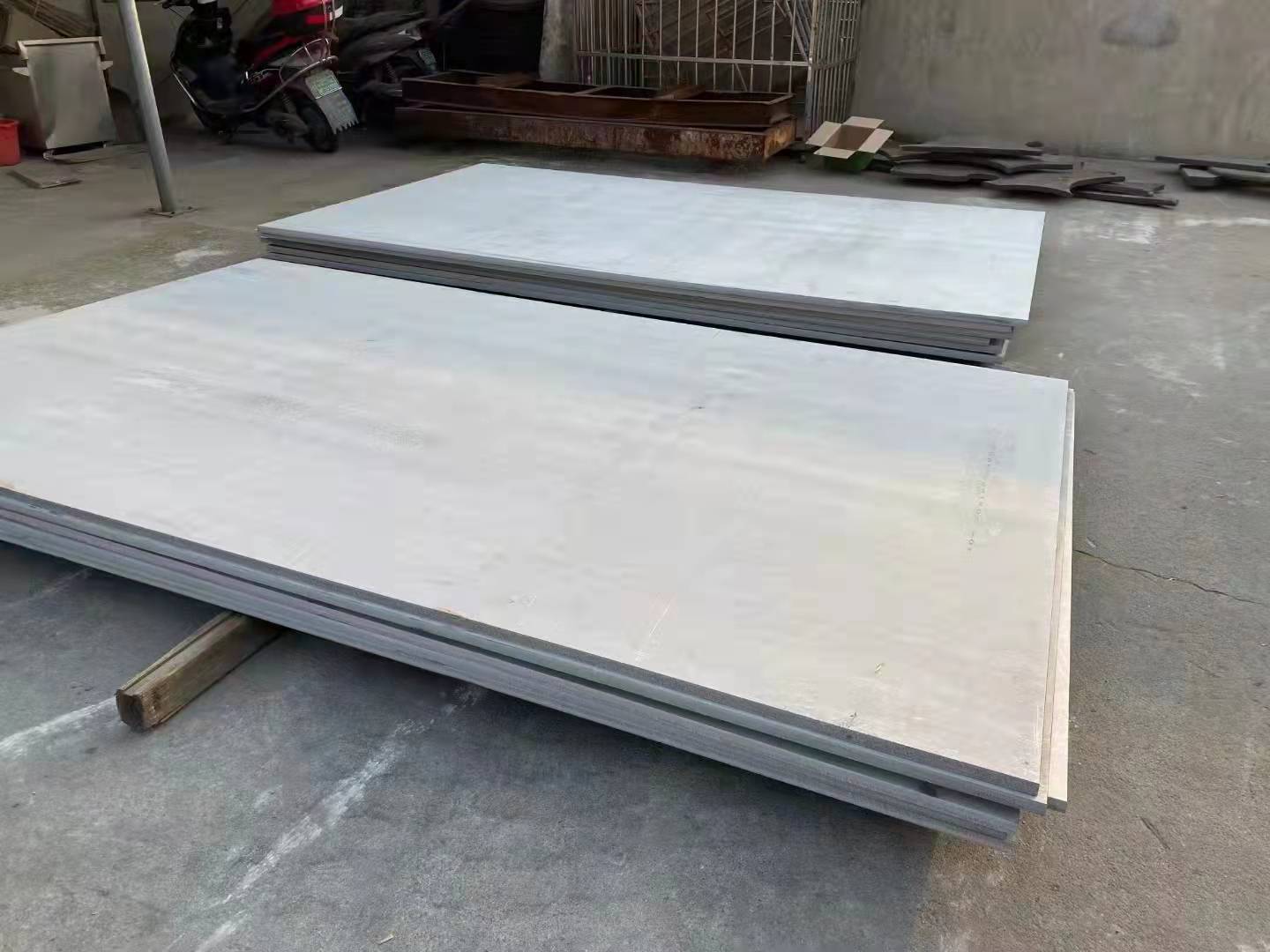
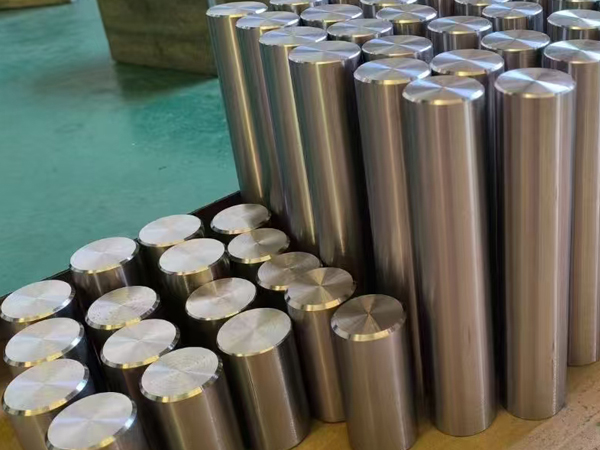
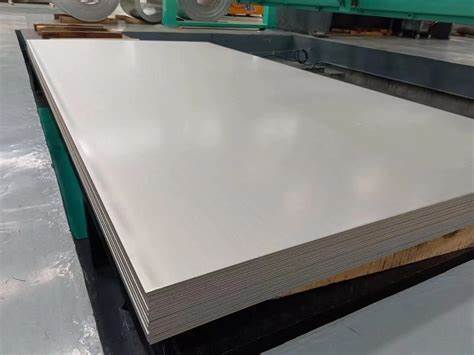
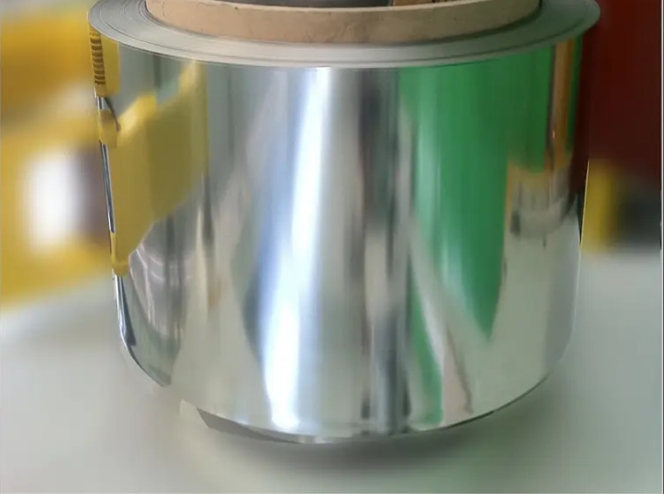
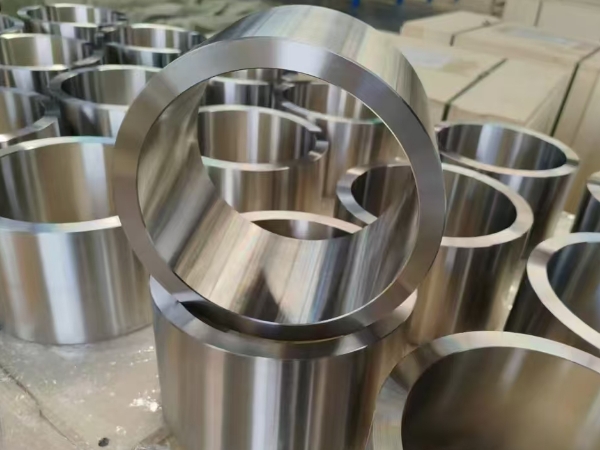
The economic logic is straightforward. Grade 15 captures a large share of Grade 7's crevice- and reducing-acid-resistance envelope at a substantially lower alloy cost, and it does so on a higher-strength base. For a heat exchanger that is crevice-limited rather than strength-limited, Grade 15 often removes the need for the palladium premium altogether; for a vessel that needs both crevice immunity and a higher design stress, it competes directly with the Mo-Ni-bearing Grade 12. Shanghai Hangbo Alloy Group (nickel-alloy.com) supplies Titanium Grade 15 in plate, sheet, strip, bar, billet, and tube forms certified to ASTM B265, B348, and B338, with EN 10204 3.1 documentation, 100% PMI verification (ruthenium and nickel explicitly tested), and full heat traceability. This guide documents the composition, metallurgy, properties, corrosion performance, fabrication practice, and applications of Grade 15.
Chemical Composition
The composition limits below are the acceptance baseline for Grade 15 mill products supplied by Hangbo Alloy to ASTM B265 and B348. Titanium is the balance element.
| Element | ASTM Spec Limit (wt %) | Typical Heat Value | Metallurgical Role |
|---|---|---|---|
| Titanium (Ti) | Balance | ~98.3 – 98.6 | α-phase matrix; passive-film former |
| Nickel (Ni) | 0.40 – 0.60 | 0.45 – 0.55 | Cathodic enhancer and solid-solution strengthener |
| Ruthenium (Ru) | 0.04 – 0.06 | ~0.05 | Noble-metal cathodic modifier — the crevice-control element |
| Oxygen (O) | 0.25 max | 0.10 – 0.18 | Interstitial strengthener; supports the elevated strength floor |
| Iron (Fe) | 0.30 max | 0.05 – 0.15 | Trace β stabilizer |
| Carbon (C) | 0.08 max | 0.01 – 0.03 | Trace interstitial |
| Nitrogen (N) | 0.05 max | 0.008 – 0.015 | Trace interstitial |
| Hydrogen (H) | 0.015 max | 0.002 – 0.005 | Held low for hydride control |
| Other elements, each / total | 0.10 / 0.40 max | — | Per governing ASTM specification |
Two elements carry the grade's identity, and both must be verified on every certificate. Ruthenium in the 0.04–0.06% window is what converts an ordinary near-α titanium alloy into a crevice-resistant one; below 0.03% the cathodic effect weakens measurably. Nickel at 0.4–0.6% does double duty: it enriches on the corroding surface and supports the cathodic reaction alongside ruthenium, and it raises the annealed strength of the alloy toward the 483 MPa minimum. A certificate that shows no tested ruthenium value, or treats it as a trace residual, is not delivering Grade 15 — and paying the Grade 15 premium for unalloyed titanium is exactly the substitution risk that arrival PMI exists to close. Hangbo Alloy performs XRF/arc-OES PMI on every Grade 15 item before release and declares the tested Ni and Ru values on the EN 10204 3.1 mill certificate.
Metallurgy: Nickel + Ruthenium as a Low-Cost Cathodic Package
Grade 15's corrosion mechanism is the same elegant principle that makes Grade 7 work, executed with cheaper ingredients. Titanium's corrosion resistance is potential-dependent: in aerated, oxidizing media the TiO₂ film is stable and corrosion rates are negligible, but in an oxygen-starved crevice — or in a deaerated reducing acid — the cathodic half-reaction (hydrogen reduction) on a plain titanium surface is slow. The mixed potential drifts into the active region, the passive film dissolves, and the metal corrodes. Cathodic alloying fixes this not by strengthening the film but by accelerating the cathodic reaction, so that the potential is pulled back into the passive range where the film is thermodynamically stable.
In Grade 15, both alloying elements contribute to that acceleration. Ruthenium, like palladium, is one of the most efficient hydrogen-evolution catalysts known; present as a fine dispersion and progressively enriched on the surface during service, it provides the noble cathodic sites that keep the potential in the passive range. Nickel acts through a complementary route: it too enriches at the corroding surface and, in many reducing media, supports the cathodic reaction and modifies the surface chemistry of the film. Together the Ni-Ru pair shifts the practical crevice-corrosion temperature limit of titanium upward by a wide margin — into the range where CP grades would fail within weeks — at a fraction of the cost of an equivalent palladium loading.
The microstructure story is simple because the alloy is intentionally modest. Grade 15 is essentially an α-phase titanium base — near-α in character — with the nickel and ruthenium present in small amounts as fine dispersoids and in solid solution. There is no significant α+β transformation response to manage: the alloy is used in the annealed condition, its strength comes from oxygen control and nickel's solution hardening, and its fabricability remains close to the CP family. The beta transus is lowered modestly by the alloying additions relative to unalloyed titanium but remains well above normal processing temperatures, so the alloy can be hot worked, cold formed, and welded with the same shop discipline used for CP titanium. The practical outcome: a crevice-resistant alloy that behaves, on the shop floor, like the conventional titanium everyone already knows how to fabricate.
Three consequences define Grade 15 in service:
- Crevice immunity in hot chloride service. In seawater, brine, and chloride process streams, Grade 15 resists crevice corrosion at temperatures far above the CP limit — the signature benefit of the ruthenium family and the reason these alloys dominate Japanese chemical-plant exchanger practice.
- Extended resistance to dilute reducing acids. Deaerated hydrochloric and sulfuric acid solutions that actively corrode CP titanium are tolerated by Grade 15 to substantially higher concentrations and temperatures, with the usual strong synergy when oxidizing impurities or aeration are present.
- Higher strength than the Pd-bearing CP-base grades. Because the 483 MPa minimum tensile floor is written into the specification, designers get the corrosion upgrade and a genuine structural allowance in the same purchase — no wall-thickness penalty for choosing corrosion resistance.
Governing Specifications and Product Forms
| Product Form | ASTM Specification | ASME Equivalent | Typical Range Supplied by Hangbo Alloy |
|---|---|---|---|
| Plate, sheet, and strip | ASTM B265 | ASME SB-265 | Plate 0.3 – 80 mm thick |
| Bar and billet | ASTM B348 | ASME SB-348 | Round bar Ø 6 – 300 mm |
| Seamless condenser / heat-exchanger tube | ASTM B338 | ASME SB-338 | Seamless tube Ø 6 – 89 mm OD |
| Seamless pipe | ASTM B861 | ASME SB-861 | 1/8" – 12" NB |
| Welded pipe | ASTM B862 | ASME SB-862 | 60 – 610 mm OD |
| Forgings | ASTM B381 | ASME SB-381 | Flanges, custom forgings |
| Wire | ASTM B863 | — | Welding wire |
Procurement callout discipline: "Titanium Grade 15, UNS R53415, plate per ASTM B265 / ASME SB-265, annealed, Ru and Ni verified" — UNS plus product standard plus the two identity elements confirmed on the certificate. Because Grade 15 shares a UNS family with the lower-strength ruthenium grades 13 and 14, the full grade designation, not just the chemistry, must appear on every order and every certificate.
Mechanical Properties
Grade 15 annealed minimums per the ASTM B265 and B348 tables are shown below with typical mill values:
| Property | ASTM Minimum | Typical (Annealed) | Notes |
|---|---|---|---|
| Tensile strength (UTS) | 483 MPa (70 ksi) | 520 – 650 MPa | Highest floor in the Ru-bearing family |
| 0.2% yield strength (YS) | 380 MPa (55 ksi) | 410 – 550 MPa | Above Grade 12's 345 MPa yield floor |
| Elongation in 2 in. (50 mm) | 18% | 22 – 30% | Scales with section size |
| Reduction of area (bar) | — | 40 – 55% | Informational |
| Hardness | — | 170 – 230 HV | Informational |
| Condition | Annealed | Recrystallized near-α | No heat-treatment response |
The strength story matters for the economic comparison. Grade 15's 483/380 MPa minimums place it well above the palladium-bearing Grade 7 and the Grade 17 (which inherit CP Grade 2's 345/275 MPa floors) and give it a 35 MPa yield advantage over Grade 12. For an exchanger or vessel that is pressure- or buckling-limited as well as crevice-limited, that higher floor translates into thinner walls or higher design ratings — which is precisely why Grade 15, rather than the softer ruthenium grades, is the default choice when the duty is demanding in both corrosion and mechanics. Within the ruthenium family the selection rule is simple: Grade 13 where maximum formability and softness matter (tube bending, gaskets, lined equipment), Grade 14 as the general-purpose seawater-exchanger grade, and Grade 15 where the strength floor of the CP family's upper range is required.
Physical Properties
| Property | Value | Notes |
|---|---|---|
| Density | 4.51 g/cm³ (0.163 lb/in³) | Ni/Ru additions do not measurably change density |
| Melting range | ~1640 – 1670 °C | Titanium-base melting behavior |
| Beta transus | ~900 – 940 °C | Lowered modestly by Ni/Ru relative to CP titanium |
| Modulus of elasticity | ~103 – 110 GPa | RT |
| Coefficient of thermal expansion | ~8.6 – 9.2 × 10⁻⁶ /°C | Steel-like |
| Thermal conductivity | ~16 – 19 W/m·K | |
| Electrical resistivity | ~0.55 µΩ·m | |
| Magnetic behavior | Non-magnetic | |
| Annealing range | 650 – 790 °C | Air cool |
Corrosion Performance: Where Grade 15 Earns Its Place
| Environment | CP Titanium (Grades 2/3) | Grade 15 (Ti-Ni-Ru) |
|---|---|---|
| Seawater and chloride brines | Excellent | Excellent |
| Hot chloride crevices (>70 – 80 °C) | Crevice attack possible | Resistant at temperatures far above the CP limit |
| Dilute HCl (non-oxidizing) | Active corrosion possible | Passive — markedly extended envelope |
| Dilute H₂SO₄ (non-oxidizing) | Active corrosion possible | Passive — markedly extended envelope |
| Oxidizing acids (nitric, chromic) | Excellent | Excellent |
| Organic acids | Excellent | Excellent |
| Wet chlorine, hypochlorite, chlorine dioxide | Excellent | Excellent |
| Hot concentrated reducing acids | Limited | Better, but coupon-test for severe duty |
| Hydrofluoric acid | Not recommended | Not recommended (no titanium grade defeats HF) |
| Oxidizing impurities (Fe³⁺, Cu²⁺, O₂) | Improve CP performance | Further improve Grade 15 — synergy with aeration |
The engineering message is that Grade 15 should be on the shortlist whenever a design is limited by crevice temperature or by excursions into dilute reducing acid rather than by sheer strength. Its signature duty is the hot chloride exchanger: seawater heaters, brine heaters, chlor-alkali heat-transfer surfaces, and bleach-plant coolers, where tube-to-tubesheet and gasket crevices run above the CP threshold and would initiate attack on unalloyed titanium within months. Because matching Ru-bearing weld metal preserves the cathodic modification through fabricated joints, the immunity extends across welds, heat-affected zones, and the crevices that welds inevitably create. In borderline duties Hangbo Alloy routinely supplies side-by-side coupon packs — CP, Grade 12, Grade 15, and Grade 7 — so that the economic crossover can be measured in the actual process stream rather than guessed from tables.
Fabrication, Welding, and Machining
- Welding: Grade 15 welds with the discipline used for CP titanium and Grade 12. GTAW with argon shielding and a backing purge is standard; matching Ru-bearing filler preserves the crevice-corrosion upgrade in the weld metal, which matters wherever welded joints create their own crevice geometries. No preheat is required and, for the annealed near-α structure, no post-weld heat treatment is mandatory; where maximum crevice margin is required after heavy welding or cold work, a final anneal at 650 – 760 °C is recommended.
- Hot and cold forming: Formability is close to the CP family. Cold forming follows standard titanium practice with generous bend radii and springback allowance; hot forming in the 650 – 900 °C band followed by anneal restores the specified property envelope.
- Machining: Free-cutting relative to α+β alloys, but with titanium's characteristic tendency to gall and work-harden if tooling is dull. Sharp tools, positive rake, rigid setups, and flood coolant are the standard recipe.
- Surface and cleanliness: Prevent iron contamination from tooling and handling; pickle or passivate per specification after fabrication. The TiO₂ film, now cathodically reinforced, re-forms instantly on clean surfaces.
- Quality verification: Ruthenium and nickel are the acceptance-critical elements. Hangbo Alloy verifies both by certified analysis and PMI on every item and confirms the declared values against the 0.04–0.06% Ru and 0.40–0.60% Ni windows before release.
Grade 15 vs. the Crevice-Resistant Alternatives
Grade 15 competes in the "economic crevice resistance" band of the titanium market, between plain CP grades and the palladium-bearing grades. The selection table below is the map Hangbo Alloy's engineers use when advising buyers:
| Alloy | Key Addition | Strength Level (min UTS) | Relative Cost | Typical Selection Logic |
|---|---|---|---|---|
| Grade 2 (R50400) | None | 345 MPa | Baseline | General chloride service, no crevice issue |
| Grade 12 (R53400) | 0.3% Mo + 0.8% Ni | 483 MPa | Low-moderate | High-temp brine and mild reducing acid, elevated strength |
| Grade 14 (R53414) | 0.5% Ni + ~0.05% Ru | 345 MPa | Moderate | Crevice resistance on a soft Grade 2-type base |
| Grade 15 (R53415) | 0.5% Ni + ~0.05% Ru | 483 MPa | Moderate | Crevice resistance plus a 483 MPa strength floor |
| Grade 7 (R52400) | 0.12 – 0.25% Pd | 345 MPa | High | Maximum reducing-acid and crevice margin |
| Grade 17 (R52252) | ~0.05% Pd | 275 MPa | Moderate-high | Soft, formable low-Pd option for tube and strip |
Two practical rules emerge. First, versus Grade 7: if the duty is severe hot reducing acid at the top of the CP envelope, or if maximum crevice margin is a safety-critical requirement, the palladium grade remains the benchmark; for the large middle ground of hot chloride crevice service, Grade 15 delivers most of the benefit at meaningfully lower alloy cost. Second, versus Grade 12: both carry the same 483 MPa strength floor, and the choice is environmental — Grade 15's ruthenium chemistry tends to carry the advantage in hot chloride crevices and the lower pH range, while Grade 12's Mo-Ni package is the traditional workhorse for hot, mildly reducing process streams. Where the two overlap, coupon testing in the real stream decides.
Applications Summary
- Seawater and brackish-water heat exchangers, condensers, and coolers with tube-to-tubesheet and gasket crevices running above ambient temperature.
- Brine heaters, evaporators, and crystallizer heat-transfer surfaces in chlor-alkali and salt-recovery plants.
- Chemical-process reactors, columns, and piping handling dilute hydrochloric or sulfuric acid with intermittent oxidizer exposure.
- Pulp-bleach and chlorine-dioxide equipment where chloride crevice duty is severe.
- Geothermal brine handling equipment and produced-water systems in oil and gas.
- Pharmaceutical and fine-chemical reactors requiring metallic-ion freedom with crevice immunity.
- Hydrometallurgical autoclave internals, leach heaters, and solution heat exchangers.
- Marine propulsion heat exchangers and desalination heat-rejection circuits where the Pd premium is not justified.
Hangbo Alloy Supply Program
| Product Form | Specification | Typical Size Range | Testing / Documentation |
|---|---|---|---|
| Plate / Sheet / Strip | ASTM B265 / ASME SB-265 | 0.3 – 80 mm thick | EN 10204 3.1, PMI (Ru and Ni verified) |
| Bar / Billet | ASTM B348 / ASME SB-348 | Ø 6 – 300 mm | EN 10204 3.1, PMI, UT on request |
| Seamless Tube | ASTM B338 / ASME SB-338 | Ø 6 – 89 mm OD | Hydrostatic, eddy current, PMI |
| Pipe (seamless / welded) | ASTM B861 / B862 | 1/8" NB – 610 mm OD | Hydrostatic, flattening, PMI |
| Forgings / Fittings | ASTM B381 / B363 | Custom | Dimensional, penetrant, PMI |
Every Hangbo Alloy Grade 15 heat is released with tested ruthenium and nickel values documented, 100% PMI of delivered items, heat-lot traceability, and, on request, third-party witness testing (SGS, BV, TÜV) at our Shanghai mill. Grade 15 stock is segregated from CP and other alloy grades to eliminate mix-up risk at every handling stage.
Technical FAQ — Titanium Grade 15 (UNS R53415)
1. What is Titanium Grade 15?
Grade 15 is the strongest standard ruthenium-bearing titanium grade — nominal Ti-0.5Ni-0.05Ru, UNS R53415. It combines a 483 MPa minimum tensile strength with crevice-corrosion resistance in hot chloride service, achieved by cathodic alloying with ~0.05% ruthenium plus 0.4–0.6% nickel, at lower cost than palladium-bearing grades.
2. How does ruthenium improve corrosion resistance?
Ruthenium, like palladium, is a highly efficient catalyst for the hydrogen-reduction cathodic reaction. Enriched at the surface during service, it pulls titanium's potential back into the passive range even in oxygen-starved crevices and reducing acids, keeping the TiO₂ film stable where it would otherwise break down.
3. What does the nickel addition do?
Nickel has two jobs. It enriches at the corroding surface and supports the cathodic reaction alongside ruthenium, strengthening the crevice-resistance package; and it raises the annealed strength of the alloy, contributing to the 483 MPa minimum tensile floor that distinguishes Grade 15 from the softer ruthenium grades 13 and 14.
4. How does Grade 15 compare with Grade 7?
Grade 7 adds 0.12–0.25% palladium to a Grade 2 base and remains the benchmark for maximum reducing-acid and crevice margin. Grade 15 uses much less precious metal — ruthenium at ~0.05% costs a fraction of an equivalent palladium loading — and provides a higher strength floor. For most hot chloride crevice duties, Grade 15 captures most of Grade 7's benefit at lower cost.
5. What are the mechanical properties of Grade 15?
Annealed minimums per the ASTM B265/B348 tables are 483 MPa (70 ksi) tensile, 380 MPa (55 ksi) yield, and 18% elongation — the same tensile floor as Grade 12 with a higher yield floor, on a near-α base with no heat-treatment response.
6. Which ASTM specifications cover Grade 15?
ASTM B265 covers plate, sheet, and strip; ASTM B348 covers bar and billet; ASTM B338 covers seamless condenser and heat-exchanger tube. Seamless pipe is B861, welded pipe B862, forgings B381, and wire B863, with ASME SB equivalents for code construction.
7. Is Grade 15 weldable?
Yes. It welds with CP-titanium discipline — GTAW with argon shielding and backing purge, no preheat. Matching Ru-bearing filler preserves the crevice-corrosion upgrade through the weld; no post-weld heat treatment is mandatory in the annealed condition.
8. Where does Grade 15 outperform Grade 12?
Both carry a 483 MPa tensile floor, but Grade 15's ruthenium chemistry generally carries the advantage in hot chloride crevices and lower-pH environments, while Grade 12's Mo-Ni package is the traditional workhorse for hot mildly reducing process streams. Coupon testing in the actual stream is the definitive selector in the overlap zone.
9. How do I verify I actually received Grade 15?
Check the mill certificate for tested ruthenium within 0.04–0.06% and nickel within 0.40–0.60%, and confirm by independent PMI on arrival. A certificate without stated Ru and Ni values is not proof of Grade 15. Hangbo Alloy declares both values on every EN 10204 3.1 certificate and PMI-checks every delivered item.
10. Does Hangbo Alloy supply Grade 15 in tube form?
Yes. Hangbo Alloy supplies Grade 15 seamless heat-exchanger and condenser tube to ASTM B338, plus plate, sheet, bar, pipe, and forgings to the B-series specifications, with full traceability, tested Ru/Ni values, and third-party inspection options at our Shanghai mill.
This page is part of the Titanium Alloy Technical Reference series by Hangbo Alloy (Shanghai Hangbo Alloy Group, nickel-alloy.com). Data presented are typical engineering values compiled from recognized industry sources and are provided for material selection guidance; the governing documents for any purchase are the applicable ASTM/ASME specifications (B265, B348, B338 and SB equivalents) and the certified mill test report. Contact Hangbo Alloy for current stock, mill certificates, and application engineering support.