

Excerpt:
Titanium Grade 23 (Ti-6Al-4V ELI, UNS R56401) technical guide from Hangbo Alloy (Shanghai Hangbo Alloy Group, nickel-alloy.com). The Extra Low Interstitial edition of Ti-6Al-4V (oxygen capped at 0.13%) for surgical implants to ASTM F136 and cryogenic aerospace hardware to AMS 4930. Covers low-interstitial metallurgy, the 828 MPa minimum tensile envelope, biocompatibility, and ASTM B348/B265 industrial forms with full certification.
Titanium Grade 23 (Ti-6Al-4V ELI / UNS R56401) — Medical Implant and Cryogenic Technical Guide | Hangbo Alloy
Technical Bulletin for Orthopedic Implant, Trauma, Dental, and Cryogenic Engineering Procurement
Introduction
Titanium Grade 23 — Ti-6Al-4V ELI, UNS R56401 — is the high-integrity edition of the world's most-used titanium alloy. Chemically it is Ti-6Al-4V with one deliberate change: the oxygen content is capped at 0.13% maximum, roughly half the 0.20% ceiling of conventional Grade 5, together with tight control of the other interstitials. "ELI" stands for Extra Low Interstitial, and that single refinement transforms the alloy's behavior in the two applications where Grade 23 is the established standard: human implants and cryogenic engineering. Lower interstitial oxygen means higher ductility, higher fracture toughness, and better fatigue-crack resistance — exactly the properties a load-bearing implant must have to survive decades of cyclic loading inside the body, and exactly the properties a cryogenic pressure vessel needs to avoid brittle failure at temperatures where most metals turn glassy.
Grade 23 occupies a privileged position in the specification world because its two principal markets are both governed by dedicated standards. For surgical implant applications, ASTM F136 is the governing specification — wrought Ti-6Al-4V ELI for surgical implant applications — the material of record for orthopedic trauma plates and screws, spinal fixation hardware, dental implants, and a wide range of permanent and temporary implants. For aerospace and defense bar, wire, forgings, and rings, AMS 4930 is the governing callout, carrying the same low-interstitial chemistry into cryogenic tankage, high-pressure gas storage, and structural hardware that must retain toughness at -196 °C and below. In both worlds the commercial-grade fallback, ASTM B348 Grade 23 (and B265 plate/sheet), covers non-implant industrial and cryogenic supply with the same 828 MPa minimum tensile floor.
At 4.43 g/cm³, roughly half the density of cobalt-chrome and a little over half that of 316L stainless steel, Grade 23 gives implant designers a high-strength, biocompatible, MRI-compatible, osseointegration-friendly material whose elastic modulus (~110 – 114 GPa) is far closer to cortical bone than any steel or cobalt alloy. Shanghai Hangbo Alloy Group (nickel-alloy.com) supplies Titanium Grade 23 in implant-grade bar and wire to ASTM F136, aerospace bar to AMS 4930, and industrial plate, bar, and billet to ASTM B348/B265, each with full chemistry certification including the critical interstitial elements, 100% PMI verification, and complete heat-lot traceability. This guide documents the composition, metallurgy, properties, specifications, fabrication, and applications of Ti-6Al-4V ELI.
Chemical Composition
The composition limits below reflect the low-interstitial envelope shared by ASTM F136 and AMS 4930 for Grade 23 (Ti-6Al-4V ELI). Titanium is the balance element.
| Element | ASTM F136 / AMS 4930 Limit (wt %) | Typical Heat Value | Metallurgical Role |
|---|---|---|---|
| Titanium (Ti) | Balance | ~89 – 90 | Matrix |
| Aluminum (Al) | 5.50 – 6.50 | 5.8 – 6.3 | α stabilizer; primary strengthener |
| Vanadium (V) | 3.50 – 4.50 | 3.8 – 4.3 | β stabilizer; enables α+β processing |
| Oxygen (O) | 0.13 max (ELI) | 0.09 – 0.12 | Interstitial — the ELI control element; lower O = higher toughness |
| Iron (Fe) | 0.25 max | 0.05 – 0.15 | Trace β stabilizer |
| Carbon (C) | 0.08 max | 0.01 – 0.03 | Trace interstitial |
| Nitrogen (N) | 0.05 max | 0.005 – 0.02 | Trace interstitial |
| Hydrogen (H) | 0.0125 max | 0.002 – 0.006 | Held low for hydride control |
| Yttrium (Y) | 0.005 max (F136) | <0.005 | Per ASTM F136 for implant products |
| Other elements, each / total | 0.10 / 0.40 max | — | Per governing specification |
The oxygen ceiling is the entire point of the grade. In titanium, oxygen is a powerful α-strengthener — but every increment of strength it buys comes at the price of ductility and fracture toughness. By holding oxygen to 0.13% maximum, the ELI specification sacrifices only a small amount of strength relative to Grade 5 while buying a large improvement in the properties that govern crack initiation and propagation. For implant manufacturers this is the difference between a plate that survives ten million loading cycles and one that does not; for cryogenic designers it is the difference between a tank that strains to failure and one that fractures. Hangbo Alloy verifies oxygen, hydrogen, and nitrogen by inert-gas fusion analysis on every implant- or cryogenic-grade heat and declares the tested values on the certificate — for F136 product this interstitial documentation is a regulatory requirement, not a formality.
Metallurgy: What "Extra Low Interstitial" Actually Buys
Ti-6Al-4V ELI is an α+β alloy: its microstructure at service temperature is a two-phase mixture of hexagonal-close-packed α (stabilized by aluminum and oxygen) and body-centered-cubic β (stabilized by vanadium and iron). That two-phase architecture is what gives the alloy its exceptional combination of strength, fatigue resistance, and processing flexibility — it can be mill-annealed for a fine equiaxed structure, solution-treated and aged for maximum strength, or β-annealed for maximum fracture toughness. Grade 23 can be processed through all of these routes; the ELI chemistry simply shifts the outcome of every route toward higher toughness and ductility at a given strength level.
The mechanistic story is well understood. Oxygen strengthens the α phase by blocking dislocation motion, which raises yield strength but also raises the ductile-to-brittle transition behavior and reduces the energy a crack needs to propagate. Cutting the oxygen ceiling from 0.20% (Grade 5) to 0.13% (Grade 23) removes a meaningful fraction of that embrittling contribution. The result is visible in every mechanical test: higher elongation and reduction of area at equal strength, higher Charpy impact energy and plane-strain fracture toughness (K_IC), better low-cycle and high-cycle fatigue performance through improved crack-initiation resistance, and — critically for cryogenics — retention of substantial ductility at -196 °C and below, where standard Grade 5 shows markedly degraded toughness.
Two microstructure routes dominate Grade 23 hardware:
- Mill-annealed (equiaxed α+β). Annealing near 700 – 790 °C produces a fine equiaxed structure with the best combination of ductility, fatigue strength, and machinability — the default for implant bar, trauma plates, and aerospace fittings, and the condition in which the ASTM/AMS minimums are certified.
- β-annealed (transformed structure). Annealing above the beta transus (~975 – 995 °C) produces a coarse Widmanstätten/colony structure with substantially higher fracture toughness and better fatigue-crack-growth resistance — the route chosen for cryogenic pressure hardware and for implant components where damage tolerance governs.
For load-bearing implants, a further consideration is that ELI's lower oxygen also improves the alloy's response to the thermomechanical working used to produce fine, uniform grain structures in small-diameter bar — the product form from which most orthopedic and dental devices are machined. Combined with strict control of hydrogen (0.0125% max), which prevents hydride embrittlement, and of the aluminum-vanadium balance, ELI chemistry is the metallurgical foundation of modern titanium implant manufacturing.
Governing Specifications and Product Forms
| Product Form | Specification | Market / Application Domain | Typical Range Supplied by Hangbo Alloy |
|---|---|---|---|
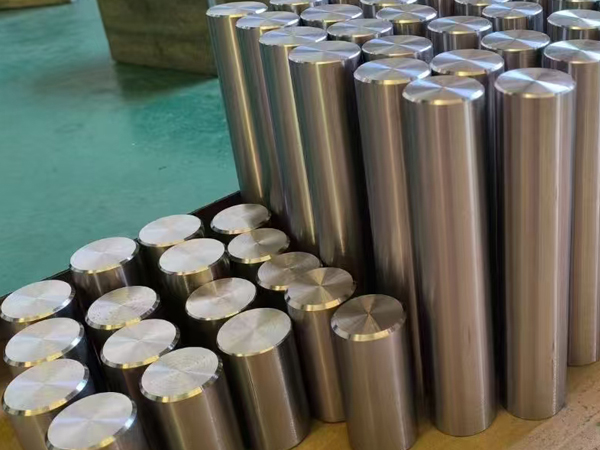
| Implant bar, wire, billet | ASTM F136 | Surgical implants (orthopedic, spinal, dental) | Bar Ø 3 – 250 mm; wire Ø 1 – 8 mm |
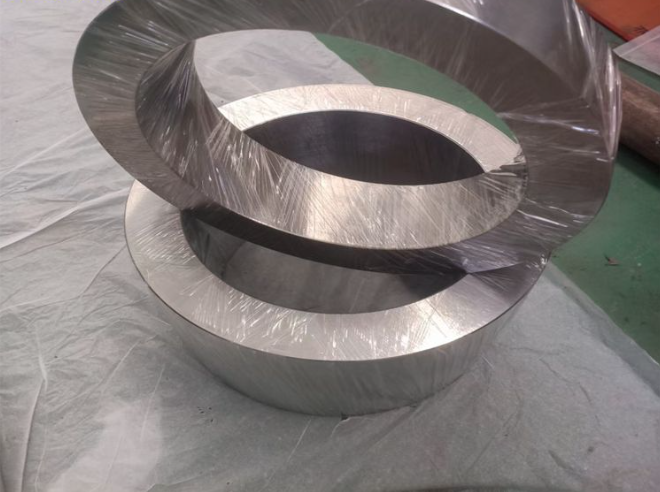
| Aerospace bar, wire, forgings, rings | AMS 4930 | Cryogenic and aerospace hardware | Bar Ø 6 – 300 mm; custom forgings |
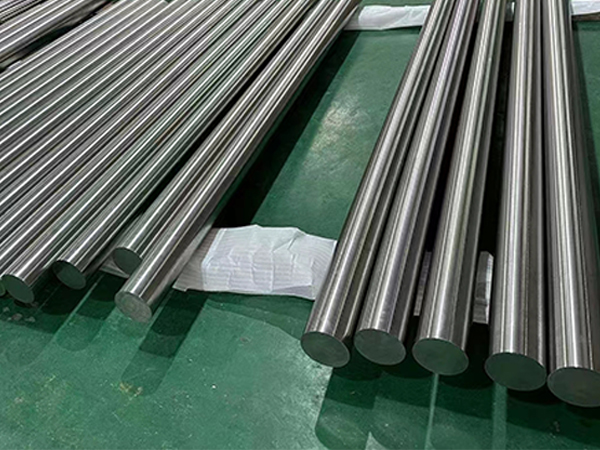
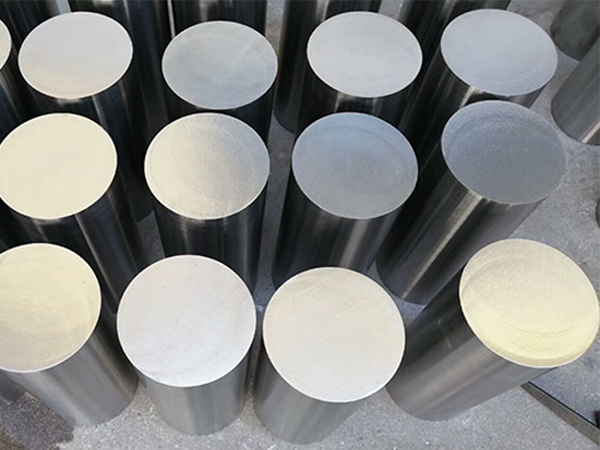
| Industrial bar and billet | ASTM B348 (Grade 23) | General engineering, non-implant | Round bar Ø 6 – 300 mm |
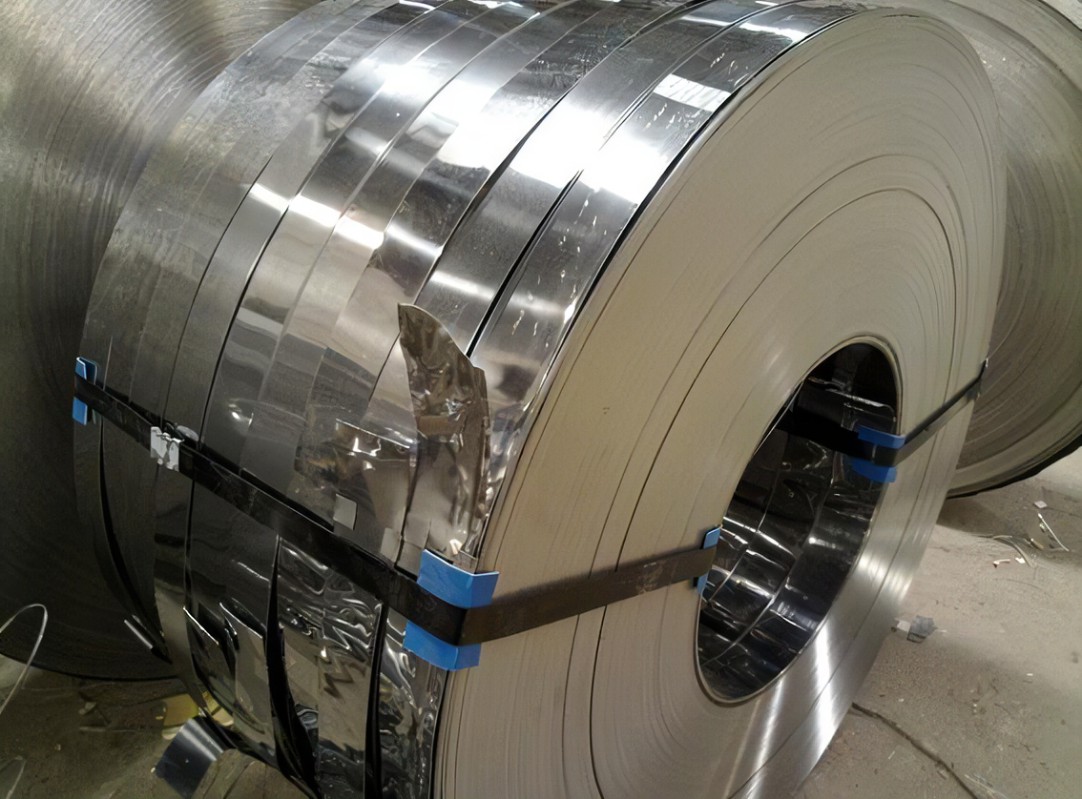
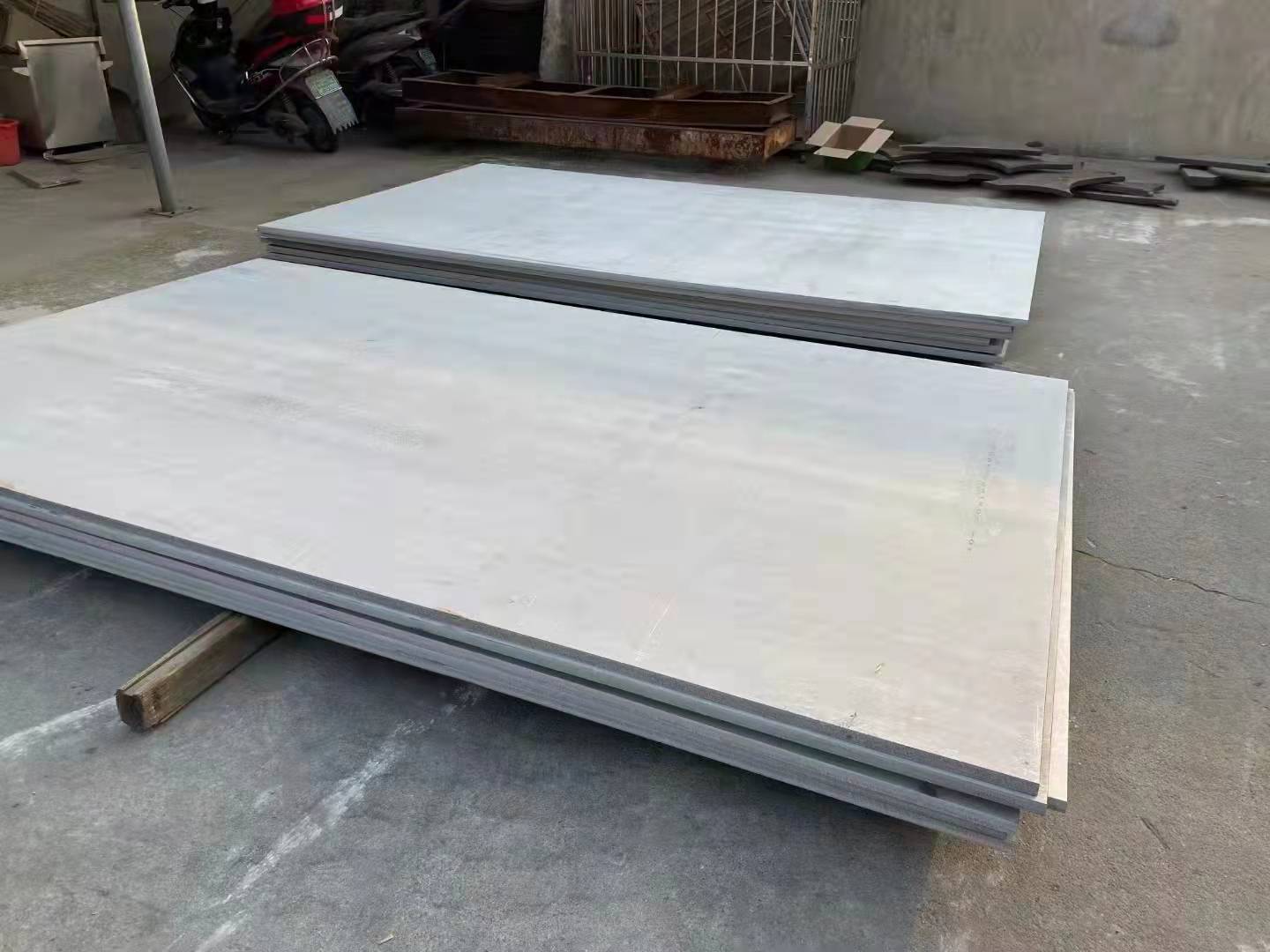
| Plate, sheet, strip | ASTM B265 (Grade 23) | Cryogenic vessels, industrial | 0.4 – 80 mm thick |
| Implant equivalents | ISO 5832-3 | Global implant regulation | Per ISO chemistry/property requirements |
Procurement discipline differs by market. For implants, the callout must chain the product to its regulatory intent — "Ti-6Al-4V ELI bar, UNS R56401, per ASTM F136, annealed, O ≤ 0.13%" — and the mill must demonstrate interstitial control and traceability that survive an FDA or equivalent audit. For aerospace, "Ti-6Al-4V ELI bar per AMS 4930" carries its own chemistry, tensile, and ultrasonic requirements. Hangbo Alloy maintains physically segregated stock for F136 and AMS 4930 product lines so that implant and aerospace material can never be mixed with commercial B348 stock, and issues the corresponding documentation set for each line.
Mechanical Properties
Grade 23 mechanical minimums are shown below for the three governing specification families, with typical annealed mill values:
| Property | ASTM B348 Gr. 23 Min (Annealed) | AMS 4930 Min (Annealed) | ASTM F136 Min (Implant Bar) | Typical (Annealed) |
|---|---|---|---|---|
| Tensile strength (UTS) | 828 MPa (120 ksi) | 828 – 862 MPa (120 – 125 ksi) | 860 MPa (125 ksi) | 900 – 1010 MPa |
| 0.2% yield strength (YS) | 759 MPa (110 ksi) | 758 – 793 MPa (110 – 115 ksi) | 795 MPa (115 ksi) | 830 – 950 MPa |
| Elongation in 2 in. / 4D | 10% | 8 – 10% | 10% | 12 – 18% |
| Reduction of area | 15% | 15 – 25% | 25% | 25 – 40% |
| Condition | Annealed | Annealed | Annealed | Recrystallized α+β |
Two reading notes matter. First, the small differences between columns reflect measurement conventions and product scopes rather than material differences — AMS 4930 publishes a strength band for bar and wire, while F136's slightly higher 860 MPa minimum reflects implant-bar requirements expressed on a 4D gauge length. Second, the "typical" column understates what the ELI grade contributes: the specification minimums for elongation and reduction of area are the same as or better than Grade 5's, but real ELI heats consistently deliver ductility and toughness several points above Grade 5 at the same strength — the margin that implant and cryogenic designers bank on. Where maximum fracture toughness is specified (typically as a K_IC requirement on β-annealed or STA plate and forgings), the ELI chemistry is what makes the requirement achievable at all.
Physical Properties
| Property | Value | Notes |
|---|---|---|
| Density | 4.43 g/cm³ (0.160 lb/in³) | ~45% lighter than steel; ~56% lighter than Co-Cr |
| Melting range | ~1600 – 1660 °C | |
| Beta transus | ~975 – 995 °C | Al/V dependent; controls processing route selection |
| Modulus of elasticity | ~110 – 114 GPa | RT; closest-to-bone modulus among implant metals after near-β alloys |
| Coefficient of thermal expansion | ~8.6 × 10⁻⁶ /°C | |
| Thermal conductivity | ~7.2 W/m·K | Low — relevant to machining and welding heat input |
| Electrical resistivity | ~1.7 µΩ·m | |
| Magnetic behavior | Non-magnetic — MRI compatible | Critical for implant selection |
| Annealing range | 700 – 790 °C | Mill anneal; air cool |
Corrosion and Biocompatibility Performance
| Environment / Attribute | Grade 23 Performance | Engineering Comment |
|---|---|---|
| Physiological environment (body fluids) | Excellent | Passive TiO₂ film; corrosion rates essentially nil in vivo |
| Crevice conditions under implant hardware | Excellent | Passivity retained in low-oxygen tissue fluid |
| Pitting in chloride media | Excellent | Immune at body temperature |
| Stress-corrosion cracking | Excellent | ELI toughness adds further margin |
| MRI compatibility | Non-magnetic | No ferromagnetic artifact; preferred over steels |
| Metal-ion release | Very low | Ti/Al/V release far below Co-Cr and steel; basis of biocompatibility |
| Osseointegration | Excellent | Bone apposition on TiO₂ surface; standard for dental and orthopedic |
The biological performance of Grade 23 rests on the same passive-film electrochemistry that makes all titanium alloys corrosion-resistant, applied to a surface that bone will grow directly against. The ELI refinement adds a mechanical-ethics dimension: an implant must not simply resist corrosion — it must resist fatigue fracture for the patient's lifetime, and the improved ductility and toughness of the low-interstitial grade are part of the regulatory rationale for requiring F136 material in load-bearing devices. Note that where maximum long-term biocompatibility is the design driver and aluminum or vanadium release is a stated concern, the vanadium-free and aluminum-lean implant alloys — Ti-6Al-7Nb (ASTM F1295) and Ti-13Nb-13Zr (ASTM F1713) — offer alternatives that Hangbo Alloy also supplies; Grade 23 remains the mechanical and regulatory benchmark against which they are compared.
Fabrication, Welding, and Machining
- Machining: Implant and cryogenic hardware is almost entirely machined from bar or plate. Grade 23 machines with the same discipline as Grade 5 — sharp carbide tooling, positive rake, rigid setups, flood coolant, and no dwell — but the tighter interstitial control gives slightly more forgiving chip behavior. Small-diameter implant bar is often precision-ground or centerless-ground to tight tolerance after machining.
- Welding: Grade 23 is weldable by GTAW, EBW, and laser processes with strict argon shielding and backing purge. Matching ELI filler (ERTi-23-type, per the AMS/AWS systems) preserves the low-interstitial, high-toughness character of the weld. Post-weld vacuum annealing is frequently specified for aerospace hardware to remove hydrogen picked up during welding and to restore ductility.
- Heat treatment: Mill anneal (700 – 790 °C) for the standard certified condition; solution treat and age (typically solution ~925 – 955 °C, age ~480 – 595 °C) for higher strength where the implant or aerospace design demands it; β-anneal (~1000 – 1050 °C) followed by controlled cooling for maximum fracture toughness in cryogenic pressure hardware.
- Surface treatment for implants: The final surface condition of implant hardware is a controlled variable — mechanical polishing, grit blasting, and anodizing are used to tune osseointegration and wear behavior. Hangbo Alloy supplies material in the condition required for downstream processing, with surface quality appropriate to implant-grade bar.
- Cleanliness and segregation: Implant-grade and aerospace-grade material must never contact contaminated tooling or mixed scrap. Hangbo Alloy applies dedicated handling, marking, and storage for F136 and AMS 4930 product lines.
- Quality verification: The acceptance-critical elements are oxygen (0.13% max), hydrogen (0.0125% max), nitrogen, aluminum, and vanadium. Hangbo Alloy verifies interstitials by inert-gas fusion, metallics by OES, and confirms tensile, ultrasonic (where required), and dimensional compliance on every lot.
Grade 23 vs. Grade 5 and the Implant Alloy Family
| Alloy | O Max | Min UTS | Key Attribute | Typical Selection Logic |
|---|---|---|---|---|
| Grade 5 / Ti-6Al-4V (R56400) | 0.20% | 895 MPa | Maximum strength, lowest cost | Aerospace structure, industrial, non-implant |
| Grade 23 / Ti-6Al-4V ELI (R56401) | 0.13% | 828 – 860 MPa | Toughness + ductility at near-Grade-5 strength | Implants (F136), cryogenics (AMS 4930) |
| Ti-6Al-7Nb (R56700, F1295) | 0.20% | ~860 MPa class | Vanadium-free biocompatibility | Implants where V release is a stated concern |
| Ti-13Nb-13Zr (R58130, F1713) | 0.15% | ~900 MPa class | Low modulus, near-β | Orthopedic implants where stress shielding matters |
The Grade 23 versus Grade 5 decision is rarely about peak strength — Grade 23 gives away only a little — and almost always about toughness, fatigue, and regulatory intent. If the hardware goes inside a human body, F136 is the standard of care. If the hardware must hold cryogenic fluid or survive impact at low temperature, AMS 4930 (or the equivalent B265 plate) is the engineering answer. If neither applies, Grade 5 remains the economical high-strength default. The choice between Grade 23 and the newer implant alloys is a biocompatibility and modulus decision discussed in the F1295 and F1713 technical guides.
Applications Summary
- Orthopedic trauma implants: bone plates, screws, intramedullary nails, and fracture-fixation hardware per ASTM F136.
- Spinal fixation systems: pedicle screws, rods, plates, and interbody devices.
- Dental implants and abutments, and maxillofacial reconstruction hardware.
- Total-joint components where a forged or bar-stock wrought alloy is specified (hip, knee, shoulder) — many designs use F136 Ti-6Al-4V ELI or move to the low-modulus F1713 alloy.
- Cryogenic pressure vessels and transfer lines for liquefied gases, including liquid-hydrogen and liquid-oxygen aerospace systems.
- High-pressure gas storage bottles and composite-overwrapped pressure vessels operating at low temperature.
- Aerospace structural bar, forgings, and rings requiring certified toughness — landing-gear components, engine mounts, and fittings.
- Marine and offshore hardware where the toughness premium of ELI chemistry justifies the grade.
Hangbo Alloy Supply Program
| Product Form | Specification | Typical Size Range | Testing / Documentation |
|---|---|---|---|
| Implant Bar / Wire | ASTM F136 | Bar Ø 3 – 250 mm; wire Ø 1 – 8 mm | Full chemistry (O/H/N by fusion), tensile, EN 10204 3.1, segregation control |
| Aerospace Bar / Forgings | AMS 4930 | Bar Ø 6 – 300 mm; custom | AMS documentation, UT per AMS 2631 on request |
| Industrial Bar / Billet | ASTM B348 Gr. 23 | Ø 6 – 300 mm | EN 10204 3.1, PMI, UT on request |
| Plate / Sheet / Strip | ASTM B265 Gr. 23 | 0.4 – 80 mm thick | EN 10204 3.1, PMI, Charpy/K_IC on request |
Every Hangbo Alloy Grade 23 heat is released with tested oxygen, hydrogen, and nitrogen values documented, 100% PMI of delivered items, heat-lot traceability to the source ingot, physical segregation of F136/AMS product from commercial stock, and, on request, third-party witness testing (SGS, BV, TÜV) at our Shanghai mill.
Technical FAQ — Titanium Grade 23 (Ti-6Al-4V ELI / UNS R56401)
1. What does "ELI" mean in Ti-6Al-4V ELI?
ELI stands for Extra Low Interstitial. The oxygen content is limited to 0.13% maximum — roughly half the 0.20% ceiling of standard Grade 5 — with nitrogen and hydrogen also tightly controlled. The lower interstitial content buys markedly higher ductility, fracture toughness, and fatigue-crack resistance at only a small sacrifice in strength.
2. What is the difference between Grade 23 and Grade 5?
Both are Ti-6Al-4V. Grade 23 is the low-interstitial version (oxygen ≤ 0.13% versus ≤ 0.20%), specified where toughness and ductility are safety-critical — human implants and cryogenic hardware. Grade 5 maximizes strength at lower cost for general aerospace and industrial use.
3. Why is Grade 23 the standard implant material?
Because it combines proven biocompatibility, high fatigue strength, MRI compatibility, and osseointegration behavior with the fracture toughness a load-bearing device needs for a patient lifetime of cyclic loading. ASTM F136 governs the wrought implant-grade material and is the regulatory benchmark for orthopedic, spinal, and dental hardware.
4. Which standards cover Grade 23?
ASTM F136 for surgical implant applications, AMS 4930 for aerospace bar, wire, forgings, and rings, and ASTM B348/B265 (Grade 23) for general industrial bar and plate. ISO 5832-3 covers the implant alloy in the international system. The oxygen ceiling is 0.13% in all of them.
5. What are the mechanical properties of Grade 23?
Annealed minimums are approximately 828 MPa (120 ksi) tensile and 759 MPa (110 ksi) yield per ASTM B348, with ASTM F136 implant bar requiring about 860 MPa (125 ksi) tensile and 795 MPa (115 ksi) yield, 10% elongation, and 25% reduction of area. Typical annealed bar runs 900 – 1010 MPa UTS with elongation of 12 – 18%.
6. Why is Grade 23 used for cryogenic applications?
At cryogenic temperatures most metals lose ductility and become brittle. The ELI chemistry keeps the ductile-to-brittle transition suppressed, preserving elongation and fracture toughness down to -196 °C and below — which is why AMS 4930 ELI bar and plate are specified for liquid-hydrogen and liquid-oxygen tankage and gas-storage hardware.
7. Is Grade 23 weldable?
Yes — by GTAW, EBW, and laser with strict argon shielding and backing purge, using matching ELI filler to preserve the low-interstitial toughness of the joint. Vacuum annealing after welding is commonly specified for aerospace hardware to remove picked-up hydrogen and restore ductility.
8. Can Grade 23 be heat treated to higher strength?
Yes. It is a genuine α+β alloy: solution treating near 925 – 955 °C followed by aging at 480 – 595 °C raises strength well above the annealed minimums. Beta annealing above ~1000 °C is used when maximum fracture toughness is the design driver. Most implant bar, however, is used in the fine-grained mill-annealed condition.
9. How is Grade 23 verified as genuine ELI material?
The certificate must state tested oxygen at or below 0.13%, with hydrogen and nitrogen also reported; metallics (Al, V, Fe) confirm the base composition. Independent re-testing of interstitials on arrival is standard practice for implant and cryogenic buyers. Hangbo Alloy documents all interstitials by inert-gas fusion on every lot.
10. Does Hangbo Alloy supply implant-grade bar to ASTM F136?
Yes. Hangbo Alloy supplies F136 implant bar and wire in the annealed condition with full interstitial documentation, dedicated segregation from commercial stock, and third-party inspection options — plus AMS 4930 aerospace bar and B348/B265 Grade 23 for industrial and cryogenic applications.
This page is part of the Titanium Alloy Technical Reference series by Hangbo Alloy (Shanghai Hangbo Alloy Group, nickel-alloy.com). Data presented are typical engineering values compiled from recognized industry sources and are provided for material selection guidance; the governing documents for any purchase are the applicable ASTM/AMS specifications (F136, AMS 4930, B348, B265 and equivalents) and the certified mill test report. Contact Hangbo Alloy for current stock, mill certificates, and application engineering support.