

Excerpt:
Titanium Grade 1 (UNS R50250) technical guide from Hangbo Alloy: the softest, most ductile commercially pure titanium with the highest elongation and best cold formability for deep-drawing and spinning. Outstanding corrosion resistance in seawater and chemical media. ASTM B265/B348/B381 forms, mechanical data and fabrication tips included.
Titanium Grade 1 (UNS R50250): Maximum Ductility and Deep-Draw Performance in Commercially Pure Titanium | Hangbo Alloy
Introduction
Titanium Grade 1, designated UNS R50250, is the softest, most ductile member of the commercially pure (CP) titanium family. Because it carries the lowest guaranteed levels of the interstitial elements oxygen, nitrogen, and carbon, it offers the highest elongation, the lowest yield strength, and by far the best cold formability of any titanium grade — properties that make it the default choice when sheet metal must be deep-drawn, spun, or severely bent into complex shapes without cracking or spring-back problems. In practice, Grade 1 is specified wherever the design driver is fabricability and corrosion resistance rather than load-bearing strength: chemical-process vessel linings, heat-exchanger tubing, deep-drawn anodes and catalyst baskets, architectural cladding, desalination plant components, and a wide range of marine equipment.
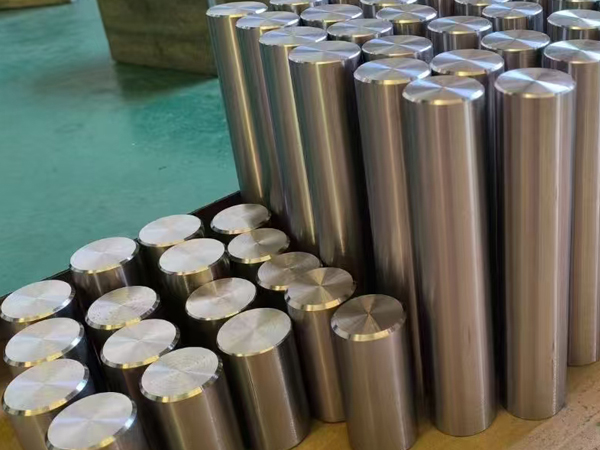
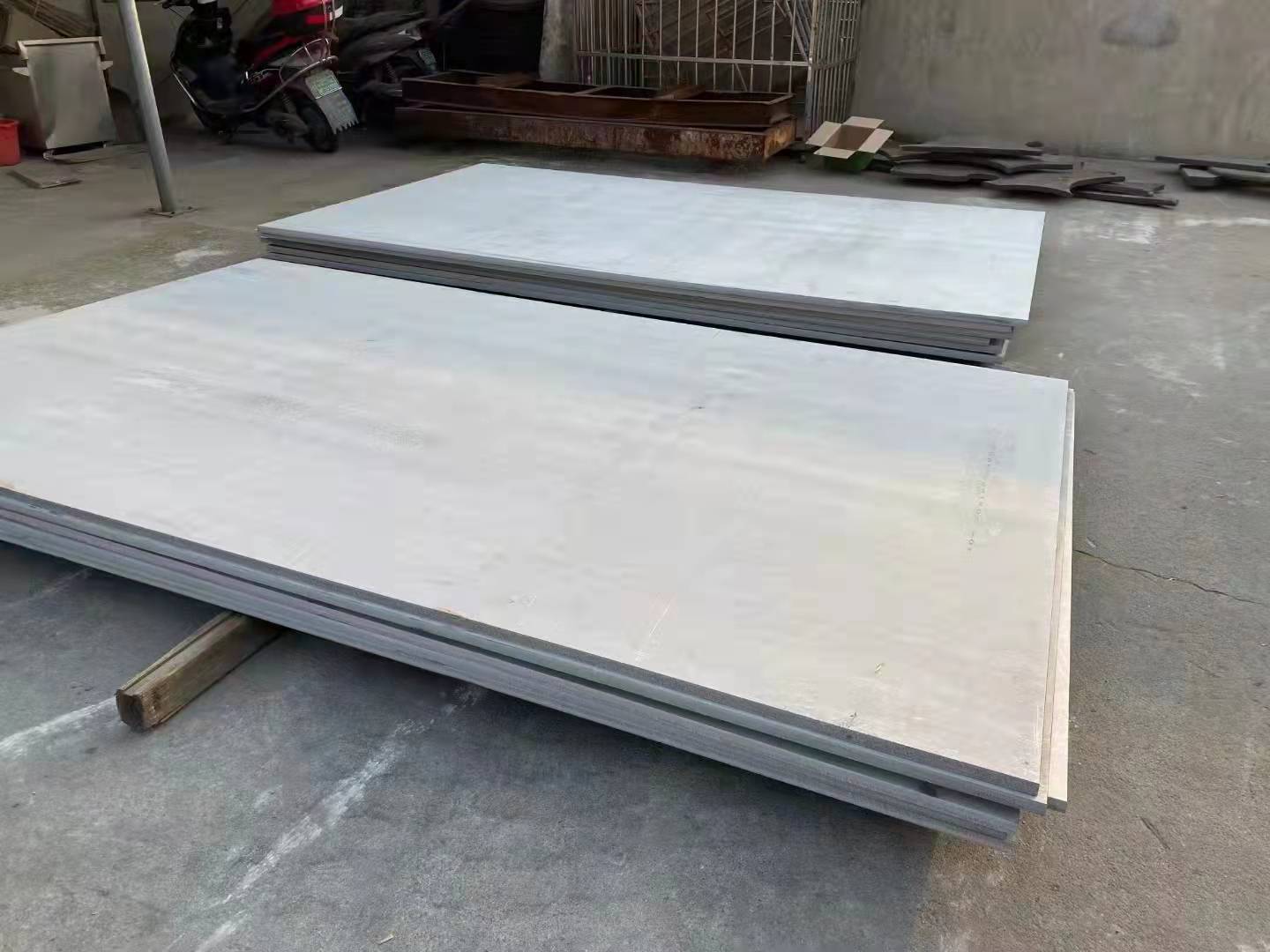
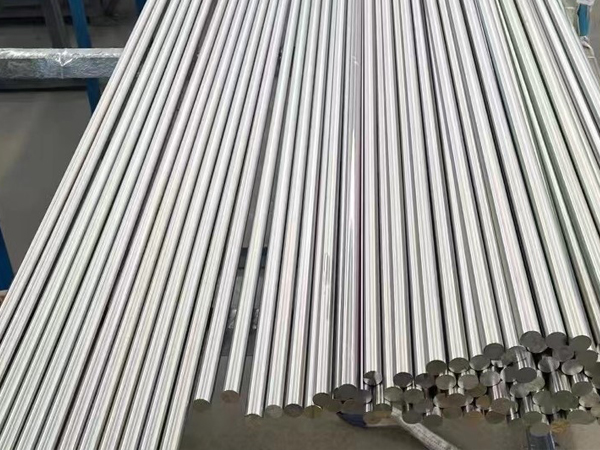
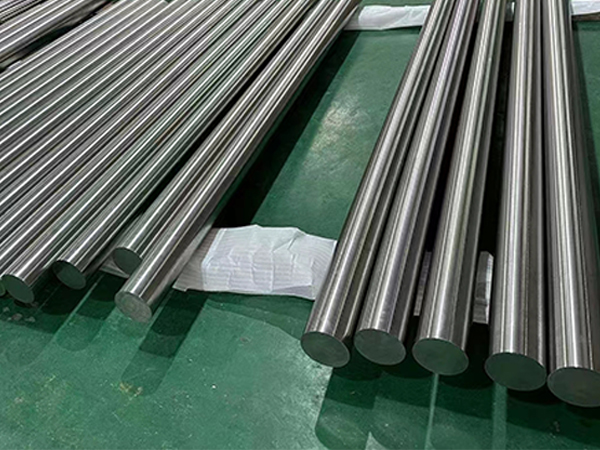
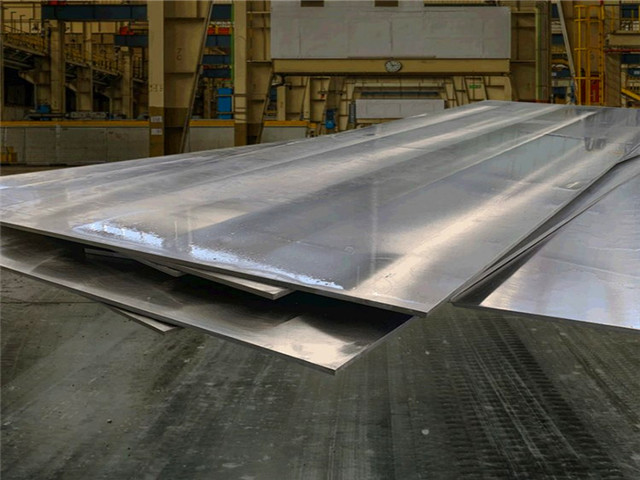
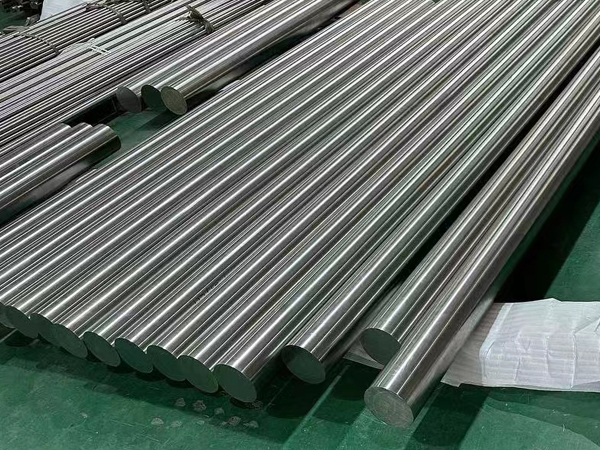
The metal's corrosion resistance comes from a dense, self-healing titanium dioxide (TiO2) passive film that forms instantly on exposure to air or water. That film makes Grade 1 virtually immune to seawater, oxidizing chloride solutions, wet chlorine, and most organic acids, and it is never consumed because the film reforms almost instantly if damaged. Because Grade 1 has the same titanium chemistry at heart as the stronger CP grades, it loses almost none of that corrosion performance while gaining exceptional workability. Hangbo Alloy supplies Titanium Grade 1 as plate, sheet, strip, bar, and billet to ASTM B348 (bar and billet) and ASTM B265 (sheet, strip, and plate), backed by full mill test certification and traceable from ingot to final dimension. This article examines the metallurgy, mechanical behavior, corrosion performance, and deep-drawing characteristics of UNS R50250 in detail.
Metallurgy of Commercially Pure Titanium
Commercially pure titanium is not an alloy in the conventional sense: it is unalloyed titanium whose properties are controlled almost entirely by residual interstitial elements — oxygen, nitrogen, carbon, and hydrogen — together with a small iron content. At room temperature, pure titanium is stable in the hexagonal close-packed (HCP) alpha phase. The alpha phase has limited slip systems compared with the body-centered cubic (BCC) beta phase that exists above the beta transus (roughly 880–900 °C for Grade 1), and this crystallography explains both the metal's high ductility in sheet form and its anisotropic forming behavior.
Oxygen is the dominant strengthener in CP titanium. Each interstitial oxygen atom distorts the HCP lattice and blocks dislocation motion, raising yield and tensile strength while reducing elongation and formability. Titanium Grade 1 caps oxygen at 0.18 %, the tightest limit in the CP series, which is why it is the grade with the greatest capacity for cold work. Nitrogen is roughly an order of magnitude more potent as a strengthener per unit weight than oxygen and is held to 0.03 % maximum; carbon is limited to 0.08 %. Hydrogen is controlled to 0.015 % maximum, primarily to avoid hydride precipitation and impact-toughness loss in plate product. Iron, present as an impurity that stabilizes the beta phase, is limited to 0.20 %.
Chemical Composition
| Element | Composition Limit (wt. %) — ASTM B265 / B348 |
|---|---|
| Titanium (Ti) | Balance (99.0 min., typical) |
| Oxygen (O) | 0.18 max. |
| Iron (Fe) | 0.20 max. |
| Carbon (C) | 0.08 max. |
| Nitrogen (N) | 0.03 max. |
| Hydrogen (H) | 0.015 max. |
| Residuals (each) | 0.10 max. |
The composition limits above are identical in the principal product specifications, reflecting a deliberate design intent: every CP grade shares the same interstitial ceiling philosophy, and only the oxygen and iron allowances change between Grades 1, 2, 3, and 4. Grade 1 occupies the low-oxygen end, giving the weakest but most workable product in the series.
Mechanical Properties (Annealed Condition)
Because Grade 1 is nearly always used in the annealed condition, specification minimums and typical values are both meaningful for design. The values below represent the annealed requirements typical of ASTM B265 (sheet, strip, and plate) and ASTM B348 (bar and billet).
| Property | ASTM Minimum | Typical (Annealed) |
|---|---|---|
| Tensile Strength, Rm | 240 MPa (35 ksi) | 275 – 345 MPa |
| Yield Strength, Rp0.2 | 170 MPa (25 ksi) | 170 – 240 MPa |
| Elongation (2 in / 50 mm) | 24 % | 30 – 40 % |
| Reduction of Area (bar) | 30 % | 45 – 55 % |
| Hardness | — | ~120 HV / 70 HRB |
| Elastic Modulus | — | ~103 GPa |
Two observations matter to the design engineer. First, the specification minimum tensile strength of 240 MPa is the lowest of any structural metal in the CP titanium family, and the yield strength of only 170 MPa means the material reaches its plastic range early — precisely what a deep-drawing operation wants, because forming loads stay low and the metal distributes strain evenly before strain hardening takes over. Second, the ratio of tensile to yield strength is unusually high (roughly 1.4–1.5), a signature of excellent work-hardening capacity. That work-hardening reserve is what allows a Grade 1 blank to be drawn into a cup or shell without tearing at the punch nose, and it is the reason Grade 1 is specified when drawing ratios are aggressive.
Physical Properties
| Property | Value |
|---|---|
| Density | 4.51 g/cm³ |
| Melting Range | ~1,660 – 1,670 °C |
| Beta Transus | ~880 – 900 °C |
| Mean Coefficient of Thermal Expansion (20 – 100 °C) | ~8.6 – 9.0 µm/m·K |
| Thermal Conductivity (20 °C) | ~16 – 21 W/m·K |
| Electrical Resistivity (20 °C) | ~48 – 55 µΩ·cm |
| Elastic Modulus | ~103 GPa |
| Poisson's Ratio | ~0.34 |
The low density of 4.51 g/cm³ — about 57 % of steel and 60 % of nickel alloys — is frequently the economic trigger for specifying titanium. When a deep-drawn component is weight-sensitive or when a chemical vessel lining is sold by area rather than mass, Grade 1 delivers a corrosion-resistant structure at a fraction of the equivalent steel or nickel-alloy weight.
Comparing the CP Grades: Where Grade 1 Sits
| Grade | UNS | Oxygen (max.) | Tensile Min. (MPa) | Yield Min. (MPa) | Formability Ranking |
|---|---|---|---|---|---|
| Grade 1 | R50250 | 0.18 % | 240 | 170 | Best — highest ductility, easiest cold forming |
| Grade 2 | R50400 | 0.25 % | 345 | 275 | Excellent — the general-purpose workhorse |
| Grade 3 | R50550 | 0.35 % | 445 | 380 | Good — moderate strength and toughness |
| Grade 4 | R50700 | 0.40 % | 550 | 483 | Fair — highest strength, least formable |
Each step up the CP ladder buys roughly 35 % more tensile strength at the cost of progressively lower elongation and tighter bend radii. Grade 1 is the only grade that comfortably supports a 180° flat bend on its own axis and drawing ratios that other grades achieve only with intermediate annealing. When a component requires the corrosion resistance of titanium and the strength demand is modest, selecting Grade 1 instead of Grade 2 or 3 can eliminate forming rejections and reduce tooling wear.
Corrosion Resistance
Titanium's corrosion resistance is a property of its passive film, not of the bulk metal. The TiO2 film is thermodynamically stable in most natural environments and, once scratched or damaged, re-forms in milliseconds in the presence of water or oxygen. This makes Grade 1 essentially immune to general corrosion, pitting, and stress-corrosion cracking in the environments listed below.
| Environment | Grade 1 Performance |
|---|---|
| Seawater and brackish water | Immune — no pitting, crevice attack, or SCC, even at elevated velocity |
| Oxidizing chlorides (FeCl3, CuCl2, NaClO) | Excellent resistance |
| Wet chlorine gas | Excellent (dry chlorine gas is not tolerated) |
| Nitric acid (all concentrations) | Excellent up to ~90 °C and above, depending on concentration |
| Organic acids (acetic, citric, lactic) | Excellent, including at elevated temperature |
| Sulfuric and hydrochloric acid | Limited to dilute concentrations unless inhibited or aerated |
| Hydrofluoric acid | Not recommended — rapid attack |
| Caustic soda | Good at moderate temperatures and concentrations |
The metal's Achilles' heel is reducing acids such as hydrochloric and sulfuric acid, which strip the passive film in the absence of oxidizing species. Grade 1 is therefore selected for chloride-rich and oxidizing service, while reducing-acid duty belongs to nickel-molybdenum alloys such as Hastelloy C-276. Designers should also note the crevice-corrosion threshold: in hot chloride brines above roughly 80 °C, tight crevices can initiate attack on CP titanium, and crevice-free joint design or higher-alloy grades are the standard remedies.
Deep Drawing and Cold Formability
Deep drawing is where Titanium Grade 1 has no equal among corrosion-resistant metals. The combination of low yield strength, high work-hardening exponent, and elongation of 30–40 % in the annealed condition allows blanks to be drawn into shells with limiting drawing ratios (LDR) of roughly 2.0–2.2 in a single operation, and multiple draws with intermediate annealing can produce components of remarkable depth.
Practical deep-drawing guidance for Grade 1 includes the following points. Tooling must be rigid, with generous punch-nose and die-entry radii — never less than about 4–6 times the sheet thickness for the first draw — because titanium does not "flow" into sharp corners as freely as steel. Because the HCP lattice resists through-thickness shear, the sheet exhibits pronounced anisotropy; blanks should be oriented with respect to rolling direction when ears must be minimized. Lubrication is essential: a heavy-duty chlorine-free drawing compound or molybdenum-disulfide paste on the die side, with the punch side kept relatively dry to transfer strain into the wall. Blankholding pressure must be tuned carefully — too little produces wrinkling, too much produces bottom tearing. Titanium's low elastic modulus means spring-back is modest at the small strains used in shallow forming but must still be compensated by over-bending in air-bending operations.
Where multi-stage drawing is required, Grade 1 work-hardens quickly enough that an intermediate anneal at 650–760 °C in a protective atmosphere restores full ductility. Because Grade 1 has the lowest flow stress of any CP grade, it also excels at spinning, flow forming, superplastic-like hot forming at 700–900 °C, and hydroforming of large-area components. The same softness makes it the preferred grade for explosive cladding and roll bonding onto steel for lined vessels.
Fabrication and Welding
Grade 1 is the easiest titanium grade to fabricate, but titanium still demands discipline that steel fabricators must learn:
- Welding: GTAW (TIG) is the standard process, using matching Grade 1 filler. The molten and hot-solid weld zone must be shielded with high-purity argon — trailing shields and backing gas are mandatory — because titanium above about 300 °C absorbs oxygen and nitrogen rapidly, forming a brittle, hard "alpha case" that cracks under load. A clean weld on Grade 1 is bright silver; any straw, blue, or gray color indicates contamination and loss of ductility.
- Hot working: 700 – 900 °C with protective atmosphere or controlled scaling; final annealing at 650 – 760 °C followed by air cooling restores the annealed condition.
- Cold working: Excellent, as discussed; strain rates should be moderate, and galling against steel tooling is prevented by lubrication.
- Machining: Grade 1 is gummy compared with hardened titanium alloys; sharp tools, high positive rake, flood coolant, and rigid setups prevent work hardening and built-up edge.
- Surface cleanliness: Iron contamination from carbon-steel tooling or grinding debris must be removed (pickling or clean abrasive blasting) because embedded iron particles create galvanic cells that can pit the titanium in service.
Standards, Specifications, and Product Forms
| Specification | Scope |
|---|---|
| ASTM B265 | Sheet, strip, and plate |
| ASTM B348 | Bar and billet |
| ASTM B861 | Seamless pipe |
| ASTM B862 | Welded pipe |
| ASTM B338 | Seamless and welded tube for condensers and heat exchangers |
| ASTM F67 | Unalloyed titanium for surgical implant applications |
| ASME SB-265 / SB-348 | Pressure-vessel code versions |
| DIN 3.7025 / W.Nr. 3.7025 | European equivalent designation |
Hangbo Alloy manufactures Titanium Grade 1 through sponge consolidation, vacuum-arc remelting, and precision rolling, and supplies it in coil, strip, sheet, plate, bar, and billet forms. Every heat is certified for the six controlling elements, with oxygen and hydrogen verified by inert-gas fusion analysis and iron by atomic absorption or ICP spectrometry.
Applications Overview
| Industry | Representative Applications |
|---|---|
| Chemical processing | Vessel and column linings, reactor internals, heat-exchanger tubing, anodes, catalyst baskets |
| Chlor-alkali | Deep-drawn anodes and electrode frames in brine electrolysis |
| Desalination | Tube bundles and waterboxes in MSF and MED plants |
| Marine | Shafting protection, splash-zone sheathing, seawater piping |
| Architectural | Roofing, cladding, and curtain-wall panels exploiting deep-drawn profiles |
| Food and pharmaceutical | Process vessels and storage tanks requiring purity and cleanability |
| Electroplating | Deep-drawn anode baskets and heating/cooling coils |
| Medical | Implant-grade instrument trays and non-load-bearing devices (ASTM F67) |
The deep-drawn anodes, baskets, and shells made from Grade 1 illustrate the economics of the grade: a single deep-drawn titanium shell replaces a welded fabrication, eliminating weld seams — and therefore the corrosion and inspection risks every seam carries — at lower total cost.
Why Choose Hangbo Alloy
Hangbo Alloy operates an integrated titanium production route from raw sponge through multiple vacuum-arc remelts, ensuring homogeneous interstitial distribution and freedom from hard-alpha defects. Rolling is carried out with tight temperature control so that annealed sheet consistently delivers the low yield strength and high elongation that deep-drawing dies demand. Hangbo Alloy supplies Titanium Grade 1 with EN 10204 3.1 mill certificates, offers 3.2 witness testing and third-party inspection, and exports worldwide through nickel-alloy.com, with thickness tolerances and surface finish suitable for the most demanding forming operations.
Technical FAQ
Q1: What is the difference between Titanium Grade 1 and Grade 2? Grade 2 has roughly double the guaranteed minimum tensile strength (345 MPa vs. 240 MPa) and is the most widely used CP grade. Grade 1 trades that strength for higher ductility, lower yield strength, and better cold formability, making it the better choice for deep drawing and severe forming.
Q2: Can Titanium Grade 1 be deep-drawn without intermediate annealing? Single draws to a limiting drawing ratio of roughly 2.0–2.2 are routine. Deeper components require intermediate annealing at 650–760 °C between draws because CP titanium work-hardens rapidly.
Q3: Is Titanium Grade 1 resistant to seawater corrosion? Yes. It is effectively immune to general corrosion, pitting, and stress-corrosion cracking in seawater, including polluted and high-velocity seawater, which is why it is standard for heat-exchanger tubing and marine hardware.
Q4: Where should Titanium Grade 1 NOT be used? It should not be used in hydrofluoric acid, concentrated hot reducing acids such as hydrochloric or sulfuric acid without inhibitors or aeration, or dry chlorine gas. In those media, select nickel-based alloys such as Hastelloy C-276.
Q5: Why does titanium weld metal turn blue, and is that a problem? Blue, straw, or gray discoloration indicates oxygen and nitrogen pickup from inadequate shielding. The contaminated alpha case is hard and brittle and must be removed by grinding or pickling; a properly shielded Grade 1 weld is bright silver.
Q6: Is Titanium Grade 1 suitable for high-temperature service? No. It is selected for corrosion resistance and formability at ambient to moderate temperatures (typically up to ~200–300 °C for structural use). At higher temperatures, oxidation and strength loss make titanium alloys such as Ti-6Al-4V or nickel alloys more appropriate.
Q7: How is Titanium Grade 1 priced relative to stainless steel? Grade 1 costs substantially more per kilogram than stainless steel, but its density is only 57 % of steel's, and in corrosion service its life is measured in decades. Life-cycle cost comparisons routinely favor titanium for seawater and chloride service.
Q8: Does Hangbo Alloy supply Titanium Grade 1 in coil and strip? Yes — coil, strip, sheet, plate, bar, and billet, with certified chemistry per heat and mechanical testing to ASTM B265 and B348 requirements.
Q9: Can Titanium Grade 1 be welded to stainless steel or carbon steel? Direct fusion welding is not recommended because brittle intermetallic phases form. Explosive bonding or mechanical joining (such as clad plate) is the standard approach for titanium-to-steel transition joints.
Q10: How is Titanium Grade 1 certified for medical implant use? Implants require the tighter composition limits of ASTM F67; Hangbo Alloy can supply Grade 1 product meeting F67 requirements with full traceability for device manufacturers.