

Excerpt:
Titanium Grade 12 (Ti-0.3Mo-0.8Ni, UNS R53400) technical guide from Hangbo Alloy (Shanghai Hangbo Alloy Group, nickel-alloy.com). Lean near-alpha alloy strengthened and ennobled by molybdenum and nickel - crevice- and reducing-acid resistance beyond CP titanium at a fraction of the Grade 7 palladium cost, 483 MPa minimum tensile. Covers ASTM B265/B348/B338/B861/B862/B381 forms for heat exchangers, geothermal and chlor-alkali service.
Titanium Grade 12 (Ti-0.3Mo-0.8Ni / UNS R53400) — Plate, Bar and Tube Technical Guide | Hangbo Alloy
Technical Bulletin for Chemical Process, Heat-Exchanger, Geothermal, and Marine Corrosion-Engineering Procurement
Introduction
Every corrosion engineer eventually meets the same titanium dilemma. Commercially pure (CP) titanium is superb in seawater, oxidizing acids, and wet chlorine, but its protective TiO₂ passive film becomes vulnerable in hot, oxygen-starved crevices and in reducing acids — exactly the environments found inside heat exchangers, brine heaters, and chemical reactors. The classic answer, Grade 7, adds palladium to solve the problem, but palladium is a precious metal and Grade 7 carries a price premium that many projects cannot justify. Titanium Grade 12 (UNS R53400, W.Nr. 3.7105) was developed as the engineering alternative: a lean near-α alloy strengthened and ennobled by 0.3% molybdenum and 0.8% nickel, delivering crevice-corrosion and reducing-acid resistance far beyond CP titanium, at a fraction of the cost of the palladium-bearing grades.
Grade 12 occupies a deliberate market position. Mechanically it sits between the CP grades and the α+β alloys: its annealed minimum tensile strength of 483 MPa is roughly 40% higher than Grade 2, which allows thinner, lighter pressure-retaining components. Electrochemically it sits near the noble-metal grades: the nickel addition acts as a cathodic modifier that keeps the passive film stable in hot chloride crevices and mildly reducing media where unalloyed titanium would actively corrode. The result is the titanium industry's default choice when a design needs "something tougher than CP but more economical than Grade 7" — the alloy most often specified for seawater and brine heat exchangers, geothermal production equipment, chlor-alkali hardware, and pressure vessels in aggressive chloride service.
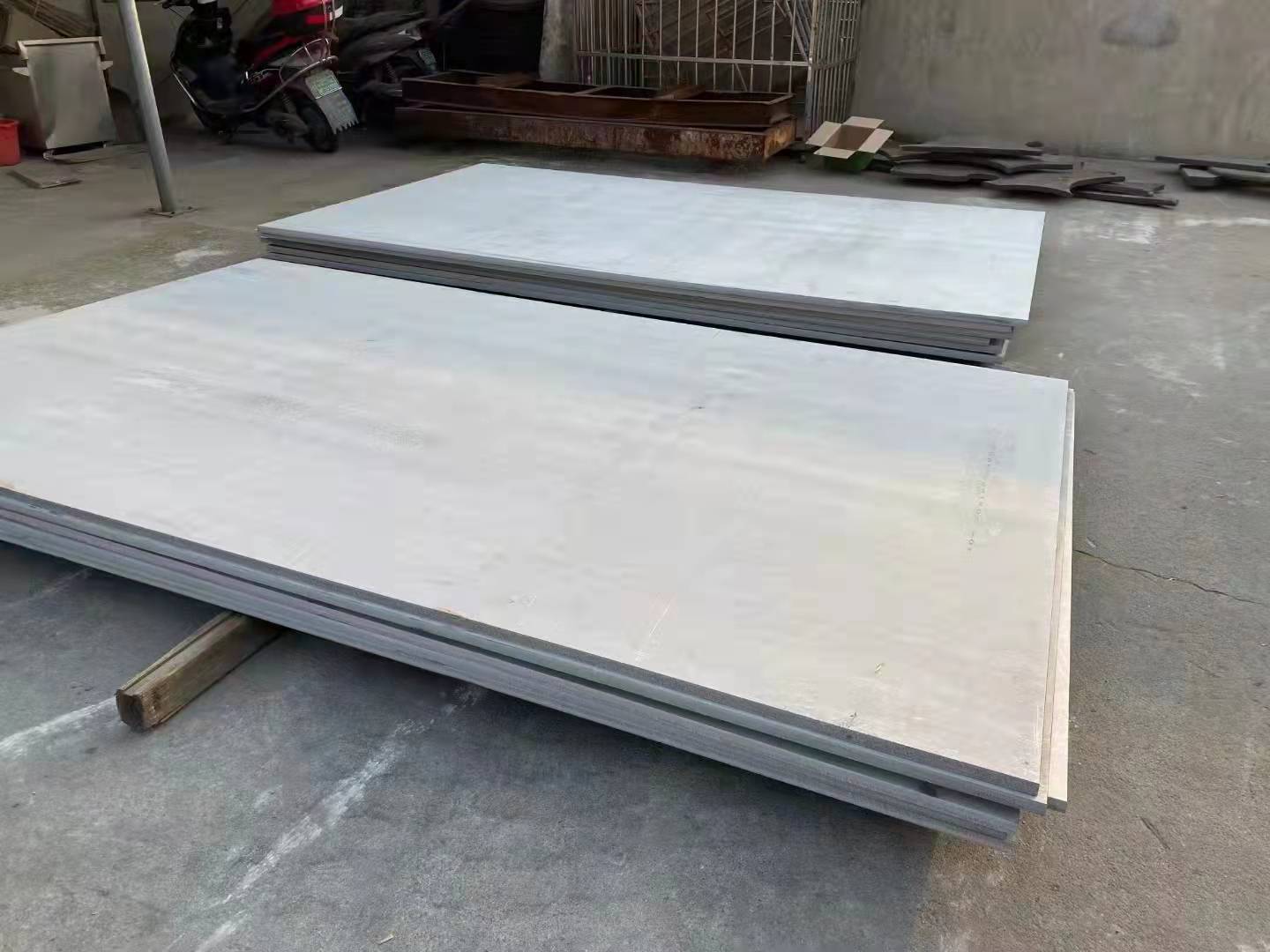
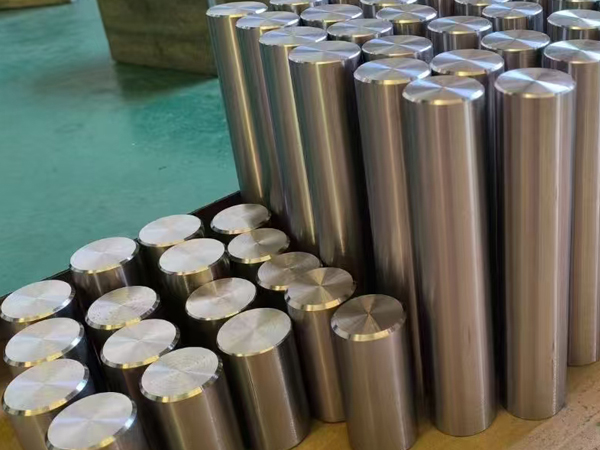
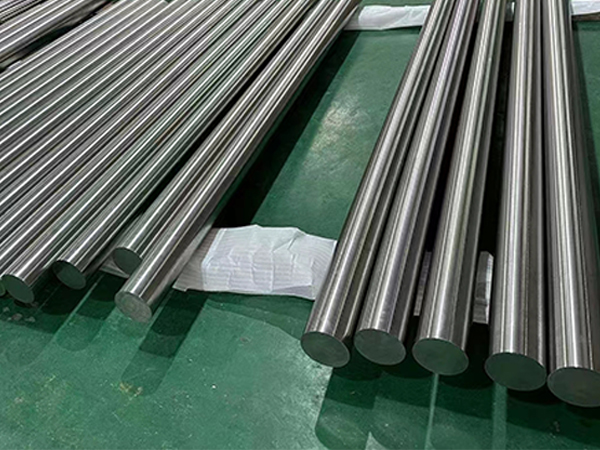
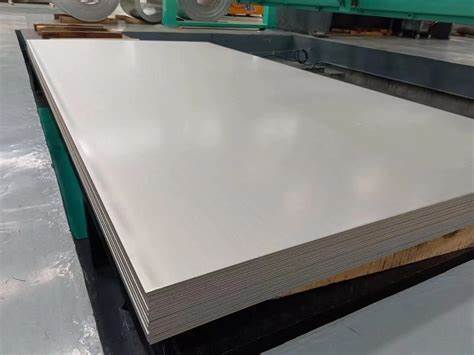
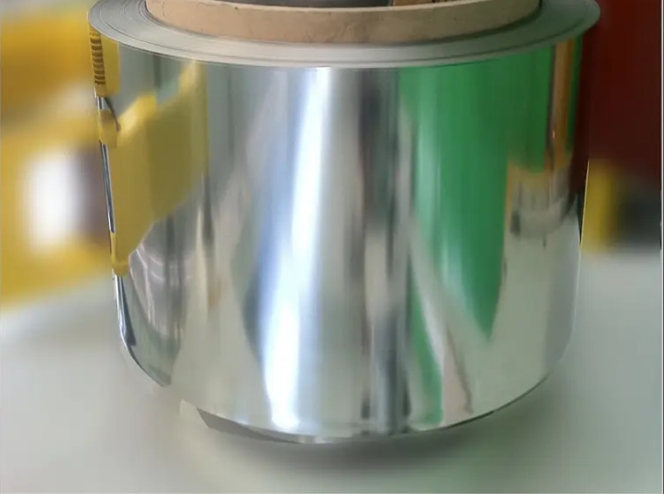
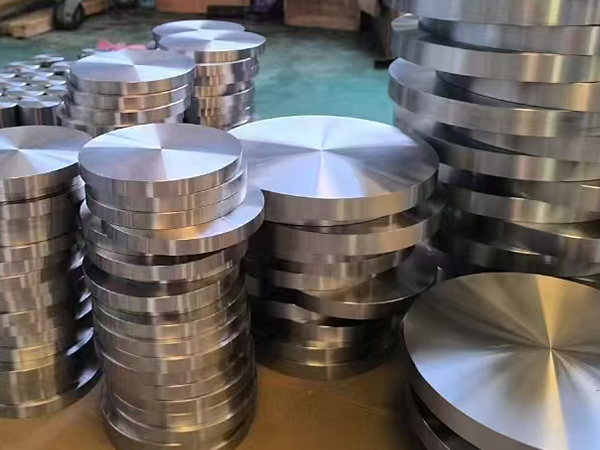
Shanghai Hangbo Alloy Group (nickel-alloy.com) supplies Titanium Grade 12 in plate, sheet, strip, bar, billet, seamless and welded tube, pipe, forgings, and fittings, certified to ASTM B348, B265, B338, B861, B862, and B381 with EN 10204 3.1 documentation, 100% PMI verification of molybdenum and nickel, and full heat traceability. Because Grade 12 is sometimes substituted for CP grades — or mislabeled by mills that do not verify nickel — confirming the 0.6–0.9% nickel range on every certificate is an essential quality check. This guide documents the chemistry, metallurgy, mechanical envelope, corrosion performance, fabrication practice, and application logic of Ti-0.3Mo-0.8Ni.
Chemical Composition
The composition limits below are the acceptance baseline for Grade 12 mill products supplied by Hangbo Alloy to ASTM B265, B348, and B338. Titanium is the balance element.
| Element | ASTM Spec Limit (wt %) | Typical Heat Value | Metallurgical Role |
|---|---|---|---|
| Titanium (Ti) | Balance | ~98.6 | α-phase matrix; passive-film former |
| Molybdenum (Mo) | 0.2 – 0.4 | 0.28 – 0.35 | β stabilizer; solid-solution strengthener; supports film stability in reducing media |
| Nickel (Ni) | 0.6 – 0.9 | 0.70 – 0.85 | Cathodic modifier — crevice- and reducing-acid-control element |
| Iron (Fe) | 0.30 max | 0.05 – 0.15 | Trace β stabilizer |
| Oxygen (O) | 0.25 max | 0.10 – 0.16 | Interstitial strengthener (Grade 3-equivalent ceiling) |
| Carbon (C) | 0.08 max | 0.01 – 0.03 | Trace interstitial |
| Nitrogen (N) | 0.03 max | 0.008 – 0.015 | Trace interstitial |
| Hydrogen (H) | 0.015 max | 0.002 – 0.005 | Held low for hydride control |
| Other elements, each / total | 0.10 / 0.40 max | — | Per governing ASTM specification |
Nickel is the element that makes Grade 12 what it is, and it is the element that must be verified. The 0.6–0.9% range is what separates Grade 12 from ordinary CP titanium in both chemistry and corrosion performance; a certificate showing nickel "nil" or below 0.6% is not Grade 12. Hangbo Alloy checks Mo and Ni by OES/arc analysis on every heat and declares the tested values on the EN 10204 3.1 certificate, and verifies delivered items by PMI before release.
Metallurgy: How Molybdenum and Nickel Protect Grade 12
Grade 12's corrosion advantage is best understood as a two-element system, not a single addition:
-
Nickel is the cathodic workhorse. Like palladium in Grade 7, nickel — enriched at the surface and present as finely dispersed Ti₂Ni-type intermetallics — provides efficient sites for the hydrogen-reduction reaction. In a hot, deoxygenated crevice or a reducing acid, this cathodic support pulls titanium's mixed potential back toward the passive range, stabilizing the TiO₂ film where CP titanium would break down. Nickel is a far weaker catalyst than palladium, which is why Grade 12 does not quite match Grade 7 in the most aggressive reducing acids — but it delivers most of the practical benefit for a small fraction of the alloy cost.
-
Molybdenum is the film and solid-solution partner. Molybdenum is a β stabilizer that strengthens the α matrix in solid solution and improves the stability of the passive film in reducing environments. It also shifts the alloy's behavior in hot chloride service, extending the temperature range over which the film resists localized breakdown. Together with nickel, molybdenum gives Grade 12 a genuine corrosion "envelope" above CP titanium rather than a marginal improvement.
Metallurgically, Grade 12 is a near-α alloy: the small Mo-Ni addition keeps the annealed structure predominantly fine equiaxed α with only a small retained β fraction. It is supplied annealed (typically 700–790 °C, air-cooled), has no meaningful age-hardening response, and behaves in fabrication almost exactly like the CP grades — weldable, formable, and forgiving. The elevated strength compared with Grade 2 comes from solid-solution strengthening rather than heat treatment, which is why properties are stable across section sizes and weld repairs.
Governing Specifications and Product Forms
| Product Form | ASTM Specification | ASME Equivalent | Typical Range Supplied by Hangbo Alloy |
|---|---|---|---|
| Plate, sheet, and strip | ASTM B265 | ASME SB-265 | Plate 0.3 – 100 mm thick |
| Bar and billet | ASTM B348 | ASME SB-348 | Round bar Ø 6 – 350 mm |
| Seamless condenser / heat-exchanger tube | ASTM B338 | ASME SB-338 | Seamless tube Ø 6 – 89 mm OD |
| Seamless pipe | ASTM B861 | ASME SB-861 | 1/8″ – 12″ NB |
| Welded pipe | ASTM B862 | ASME SB-862 | 60 – 610 mm OD |
| Forgings | ASTM B381 | ASME SB-381 | Flanges, tube sheets, custom forgings |
| Wire | ASTM B863 | — | Welding wire and springs |
| Fittings | ASTM B363 | ASME SB-363 | 1/2″ – 24″ |
Procurement callout discipline: "Titanium Grade 12, UNS R53400, seamless tube per ASTM B338 / ASME SB-338, annealed" — UNS plus product standard, with molybdenum and nickel ranges confirmed on the certificate. Grade 12 is a code-recognized material in ASME construction (SB-265/SB-348/SB-338 equivalents), so pressure-vessel and exchanger designs can reference it directly.
Mechanical Properties
| Property | ASTM Minimum (Annealed) | Typical (Annealed) | Notes |
|---|---|---|---|
| Tensile strength (UTS) | 483 MPa (70 ksi) | 540 – 650 MPa | Per B265/B348/B338 tables |
| 0.2% yield strength (YS) | 345 MPa (50 ksi) | 380 – 550 MPa | ~25% above Grade 2 minimum |
| Elongation in 2 in. (50 mm) | 18% | 20 – 28% | Scales with section size |
| Reduction of area (bar) | — | 35 – 50% | Informational |
| Hardness | — | 180 – 230 HV | Informational |
| Condition | Annealed | Recrystallized near-α | No meaningful age-hardening response |
The 483/345 MPa minimums are the practical reason Grade 12 wins thin-wall designs. An exchanger tube or pressure part sized on CP Grade 2 allowables (345/275 MPa) can be redesigned in Grade 12 at roughly 30% higher allowable stress, or conversely at thinner wall for the same rating — cutting weight and material cost while simultaneously upgrading the corrosion margin. Because Grade 12 stays ductile and weldable at that strength level, the mechanical upgrade costs nothing in fabricability.
Physical Properties
| Property | Value | Notes |
|---|---|---|
| Density | 4.51 g/cm³ (0.163 lb/in³) | Essentially unchanged from CP titanium |
| Melting range | ~1650 – 1670 °C | Near CP-titanium melting behavior |
| Beta transus | ~880 – 915 °C | Oxygen- and composition-dependent |
| Modulus of elasticity | ~103 – 110 GPa | Room temperature |
| Coefficient of thermal expansion | ~8.6 – 9.2 × 10⁻⁶ /°C | Steel-like |
| Thermal conductivity | ~16 – 19 W/m·K | Slightly below CP grades |
| Electrical resistivity | ~0.55 µΩ·m | |
| Magnetic behavior | Non-magnetic | |
| Annealing range | 700 – 790 °C | Air cool; recrystallized near-α |
Corrosion Performance: High-Temperature and Crevice Duty
| Environment | CP Titanium (Grade 2) | Grade 12 (Ti-0.3Mo-0.8Ni) |
|---|---|---|
| Seawater and chloride brines, ambient | Excellent | Excellent |
| Hot chloride crevices (>70 – 80 °C) | Crevice attack possible | Resistant well above the CP limit — the signature advantage |
| Hot reducing brines and sour brines | Marginal above ~100 °C | Good — usable at substantially higher temperatures |
| Dilute HCl (non-oxidizing) | Active corrosion possible | Passive to moderate concentrations/temperatures |
| Dilute H₂SO₄ (non-oxidizing) | Active corrosion possible | Extended envelope vs. CP |
| Oxidizing acids (nitric, chromic) | Excellent | Excellent |
| Organic acids | Excellent | Excellent |
| Wet chlorine, hypochlorite | Excellent | Excellent |
| Caustic (NaOH) solutions | Limited by temperature | Improved margin vs. CP |
| Hydrofluoric acid | Not recommended | Not recommended (Mo-Ni does not defeat HF) |
| Oxidizing impurities (Fe³⁺, Cu²⁺, O₂) in reducing acids | Improve CP performance | Further improve Grade 12 |
The practical read: Grade 12 is the alloy to specify when a CP-titanium design is limited by crevice temperature or by excursions into mildly reducing chemistry, but the full reducing-acid aggressiveness of Grade 7's palladium is not required. Its best-known duty is high-temperature brine — geothermal brines, chloride-laden produced water, and seawater circuits running hot enough that CP grades would crevice-corrode at gaskets, tube-to-tubesheet joints, and under deposits. In many services Grade 12 performs within a small margin of the palladium grades at roughly half the alloy surcharge, which is why it appears in ASME pressure-vessel and exchanger service across chemical, energy, and marine industries.
One nuance deserves emphasis: for maximum crevice performance in welded equipment, the fabricator should anneal weldments after welding. Welding leaves nickel-rich precipitates and a transformed microstructure in the weld zone; a post-weld anneal in the 650–790 °C range restores the optimum distribution and gives the weld metal the same crevice margin as the parent plate.
Fabrication, Welding, and Machining
- Welding: Grade 12 welds like the CP grades. GTAW with argon shielding and backing purge is standard, using matching ERTi-12 filler to preserve both strength and corrosion performance. No preheat is required. For crevice-critical service, a post-weld anneal at 650 – 790 °C is recommended to restore full corrosion resistance in the weld and heat-affected zone.
- Hot and cold forming: Excellent cold formability; hot forming in the 650 – 925 °C band where required, with a final anneal to restore the certified envelope.
- Machining: Machines like a moderately stronger CP grade — free-cutting relative to α+β alloys, but use sharp tooling, positive rake, rigid setups, and flood coolant to avoid galling and work hardening.
- Surface and cleanliness: Prevent iron contamination (embedded iron initiates localized corrosion), and pickle or passivate per specification after fabrication.
- Quality verification: The acceptance-critical elements are molybdenum and nickel. Hangbo Alloy verifies both by certified OES analysis on every heat, declares the values on the EN 10204 3.1 certificate, and PMI-checks delivered items — so Grade 12 is Grade 12, not quietly re-labeled CP.
Grade 12 vs. the Alternatives
| Alloy | Key Addition | Strength Level | Relative Cost | Typical Selection Logic |
|---|---|---|---|---|
| Grade 2 (R50400) | None | Low (345 MPa UTS min) | Baseline | General chloride service, no crevice issue |
| Grade 3 / Grade 4 | None (higher O / Fe) | Intermediate | Low | Stronger CP where corrosion duty is mild |
| Grade 12 (R53400) | 0.3% Mo + 0.8% Ni | Elevated (483 MPa UTS min) | Moderate | Hot brine/crevice duty + higher strength, economical |
| Grade 15 (R53415) | 0.5% Ni + ~0.05% Ru | Elevated (483 MPa UTS min) | Moderate | Crevice resistance with noble-metal assist, lower cost |
| Grade 7 (R52400) | 0.12 – 0.25% Pd | Grade 2 base | High | Maximum reducing-acid + crevice margin |
| Grade 16 / 17 (R52402/R52252) | ~0.05% Pd | Grade 2 / Grade 1 base | Moderate–High | Pd benefit at reduced palladium loading |
Selection should be confirmed with coupon testing in the actual process stream wherever duty is borderline. Hangbo Alloy routinely supplies side-by-side Grade 2 / Grade 12 / Grade 15 / Grade 7 coupons so that in-plant corrosion racks — not datasheets — make the final decision, and stocks all of these grades so the optimum can be shipped without a sourcing delay.
Applications Summary
- Seawater, brackish-water, and brine heat exchangers and condensers with hot crevice geometries.
- Geothermal brine production and reinjection equipment, flash vessels, and wellhead hardware.
- Chlor-alkali cell components, brine heaters, and evaporator heat-transfer surfaces.
- Chemical-process reactors, columns, and piping handling hot chlorides with reducing excursions.
- Pressure vessels and piping in sour (H₂S-bearing) chloride service.
- Desalination plant heat-rejection and brine-heater circuits.
- Pulp-bleach and chlorine-dioxide equipment.
- Oil and gas produced-water handling and water-injection systems.
- Pharmaceutical and fine-chemical reactors requiring metallic-ion freedom.
- Flue-gas desulfurization scrubber components where CP strength is marginal.
Hangbo Alloy Supply Program
| Product Form | Specification | Typical Size Range | Testing / Documentation |
|---|---|---|---|
| Plate / Sheet / Strip | ASTM B265 / ASME SB-265 | 0.3 – 100 mm thick | EN 10204 3.1, PMI (Mo + Ni verified) |
| Bar / Billet | ASTM B348 / ASME SB-348 | Ø 6 – 350 mm | EN 10204 3.1, PMI, UT on request |
| Seamless Tube | ASTM B338 / ASME SB-338 | Ø 6 – 89 mm OD | Hydrostatic, eddy current, PMI |
| Pipe (seamless / welded) | ASTM B861 / B862 | 1/8″ NB – 610 mm OD | Hydrostatic, flattening, PMI |
| Forgings / Fittings | ASTM B381 / B363 | Custom | Dimensional, penetrant, PMI |
Every Hangbo Alloy Grade 12 heat is released with tested molybdenum and nickel values documented, 100% PMI of delivered items, heat-lot traceability, and, on request, third-party witness testing (SGS, BV, TÜV) at our Shanghai mill.
Technical FAQ — Titanium Grade 12 (UNS R53400)
1. What is Titanium Grade 12?
Grade 12 is a near-α titanium alloy containing nominally 0.3% molybdenum and 0.8% nickel (ASTM ranges 0.2–0.4% Mo and 0.6–0.9% Ni), with a minimum annealed tensile strength of 483 MPa. It was developed as an economical alternative to palladium-bearing grades for hot chloride, brine, and mildly reducing service.
2. How do molybdenum and nickel improve corrosion resistance?
Nickel acts as a cathodic modifier: it provides efficient hydrogen-reduction sites that keep titanium's potential in the passive range inside hot, oxygen-starved crevices and reducing media. Molybdenum strengthens the matrix in solid solution and improves passive-film stability. Together they extend Grade 12's corrosion envelope far above CP titanium.
3. How does Grade 12 compare with Grade 7 (palladium)?
Grade 7 delivers the maximum reducing-acid and crevice margin because palladium is a much stronger cathodic catalyst — but it is expensive. Grade 12 captures most of the practical crevice and hot-brine benefit at roughly half the alloy surcharge, with higher strength. Where duty is borderline, coupon testing decides.
4. Does Grade 12 resist crevice corrosion?
Yes — that is its signature advantage. CP titanium can crevice-corrode in hot chloride service above roughly 70 – 80 °C; Grade 12 resists crevice initiation at substantially higher temperatures, making it a standard choice for seawater and brine exchangers with tube-to-tubesheet and gasket crevices.
5. What are the mechanical properties of Grade 12?
Annealed minimums per ASTM B265/B348/B338 are 483 MPa tensile, 345 MPa yield, and 18% elongation. Typical annealed values run 540 – 650 MPa tensile with 20 – 28% elongation. It is about 40% stronger than Grade 2 with no loss of weldability or formability.
6. Which ASTM specifications cover Grade 12?
ASTM B265 (plate, sheet, strip), ASTM B348 (bar, billet), ASTM B338 (seamless condenser/heat-exchanger tube), B861/B862 (seamless/welded pipe), B381 (forgings), B363 (fittings), and B863 (wire), with ASME SB equivalents for code construction.
7. Is Grade 12 weldable?
Yes. It welds like the CP grades by GTAW with argon shielding and backing purge, using matching ERTi-12 filler. No preheat is needed. For crevice-critical service, a post-weld anneal at 650 – 790 °C restores the full corrosion margin in the weld zone.
8. Can Grade 12 be heat treated to higher strength?
Practically no. It is a near-α alloy with no meaningful age-hardening response; strength comes from solid-solution hardening by molybdenum and nickel, and the alloy is used in the annealed condition. If higher strength is required, an α+β alloy such as Grade 9 is the appropriate step up.
9. Where is Grade 12 most commonly used?
Hot brine and seawater heat exchangers, geothermal production and reinjection systems, chlor-alkali brine heaters, desalination circuits, sour produced-water handling, and chemical-process equipment where CP titanium is crevice-limited or too weak and palladium grades are over-specified.
10. How does Hangbo Alloy document Grade 12 quality?
Every shipment includes an EN 10204 3.1 mill certificate with tested molybdenum, nickel, iron, and interstitial values plus tensile results, 100% PMI verification, heat-lot traceability, and optional third-party witness testing (SGS, BV, TÜV) at the Shanghai mill.
This page is part of the Titanium Alloy Technical Reference series by Hangbo Alloy (Shanghai Hangbo Alloy Group, nickel-alloy.com). Data presented are typical engineering values compiled from recognized industry sources and are provided for material selection guidance; the governing documents for any purchase are the applicable ASTM/ASME specifications (B265, B348, B338 and SB equivalents) and the certified mill test report. Contact Hangbo Alloy for current stock, mill certificates, and application engineering support.