

Excerpt:
Titanium Grade 2 (UNS R50400, W.Nr. 3.7035) technical guide from Hangbo Alloy (Shanghai Hangbo Alloy Group, nickel-alloy.com). The most widely specified commercially pure (CP) titanium - 345 MPa minimum tensile, ~4.51 g/cm3 - balancing corrosion resistance, strength, formability and weldability for chemical processing and marine service. Covers ASTM B265/B348/B338 chemistry and mechanical data, CP-grade selection logic, corrosion and fabrication practice, and the Hangbo supply program with EN 10204 3.1 certification, 100% PMI and full heat traceability.
Titanium Grade 2 (CP Titanium / UNS R50400) — Plate, Sheet, Bar and Tube Technical Guide | Hangbo Alloy
High-Precision Engineering Reference for Chemical Processing and Marine Service
Introduction
Titanium Grade 2 — the UNS R50400 commercially pure (CP) grade — is the most widely specified titanium product in industrial service, and for good reason. It sits at the exact engineering intersection where corrosion resistance, strength, formability, weldability, and cost-per-year-of-service converge. Where Grade 1 offers maximum ductility for severe forming and Grade 3 or Grade 4 trade ductility for higher load-bearing capacity, Grade 2 holds the balance that process engineers, pressure-vessel designers, and marine surveyors most often need: a minimum tensile strength of 345 MPa (50 ksi) with the essentially total corrosion resistance that only titanium's self-repairing passive film can provide in seawater, chlorides, and oxidizing media.
At roughly 4.51 g/cm³, Grade 2 weighs about 56% of an equivalent carbon-steel section and about half of a nickel-based alloy section, a density advantage that compounds into lighter piping systems, thinner wall allowances in rotating equipment, and lower support-structure cost in offshore topsides. Because it is commercially pure rather than alloyed, Grade 2 contains no aluminum, vanadium, molybdenum, or other deliberate alloy additions — its strengthening comes from controlled interstitial oxygen and iron — which makes its metallurgy simple, its weld heat-affected zones predictable, and its supply chain one of the most flexible in the specialty-metals market.
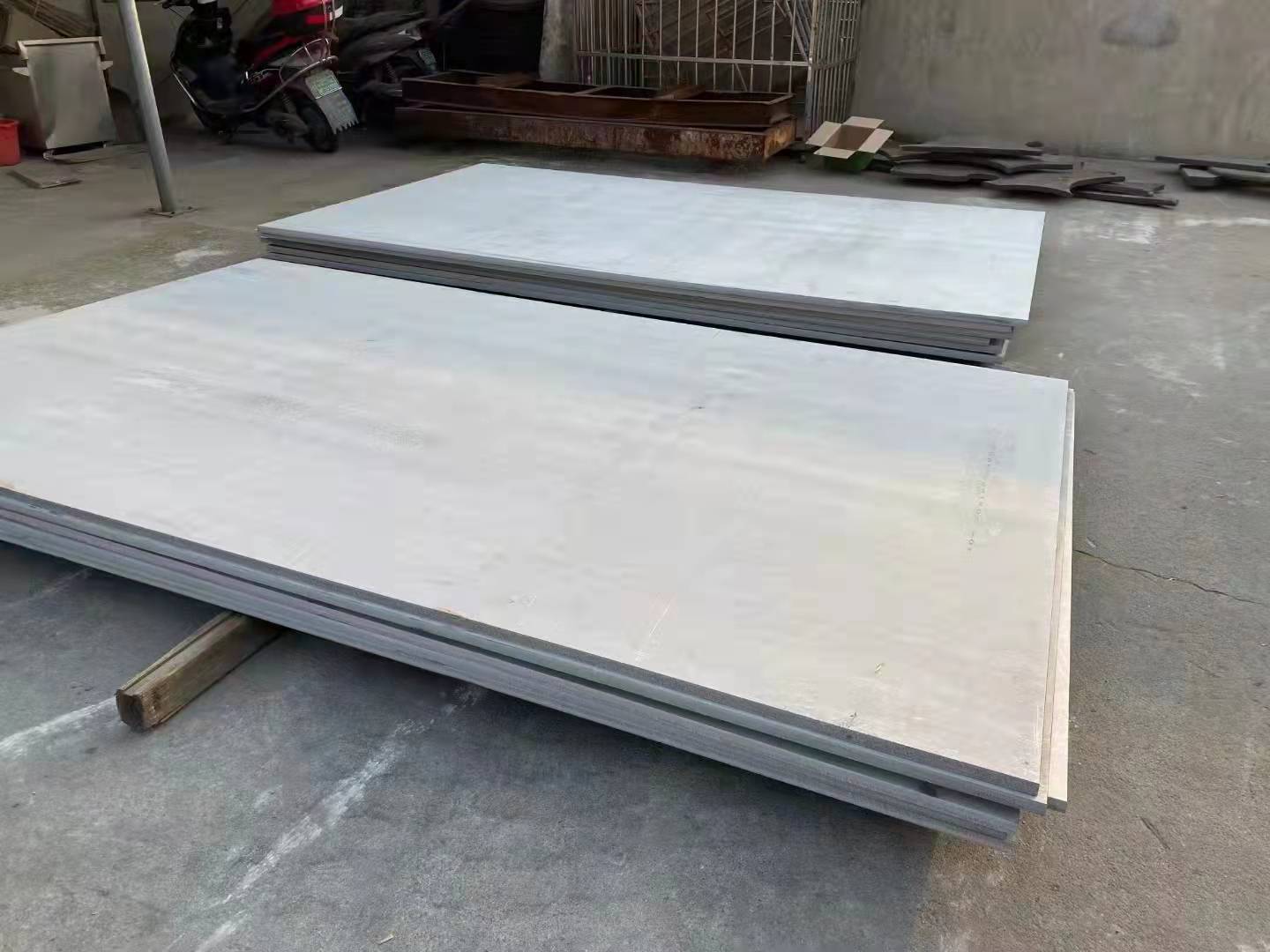
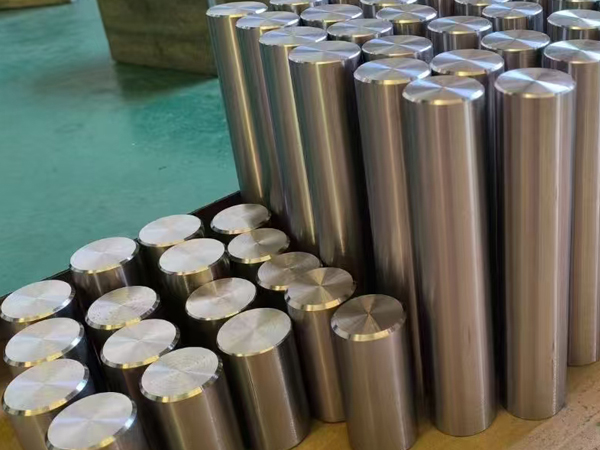
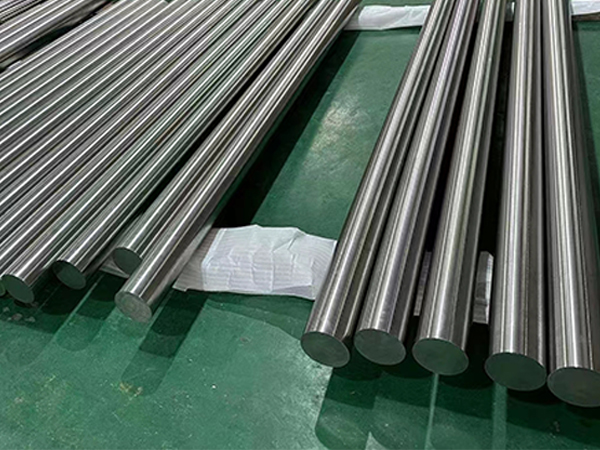
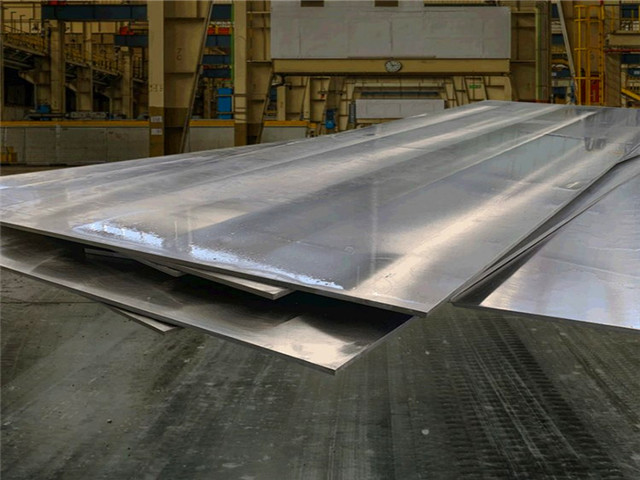
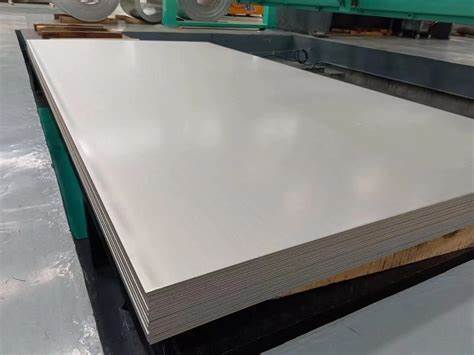
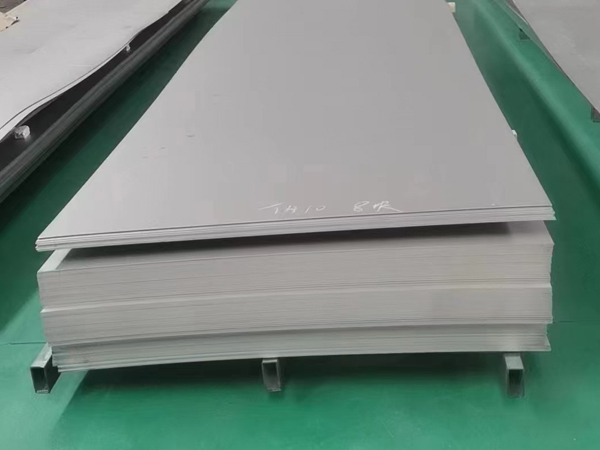
Shanghai Hangbo Alloy Group supplies Titanium Grade 2 as plate, sheet, strip, round bar, wire, forgings, and welded and seamless pipe and tube, certified to ASTM B348 (bar and billet), B265 (sheet, strip, and plate), and B338 (seamless and welded tube for condensers and heat exchangers), with ASME equivalents SB-348, SB-265, and SB-338 for code construction. Every heat ships with an EN 10204 3.1 mill certificate, full traceability to the sponge melt, and 100% positive material identification. This guide provides the working engineering data for Grade 2 procurement and design.
Chemical Composition
The composition limits below reflect the requirements of ASTM B265 for flat products and B348 for bar stock as supplied by Hangbo Alloy. Titanium is the balance element.
| Element | ASTM Limit, max (wt %) | Typical Hangbo Alloy Heat | Role in the Alloy |
|---|---|---|---|
| Titanium (Ti) | Balance (≥ 99.0) | ~99.4 | Base metal |
| Oxygen (O) | 0.25 | 0.12–0.18 | Primary solid-solution strengthener (interstitial) |
| Iron (Fe) | 0.30 | 0.05–0.15 | Minor substitutional strengthener |
| Carbon (C) | 0.08 | 0.01–0.03 | Interstitial; kept low for ductility |
| Nitrogen (N) | 0.03 | 0.005–0.015 | Interstitial; strengthens but embrittles if high |
| Hydrogen (H) | 0.015 | 0.002–0.006 | Held to a minimum for impact toughness and weld soundness |
| Other residuals, each | 0.10 | — | Per ASTM product limits |
| Other residuals, total | 0.40 | — | Per ASTM product limits |
The single most important element on this certificate is oxygen. Every 0.01% of interstitial oxygen raises the yield strength of CP titanium by roughly 7–8 MPa, and it is the difference between Grade 1 (0.18% O max), Grade 2 (0.25% O max), Grade 3 (0.35% O max), and Grade 4 (0.40% O max). A heat sitting at the top of the Grade 2 oxygen band will be noticeably stronger than a heat at the bottom; Hangbo Alloy reports actual oxygen on every certificate so that fabricators can predict forming springback and weld cooling behavior, not just verify compliance.
Metallurgy: Why "Commercially Pure" Behaves the Way It Does
Grade 2 is a single-phase, hexagonal close-packed (HCP) alpha alloy at room temperature. The allotropic transformation to body-centered cubic (BCC) beta occurs at approximately 890–920 °C depending on interstitial content, which is why CP titanium is never quench-hardened in the steel sense: any high-temperature beta phase reverts to alpha on cooling with no martensitic strengthening of practical value. All useful strength in Grade 2 comes from interstitial oxygen, residual iron, and cold work, and all of it is recovered predictably by annealing at 650–760 °C.
The practical consequences of this microstructure are decisive for fabricators:
- Weldability is excellent. The HCP alpha structure is stable, and fusion welding with matching ERTi-2 filler — or an over-alloyed ERTi-3/ERTi-5 filler where weld strength must exceed the parent plate — produces ductile welds with no post-weld heat treatment requirement, provided the weld zone is shielded from air above ~250 °C to prevent oxygen and nitrogen pickup.
- No heat-treatable strengthening. Do not specify "quench and temper" for Grade 2; specify the correct cold-worked or annealed temper instead.
- Low-temperature toughness is retained. CP titanium does not display a ductile-to-brittle transition like ferritic steel; Grade 2 is widely used in cryogenic equipment down to −196 °C and lower, with impact properties that improve as temperature drops.
- Fatigue and notch behavior are straightforward. With no second-phase particles or precipitation systems, crack initiation is dominated by surface condition — another reason mill surface quality and clean machining matter for Grade 2 rotating and cyclic service.
Governing Specifications and Product Forms
| Product Form | ASTM Specification | ASME Code Equivalent | Typical Range Supplied by Hangbo Alloy |
|---|---|---|---|
| Sheet, strip, and plate | ASTM B265 | SB-265 | 0.3–80 mm thickness; up to 3000 mm wide |
| Bar and billet | ASTM B348 | SB-348 | Round bar Ø 3–500 mm; square, rectangular, hex |
| Seamless / welded tube (condenser, heat-exchanger) | ASTM B338 | SB-338 | 6–89 mm OD; wall 0.4–5 mm |
| Welded pipe | ASTM B862 | — | Up to 610 mm OD |
| Seamless pipe | ASTM B861 | — | 1/8″–16″ NB |
| Forgings and fittings | ASTM B381 / B363 | SB-381 / SB-363 | Custom and 1/2″–24″ |
| Wire | ASTM B863 | — | Ø 0.5–12 mm coil |
Internationally, the same grade is known as W.Nr. 3.7035, DIN 17860/17861 material, and R50400 in the UNS system; Russian and Chinese equivalents (VT1-0, TA2/GR2 per GB/T 3621) are produced to comparable but not identical limits, so cross-certification should always be reviewed element by element. When writing a purchase order, Hangbo Alloy recommends specifying the UNS grade, the ASTM product standard, and the product form together — "CP Ti Grade 2, UNS R50400, plate per ASTM B265" — so that chemistry and dimensional tolerances are unambiguous.
Mechanical Properties
The table below lists the ASTM minimum tensile requirements for annealed product, together with typical delivered values from Hangbo Alloy heats.
| Condition / Product | Tensile Strength, min | Yield Strength (0.2%), min | Elongation, min | Typical Delivered UTS / YS |
|---|---|---|---|---|
| Bar and billet, annealed (ASTM B348) | 345 MPa (50 ksi) | 275 MPa (40 ksi) | 20% in 4D | 480–620 MPa / 380–480 MPa |
| Sheet, strip, plate, annealed (ASTM B265) | 345 MPa (50 ksi) | 275 MPa (40 ksi) | 20% in 50 mm (thickness-dependent) | 450–600 MPa / 350–450 MPa |
| Tube, annealed (ASTM B338) | 345 MPa (50 ksi) | 275 MPa (40 ksi) | 20% in 50 mm (small tubes pro-rated) | 480–590 MPa / 380–460 MPa |
| Cold-worked (typical, not a standard minimum) | 550–750 MPa | 450–650 MPa | Reduced with cold work | Spring, fastener and shaft stock |
Two notes for designers. First, ASTM B265 also places a maximum yield-strength cap of 450 MPa (65 ksi) on annealed Grade 2 sheet and plate — a formability safeguard that ensures the material can still meet the standard bend test. Second, minimum elongation is scaled to section thickness in the flat-product standard: thin sheet is held to 20% in 50 mm, while heavier plate allowances are reduced by the standard's table. Always confirm the exact minimum for your thickness range against the applicable ASTM table — Hangbo Alloy certifies the value applicable to your ordered dimension.
Physical Properties
| Property | Value | Notes |
|---|---|---|
| Density | 4.51 g/cm³ (0.163 lb/in³) | ~56% of carbon steel |
| Melting range | ≈ 1660–1670 °C | Pure titanium melting point ≈ 1668 °C |
| Elastic modulus (tension) | ≈ 103–107 GPa (15.0–15.5 Msi) | About half that of steel — consider in stiffness design |
| Poisson's ratio | 0.34 | |
| Coefficient of thermal expansion | ≈ 8.6–9.0 µm/m·K (20–100 °C) | Closer to austenitic stainless than to steel |
| Thermal conductivity | ≈ 16–21 W/m·K at 20 °C | About 6–8% of copper — matters for exchanger design |
| Electrical resistivity | ≈ 0.48–0.56 µΩ·m | |
| Magnetic permeability | ~1.00005 (essentially nonmagnetic) | Useful in instrument and EMF-sensitive environments |
| Beta transus | ≈ 890–920 °C | Composition-dependent; governs annealing and forming |
| Recommended annealing | 650–760 °C, air cool | Full recrystallization of cold-worked product |
The low elastic modulus is the property that surprises mechanical designers most: a Grade 2 shaft or flange is roughly twice as flexible as an identically sized steel one, which is usually an advantage in thermal-stress and fatigue-transfer terms but must be accounted for in deflection and bolted-joint stiffness calculations.
Corrosion Resistance: The Reason Grade 2 Exists
Grade 2 owes its corrosion performance to a dense, self-healing titanium dioxide (TiO₂) passive film that reforms almost instantly when damaged, provided the environment is even mildly oxidizing. This film gives CP titanium its signature behavior: it is thermodynamically reactive but kinetically passive across an exceptionally wide range of media.
| Environment Class | Grade 2 Performance | Engineering Notes |
|---|---|---|
| Seawater and natural brackish water | Excellent general resistance; rates typically < 0.01 mm/yr | Avoid crevices above ~70–80 °C; design for flow |
| Chloride solutions (all concentrations) | Excellent; immune to chloride pitting and SCC | One of few metals with total chloride SCC immunity |
| Oxidizing acids (nitric, chromic) | Excellent across wide concentration ranges | Standard material in nitric acid service |
| Organic acids (acetic, formic, citric) | Excellent at most temperatures | Widely used in food and fine-chemical plant |
| Hypochlorite / wet chlorine gas | Excellent | Bleach-plant and pulp-bleaching standard |
| Caustic soda and alkaline media | Good to excellent | Avoid hot, very high concentration with stress |
| Reducing acids — HCl, H₂SO₄ (deaerated) | Limited; attack accelerates with temperature | Restrict to dilute, cold conditions unless alloyed |
| Hydrofluoric acid (any concentration) | NOT resistant — rapid dissolution | Never specify Grade 2 for HF service |
| Oxidizing impurities in reducing acids (Fe³⁺, Cu²⁺, O₂) | Shift behavior toward passivity | Small additions can make dilute acid service viable |
The marine limitation is crevice corrosion, not general corrosion. In tight crevices at metal-to-metal or metal-to-gasket interfaces in hot chloride brine — typically above 70–80 °C in seawater — differential aeration can drive local acidification and breakdown of the passive film. Designers manage this by eliminating crevices where possible, using full-penetration welds, and selecting gasketing and seal geometry that avoids stagnation. Where service temperatures are higher, the Pd-bearing Grade 7 and the Ni-Ru Grades 13/14/15 — both available from Hangbo Alloy — extend crevice immunity far beyond Grade 2's envelope.
Grade 2 in Chemical Processing
In chemical plant service, Grade 2 is the default titanium for heat-exchanger tubing (ASTM B338), reactor linings, columns, piping, valves, pump impellers and casings, and anodes. Its combination of chloride immunity, resistance to wet chlorine and hypochlorite, and freedom from stress-corrosion cracking makes it the standard material for chlorine-cell plant, bleach-plant equipment, and seawater-cooled exchangers that would destroy austenitic stainless steel in months. Because corrosion is essentially nil in these media, designers routinely use full-strength walls or even thin-wall tube with no corrosion allowance — the thickness is set by pressure, handling, and tube-end rolling loads rather than by wastage.
Grade 2 in Marine and Offshore Service
CP titanium's seawater record spans decades of service in desalination evaporators, ship seawater systems, ballast-water treatment units, propeller shafts and shafting, rudder and stabilizer components, heat exchangers for engine and HVAC circuits, and offshore seawater lift and firewater piping. Its resistance to erosion-corrosion and cavitation in high-velocity seawater is far superior to copper-nickel alloys and stainless steels, and its nonmagnetic character is valued on mine-countermeasure vessels. When designers need more strength than Grade 2 for shafting or structural marine hardware, Grade 3 and Grade 4 move up the CP ladder without sacrificing corrosion resistance; Hangbo Alloy supplies the full CP family so that strength can be scaled without changing alloy system.
Fabrication, Welding, and Machining
- Hot forming: Grade 2 hot-forms readily in the 650–815 °C range. Heating in air produces an oxygen-enriched alpha case that must be removed before service in corrosion-critical or fatigue applications; controlled-atmosphere or vacuum heat treatment avoids the problem entirely.
- Cold forming: Excellent — Grade 2 routinely achieves tight-radius bends, deep draws, and tube coiling. Springback is predictable because the elastic modulus is low and the yield strength modest.
- Welding: GTAW (most common), GMAW, plasma arc, and resistance welding are all applicable. Matching filler ERTi-2 is standard; ERTi-3 or ERTi-5 (Grade 5 chemistry) fillers raise weld-metal strength for some pressure-vessel designs. Shielding and trailing/backing gas to ~250 °C are mandatory; iron contamination from tooling must be avoided because it can create galvanic sites in crevices.
- Machining: CP titanium produces long, stringy chips and tends to gall. Use sharp tools, positive rake, copious coolant, and rigid setups; low cutting speeds with high feed are the general rule. Hangbo Alloy can supply turned, peeled, or ground bar surfaces tailored to machining operations.
- Surface preparation: Specify pickled, blasted, or mechanically cleaned surfaces per the project code; hydrogen pickup during aggressive picking in inhibited acid baths must be controlled to keep hydrogen within the 0.015% limit.
Applications Summary
- Heat-exchanger and condenser tubing (ASTM B338) in seawater and process cooling circuits.
- Chlorine, caustic, hypochlorite, and bleach-plant equipment.
- Reactors, columns, and piping for organic and oxidizing acid service.
- Desalination plant, marine seawater systems, and offshore topsides piping.
- Cathodic-protection anodes and anode baskets.
- Food, beverage, and pharmaceutical processing equipment.
- Architectural cladding, heat-exchange coils, and consumer and sporting goods.
- Cryogenic vessels and transfer equipment where nonmagnetic, tough, low-density material is required.
Hangbo Alloy Supply Program
| Product Form | Specification | Size Range | Testing Available |
|---|---|---|---|
| Plate / Sheet / Strip | ASTM B265 | 0.3–80 mm thick | UT per SA-578/S8, PMI, tensile, bend |
| Bar / Billet | ASTM B348 | Ø 3–500 mm | UT, PMI, macro/etch, tensile |
| Seamless & Welded Pipe | ASTM B861 / B862 | Up to 610 mm OD | Hydro, eddy current, PMI |
| Condenser Tube | ASTM B338 | 6–89 mm OD | Flatten, flare, hydro, PMI |
| Forgings / Fittings | ASTM B381 / B363 | Custom | Mechanical, PMI, dye penetrant |
| Wire | ASTM B863 | Ø 0.5–12 mm | Tensile, PMI |
Technical FAQ — Titanium Grade 2 (UNS R50400)
1. What is the difference between Titanium Grade 2 and Grade 1?
Grade 1 allows 0.18% oxygen maximum against Grade 2's 0.25%, which lowers Grade 1's minimum tensile strength to 240 MPa versus 345 MPa for Grade 2 but improves formability for severe deep drawing and spinning. Corrosion resistance is essentially identical. Choose Grade 1 only when forming severity demands it; Grade 2 covers almost all structural and pressure applications.
2. Does Titanium Grade 2 resist seawater corrosion?
Yes. In seawater and most natural waters, general corrosion rates are negligible and there is total immunity to chloride pitting and chloride stress-corrosion cracking. The caveat is crevice corrosion in hot, tight crevices — generally above 70–80 °C in seawater — which is managed by design geometry or by upgrading to palladium-bearing Grade 7 where temperatures are higher.
3. Is Grade 2 resistant to hydrochloric and sulfuric acid?
Only in dilute, cold, deaerated conditions. Concentrated or hot HCl and H₂SO₄ attack CP titanium. However, the presence of oxidizing species such as ferric or cupric ions, dissolved oxygen, or oxidants can maintain passivity even in some reducing-acid service. When in doubt, use Grade 7 or Grade 12, or run coupon tests in the actual process stream.
4. Which ASTM specifications cover Grade 2 plate, bar, and tube?
ASTM B265 covers sheet, strip, and plate; ASTM B348 covers bar and billet; ASTM B338 covers seamless and welded condenser/heat-exchanger tube; ASTM B861/B862 cover seamless/welded pipe. ASME code equivalents are SB-265, SB-348, SB-338, SB-861, and SB-862. Each product form requires its own specification callout on the purchase order.
5. Can Titanium Grade 2 be welded without post-weld heat treatment?
Yes. Grade 2 is one of the easiest metals to weld successfully, provided the weld zone is protected from air contamination above approximately 250 °C using argon shielding, trailing shields, and backing gas. PWHT is normally not required, and weld ductility in the as-welded condition is excellent.
6. Why is Grade 2 titanium about half the weight of steel but not half the stiffness?
Density is 4.51 g/cm³ versus roughly 7.85 g/cm³ for steel — hence the weight saving. But the elastic modulus is approximately 105 GPa versus about 200 GPa for steel, so an identical geometry is about half as stiff. Where deflection governs, thicker sections or ribbed designs are used; where strength and corrosion govern, the weight saving is fully realized.
7. What is the maximum service temperature for Titanium Grade 2?
For corrosion-limited design, Grade 2 is commonly used to about 300 °C in oxidizing service, and it retains useful short-term strength above that. For long-term oxidation resistance in air, roughly 425 °C is a practical ceiling for CP grades, above which scaling and oxygen-enriched alpha formation accelerate.
8. Does Grade 2 contain aluminum or vanadium?
No. It is commercially pure titanium with only controlled residuals of oxygen, iron, carbon, nitrogen, and hydrogen. This matters for applications where alloy leach products are undesirable, and it keeps weld metallurgy simple. If higher strength with corrosion resistance is required, the alloyed route begins at Grade 5 (Ti-6Al-4V) or Grade 9 (Ti-3Al-2.5V).
9. How is Grade 2 distinguished from counterfeit or substituted CP grades on delivery?
The oxygen content on the mill certificate is the primary discriminator between CP grades, and a hardness or tensile check confirms the temper. Hangbo Alloy performs 100% PMI on delivered product, reports actual oxygen per heat, and certifies tensile values against the exact ASTM table for your dimension so that grade substitution cannot pass unnoticed.
10. Does Hangbo Alloy supply Titanium Grade 2 with third-party inspection?
Yes. All Grade 2 product ships with EN 10204 3.1 documentation and heat-lot traceability, and Hangbo Alloy supports SGS, BV, TÜV, or client-designated witness testing at the mill, including ultrasonic examination, PMI, tensile, and bend verification. Contact Hangbo Alloy (Shanghai Hangbo Alloy Group, nickel-alloy.com) for stock availability and certified mill-test documentation.
This technical guide is provided by Hangbo Alloy (Shanghai Hangbo Alloy Group, nickel-alloy.com). Data presented are typical engineering values compiled from recognized industry sources and are provided for material-selection guidance; the governing documents for any purchase are the applicable ASTM/ASME specifications, the current code rules, and the certified mill test report. Contact Hangbo Alloy for current stock, mill certificates, and application engineering support.