

Excerpt:
Titanium Grade 9 (Ti-3Al-2.5V, UNS R56320) technical guide from Hangbo Alloy (Shanghai Hangbo Alloy Group, nickel-alloy.com). The lean alpha+beta tubing alloy - 620 MPa minimum tensile with CP-grade cold formability and weldability for aerospace hydraulics, heat-exchanger and offshore control-line service. Covers ASTM B338/B348/B265 supply, AMS 4944/4945 callouts, chemistry, forming and corrosion data.
Titanium Grade 9 (Ti-3Al-2.5V / UNS R56320) — Pressure Tubing, Bar and Fittings Technical Guide | Hangbo Alloy
Technical Bulletin for Aerospace Hydraulics, Heat-Exchanger, and Offshore Engineering Procurement
Introduction
Between the soft, fully weldable commercially pure grades and the strong but difficult-to-form Ti-6Al-4V sits a lean α+β alloy that deliberately takes the best of both: Titanium Grade 9, Ti-3Al-2.5V (UNS R56320, W.Nr. 3.7195). Its nickname — "half 6-4" — is chemically exact: half the aluminum and half the vanadium of Ti-6Al-4V. That halving is not a compromise but a design calculation. With roughly half the alloy content, Grade 9 still develops an annealed minimum tensile strength of 620 MPa — nearly double the CP grades — yet remains cold-formable, cold-drawable, and weldable to a degree that Ti-6Al-4V cannot approach. The result is the titanium industry's standard answer for seamless pressure tubing and hydraulic lines that must be bent, flared, swaged, and welded into tight, weight-critical assemblies.
Grade 9 is best understood as the tubing alloy. Its dominant applications — aircraft hydraulic systems, seawater and chemical heat-exchanger tubing, offshore control lines, and instrumentation bundles — all exploit the same logic: the tube must resist internal pressure (which demands strength), must be formed into compact layouts (which demands cold formability), must be joined reliably (which demands weldability), and must survive decades of chloride or hydraulic-fluid service (which demands titanium-class corrosion resistance). Grade 9 delivers every one of those demands from a single annealed specification, and, uniquely among the α+β alloys, it can also be cold-worked to approximately double its annealed yield strength for the most demanding high-pressure hydraulic service.
At 4.48 g/cm³, Grade 9 tubing weighs roughly 43% less than equivalent steel hydraulic line and, at equal strength, can be specified at thinner wall than CP titanium — compounding the weight saving that makes it the default choice in aerospace and offshore weight budgets. Shanghai Hangbo Alloy Group (nickel-alloy.com) supplies Grade 9 in seamless condenser and heat-exchanger tube to ASTM B338, bar and billet to ASTM B348, and plate, sheet, and strip to ASTM B265, with EN 10204 3.1 mill certification, 100% PMI verification, and full heat traceability. This guide documents the composition, metallurgy, mechanical envelope, formability, corrosion behavior, and applications of Ti-3Al-2.5V.
Chemical Composition
The composition limits below are the acceptance baseline for Grade 9 mill products supplied by Hangbo Alloy to ASTM B338 and B348. Titanium is the balance element.
| Element | ASTM Spec Limit (wt %) | Typical Heat Value | Metallurgical Role |
|---|---|---|---|
| Titanium (Ti) | Balance | ~94 | Matrix |
| Aluminum (Al) | 2.5 – 3.5 | 2.8 – 3.2 | α stabilizer and strengthener |
| Vanadium (V) | 2.0 – 3.0 | 2.2 – 2.6 | β stabilizer — enables cold-work response and fine structure |
| Iron (Fe) | 0.25 max | 0.05 – 0.15 | Trace β stabilizer |
| Oxygen (O) | 0.15 max | 0.08 – 0.12 | Interstitial strengthener; controlled for formability |
| Carbon (C) | 0.08 max | 0.01 – 0.03 | Trace |
| Nitrogen (N) | 0.03 max | 0.005 – 0.015 | Trace |
| Hydrogen (H) | 0.015 max | 0.002 – 0.005 | Held low for tube integrity |
| Other elements, each / total | 0.10 / 0.40 max | — | Per governing specification |
The composition is balanced for a specific purpose: enough aluminum and vanadium to roughly double CP strength, but low enough — and with oxygen held to 0.15% maximum — that the alloy retains the cold-workability of the near-α family. Every element is a lever on that formability/strength trade, which is why the ASTM ranges are tight and why Hangbo Alloy verifies aluminum, vanadium, and oxygen on every heat.
Metallurgy: A Lean α+β Alloy Designed for Working, Not Just Strength
Ti-6Al-4V earns its strength from a substantial fraction of transformed β, and that microstructure makes it strong but stubborn: it strain-hardens rapidly, springs back aggressively, and demands hot working for tight bends. Grade 9 reduces the alloy content to the point where the annealed structure is mostly fine equiaxed α with a modest, well-distributed β phase — enough β to give the alloy a genuine two-phase response (it can be solution-treated and aged, and it responds strongly to cold work) but not so much that formability is lost.
Three consequences define the alloy:
-
Exceptional cold formability for an α+β alloy. Grade 9 tube can be bent to tight radii, flared, swaged, and cold-drawn — operations that are impractical or impossible on Ti-6Al-4V without heated tooling. This is the property that makes complex aerospace hydraulic layouts and compact exchanger bundles manufacturable.
-
A real cold-work strengthening path. Because the β phase is deformable and strain-hardenable, cold work raises the strength of Grade 9 substantially. Cold-worked Grade 9 hydraulic tubing — typically cold drawn and stress relieved — runs well above the annealed 620/483 MPa minimums, with tensile strength approaching the 900 MPa class, which is why high-pressure aerospace systems specify the cold-worked condition.
-
Good weldability with a manageable heat-affected zone. The lean two-phase structure welds cleanly by GTAW, and the weld zone is narrower and more ductile than in Ti-6Al-4V. Matching Grade 9 filler is standard; for many non-structural joints the alloy can even be welded with soft CP filler where ductility is prioritized. Post-weld heat treatment is not normally required, although stress relief may be specified for cold-worked tube after welding.
The anneal for Grade 9 is typically 700 – 790 °C, producing the fine equiaxed structure on which the ASTM minimums are certified. The beta transus is approximately 930 – 940 °C — high enough that normal processing never approaches it accidentally.
Governing Specifications and Product Forms
| Product Form | ASTM Specification | ASME Equivalent | Typical Range Supplied by Hangbo Alloy |
|---|---|---|---|
| Seamless condenser / heat-exchanger tube | ASTM B338 | ASME SB-338 | Seamless tube Ø 6 – 89 mm OD |
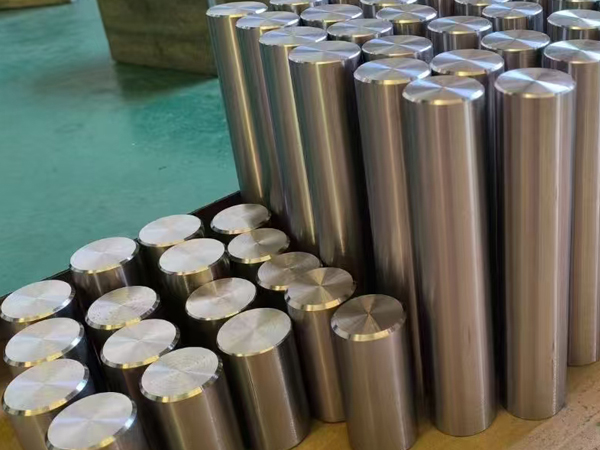
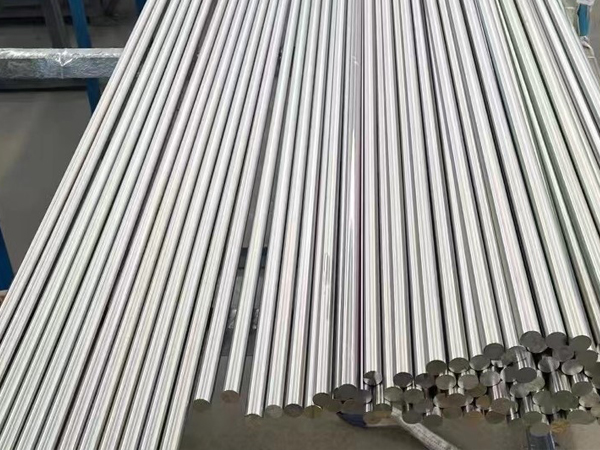
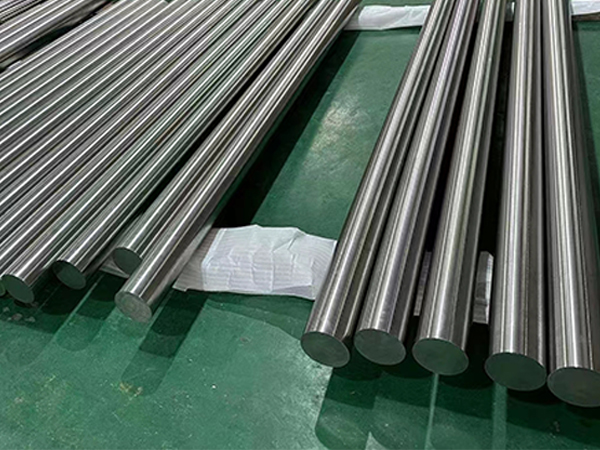
| Bar and billet | ASTM B348 | ASME SB-348 | Round bar Ø 6 – 350 mm |
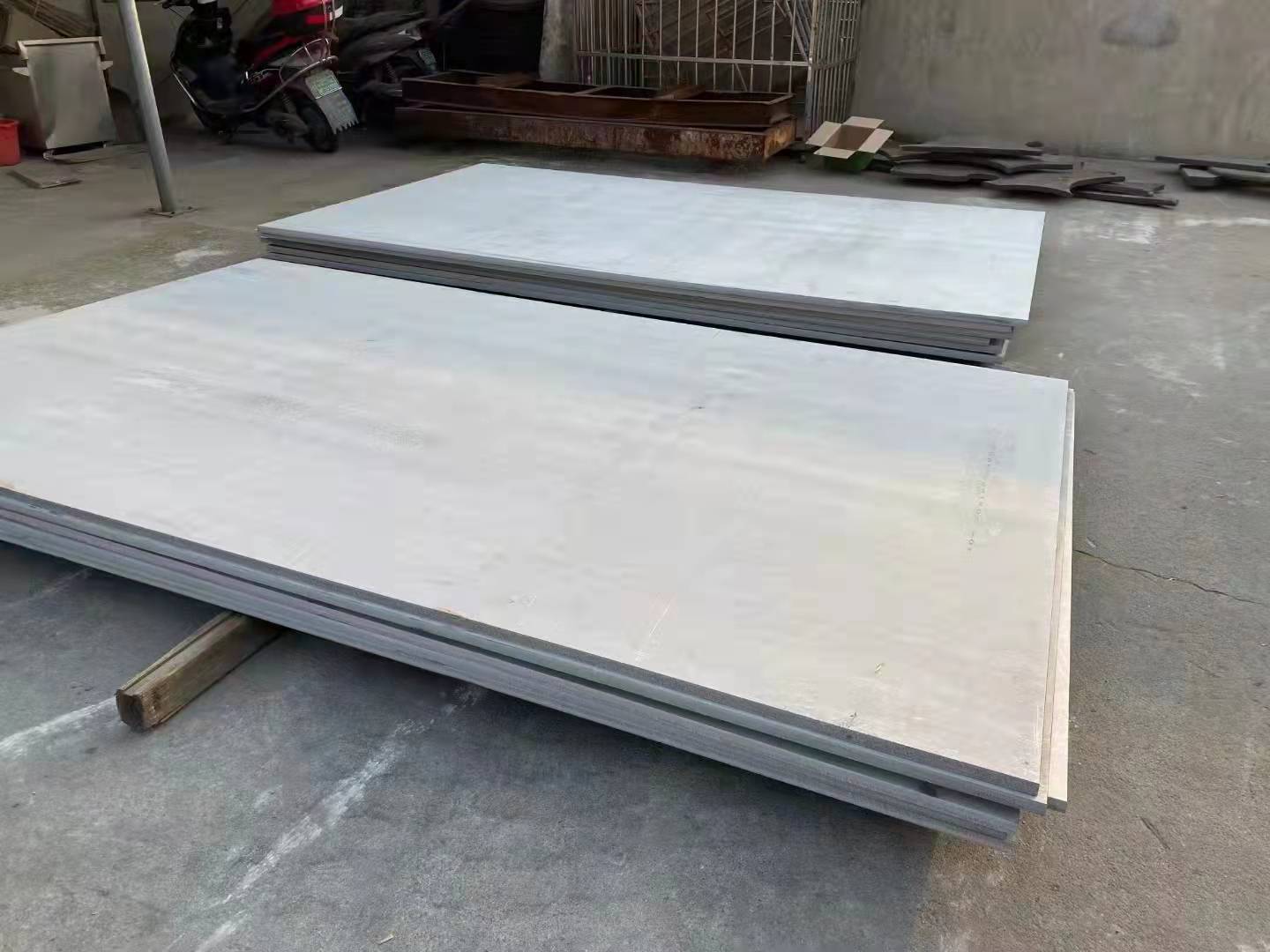
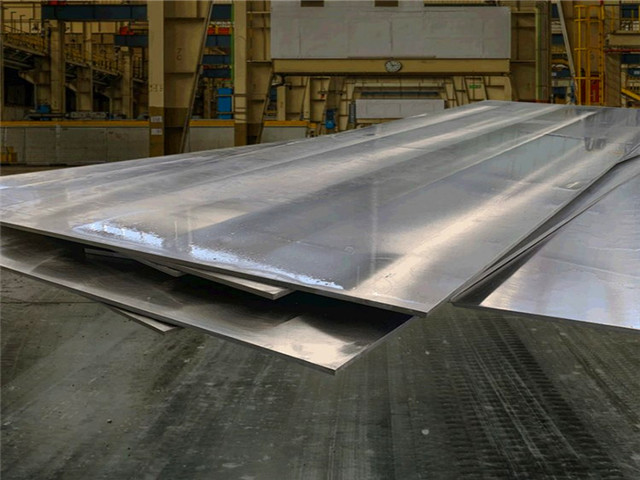
| Plate, sheet, and strip | ASTM B265 | ASME SB-265 | 0.4 – 60 mm thick |
| Seamless pipe | ASTM B861 | ASME SB-861 | 1/8" – 12" NB |
| Welded pipe | ASTM B862 | ASME SB-862 | 60 – 610 mm OD |
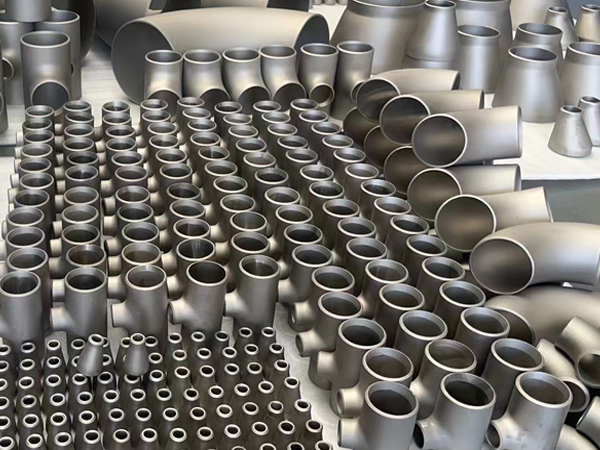
| Welded fittings | ASTM B363 | ASME SB-363 | 1/2" – 24" |
| Aerospace hydraulic tube | AMS 4944 / AMS 4945 callouts | — | Cold-worked and annealed tube conditions |
For aerospace and defense prints, the AMS tubing callouts dominate: the cold-worked condition (AMS 4944-type) for high-pressure hydraulic lines and the annealed condition for formable assemblies. For industrial and marine procurement, the ASTM/ASME callouts govern. State UNS plus the applicable specification and condition on every order — "Grade 9, UNS R56320, seamless tube per ASTM B338, annealed" — and Hangbo Alloy will certify accordingly.
Mechanical Properties
Grade 9 annealed minimums per ASTM B338 and B348 are shown below with typical values for both the annealed and cold-worked tubing conditions:
| Property | ASTM Minimum (Annealed) | Typical Annealed | Cold-Worked Tube (Typical) |
|---|---|---|---|
| Tensile strength (UTS) | 620 MPa (90 ksi) | 700 – 790 MPa | ~ 900 – 1000 MPa |
| 0.2% yield strength (YS) | 483 MPa (70 ksi) | 550 – 650 MPa | ~ 750 – 900 MPa |
| Elongation in 2 in. (50 mm) | 15% | 18 – 25% | 10 – 15% |
| Reduction of area (bar) | — | 35 – 50% | — |
| Condition note | Annealed | Recrystallized α+β | Cold drawn + stress relieved |
The cold-worked row is the key to understanding Grade 9's market position: no other weldable titanium alloy offers a certified high-pressure tubing condition in this strength class with this formability heritage. When a hydraulic system designer needs a burst margin that annealed CP titanium cannot provide and weight that stainless steel cannot match, cold-worked Grade 9 is the industry-standard answer.
Physical Properties
| Property | Value | Notes |
|---|---|---|
| Density | 4.48 g/cm³ (0.162 lb/in³) | ~43% lighter than steel |
| Melting range | ~1600 – 1660 °C | |
| Beta transus | ~930 – 940 °C | Above all normal processing temperatures |
| Modulus of elasticity | ~100 GPa | RT |
| Coefficient of thermal expansion | ~9.5 × 10⁻⁶ /°C | |
| Thermal conductivity | ~8.5 W/m·K | |
| Magnetic behavior | Non-magnetic | |
| Annealing range | 700 – 790 °C | Air cool |
Formability and Tube Manufacture: The "Half-6-4" Advantage in Practice
The practical consequences of Grade 9's lean composition appear on the shop floor. Aerospace and instrumentation fabricators routinely perform operations on Grade 9 that would be thermal-forming jobs on Ti-6Al-4V:
| Operation | Grade 9 Performance | Typical Shop Practice |
|---|---|---|
| Tube bending | Tight radii with minimal springback compensation | Mandrel bending at room temperature |
| Flaring | Reliable 37° and 45° flares without cracking | Standard aerospace flare tooling |
| Swaging / reducing | Clean diameter reduction | Rotary swaging, cold |
| Cold drawing | Substantial area reduction per pass | Mill cold drawing to CW condition |
| Flattening / crushing | Deforms without fracture | QA flattening tests per B338 |
| Welding of formed joints | Sound, ductile welds | GTAW, argon backing purge |
For heat-exchanger service, Grade 9 tube is specified where the combination of thin wall, high pressure, and corrosion rules out the softer CP grades. Because Grade 9 annealed minimum yield is 483 MPa versus 275 MPa for Grade 2, exchanger tubesheets can run at higher design pressures or thinner walls; because the alloy still flares and rolls into tubesheets without cracking, bundle fabrication practice remains unchanged.
Corrosion Resistance
Grade 9's corrosion envelope is close to that of CP titanium — the alloying additions are modest enough that the TiO₂ passive film still governs behavior. Key characteristics:
| Environment | Grade 9 Performance | Engineering Comment |
|---|---|---|
| Seawater, flowing and stagnant | Excellent | Effectively immune to pitting and SCC at ambient temperature |
| Chloride brines, all concentrations | Excellent | Same passive-film immunity as CP grades |
| Oxidizing acids (nitric, chromic) | Excellent | Film stabilized by oxidizers |
| Mild reducing acids | Good at moderate temperature | Slightly more sensitive than CP in some hot reducing media; coupon-test for borderline duty |
| Organic and process media | Excellent | |
| Hot chloride crevices (>70 – 80 °C) | Crevice corrosion possible | Use Grade 12/17/7 where crevice-critical |
| Hydrofluoric acid | Not recommended | Standard titanium limitation |
The one corrosion nuance versus the CP grades is that the vanadium and aluminum additions, while not degrading seawater and oxidizing performance, give no benefit in reducing acids; for crevice-critical hot chloride duty the palladium- or Mo-Ni-bearing grades remain the reference. Grade 9's selection driver is mechanical — pressure capability plus formability — not corrosion upgrade.
Fabrication, Welding, and Machining
- Welding: GTAW with argon shielding and backing purge is standard for Grade 9. Matching Ti-3Al-2.5V filler is preferred for structural joints; preheat is not required and post-weld heat treatment is normally unnecessary. For cold-worked tube, welding locally anneals the joint zone, so design allowables for welded joints should reference the annealed condition.
- Hot forming: Where tight bends exceed cold-formability limits, hot forming at 700 – 800 °C with subsequent anneal restores the specified envelope.
- Machining: Grade 9 machines more easily than Ti-6Al-4V but harder than CP titanium. Sharp tools, positive rake, rigid setups, and flood coolant; avoid dwell and rubbing.
- Surface and cleanliness: Prevent iron contamination, pickle or passivate per specification, and for oxygen-service lines observe the applicable cleanliness requirements.
- Quality verification: Aluminum, vanadium, and oxygen are the acceptance-critical elements. Hangbo Alloy verifies each by OES/PMI and certified analysis and declares values on the EN 10204 3.1 certificate.
Applications Summary
- Aerospace hydraulic tubing, pneumatic lines, and instrumentation conduits (annealed and cold-worked conditions).
- Seawater-cooled heat exchangers and condensers requiring thin-wall, high-pressure tube design.
- Offshore hydraulic control lines and subsea umbilical tubing.
- Chemical and pharmaceutical process tubing where CP strength is insufficient and stainless is unacceptable.
- Desalination plant heat-transfer tubing with elevated design pressures.
- Bicycle, automotive, and motorsport frame and exhaust components exploiting formability plus strength.
- Oil and gas produced-water and injection systems.
- Marine shafting, fasteners, and structural hardware at the CP-to-6Al-4V strength crossover.
Hangbo Alloy Supply Program
| Product Form | Specification | Typical Size Range | Testing / Documentation |
|---|---|---|---|
| Seamless Tube (HX / condenser) | ASTM B338 / ASME SB-338 | Ø 6 – 89 mm OD | Hydrostatic, eddy current, flattening, flare tests |
| Bar / Billet | ASTM B348 / ASME SB-348 | Ø 6 – 350 mm | EN 10204 3.1, PMI, UT on request |
| Plate / Sheet / Strip | ASTM B265 / ASME SB-265 | 0.4 – 60 mm thick | EN 10204 3.1, PMI |
| Pipe (seamless / welded) | ASTM B861 / B862 | 1/8" NB – 610 mm OD | Hydrostatic, PMI |
| Fittings | ASTM B363 | 1/2" – 24" | Dimensional, PMI |
| Aerospace tubing | Per AMS callout | Per drawing | Full AMS documentation package |
Hangbo Alloy maintains dedicated Grade 9 stock with segregation from other titanium grades, verifies Al/V/O by certified analysis on every heat, and supports third-party witness testing (SGS, BV, TÜV) at the Shanghai mill.
Technical FAQ — Titanium Grade 9 (Ti-3Al-2.5V / UNS R56320)
1. Why is Grade 9 called "half 6-4"?
Because its nominal composition is Ti-3Al-2.5V — half the 6% aluminum and half the 4% vanadium of Ti-6Al-4V. The leaner alloying roughly halves the strength gap to 6-4 while preserving the cold formability and weldability of the softer titanium grades, making it the standard titanium pressure-tubing alloy.
2. What is the strength of Grade 9?
Annealed minimums are 620 MPa tensile and 483 MPa yield with 15% elongation per ASTM B338/B348. In the cold-worked, stress-relieved condition used for aerospace hydraulic tubing, tensile strength typically reaches the 900 – 1000 MPa class.
3. What makes Grade 9 better than Ti-6Al-4V for tubing?
Formability. Grade 9 tube can be bent, flared, swaged, and cold-drawn at room temperature — operations that require heated tooling or are impractical on Ti-6Al-4V. It also welds with a narrower, more ductile heat-affected zone and is supplied in certified cold-worked tubing conditions for high-pressure hydraulics.
4. Which ASTM specifications cover Grade 9?
ASTM B338 covers seamless condenser and heat-exchanger tube; ASTM B348 covers bar and billet; ASTM B265 covers plate, sheet, and strip. Seamless pipe is B861, welded pipe B862, and fittings B363. Aerospace tubing commonly cites the AMS 4944/4945 series for cold-worked and annealed hydraulic tube.
5. Is Grade 9 corrosion resistant in seawater?
Yes. Like CP titanium, Grade 9 is effectively immune to pitting and stress-corrosion cracking in seawater and chloride brines at ambient temperature. In hot chloride crevices above roughly 70 – 80 °C, crevice attack is possible and the palladium- or Mo-Ni-bearing grades should be considered.
6. Can Grade 9 be welded without losing properties?
Grade 9 welds cleanly by GTAW with matching filler and normally needs no post-weld heat treatment. Welding locally anneals any cold-worked condition, so welded joints are designed to the annealed properties while the un-welded tube retains its cold-worked strength.
7. What is the density and weight advantage of Grade 9?
Density is 4.48 g/cm³ — about 43% lighter than steel. Because its annealed yield strength is nearly double that of Grade 2, high-pressure lines can use thinner walls, compounding the weight saving.
8. Can Grade 9 be heat treated to higher strength?
It is a genuine α+β alloy, so it responds to solution treatment and aging, and more importantly to cold work. In practice the certified strengthening route for tubing is cold work plus stress relief; annealed stock is used where maximum formability is needed.
9. Where does Grade 9 not perform?
In hot concentrated reducing acids and in hydrofluoric acid, where all titanium grades are limited, and in crevice-critical hot chloride service where a Pd/Mo-Ni grade is the safer call. For purely corrosion-driven duty at low pressure, CP Grade 2 remains the economic default.
10. How does Hangbo Alloy document Grade 9 quality?
Every shipment includes an EN 10204 3.1 mill certificate with tested Al, V, O, Fe, and interstitial values, tensile test results, 100% PMI verification, heat-lot traceability, and on request third-party witness testing (SGS, BV, TÜV). B338 tube additionally carries hydrostatic, eddy-current, flattening, and flare test documentation.
This page is part of the Titanium Alloy Technical Reference series by Hangbo Alloy (Shanghai Hangbo Alloy Group, nickel-alloy.com). Data presented are typical engineering values compiled from recognized industry sources and are provided for material selection guidance; the governing documents for any purchase are the applicable ASTM/ASME specifications (B338, B348, B265 and SB equivalents) or AMS callouts and the certified mill test report. Contact Hangbo Alloy for current stock, mill certificates, and application engineering support.