


Excerpt:
Titanium Grade 3 (UNS R50550, W.Nr. 3.7055) technical guide from Hangbo Alloy (Shanghai Hangbo Alloy Group, nickel-alloy.com). The higher-strength CP titanium for pressure vessels and industrial service - roughly 30% stronger in yield than Grade 2 while retaining identical corrosion resistance. Covers ASTM B265/B348/B338 forms, chemistry, the mechanical envelope, ASME pressure-vessel context, corrosion and welding practice with EN 10204 3.1 certified supply.
Titanium Grade 3 (CP Titanium / UNS R50550) — Plate, Sheet, Bar and Tube Technical Guide | Hangbo Alloy
Technical Bulletin for Pressure-Vessel Fabricators, Chemical Plant Engineers, and Procurement Specialists
Introduction
Commercially pure (CP) titanium is not one metal but a family of four metallurgically graded materials — Grades 1, 2, 3, and 4 — that share the same hexagonal close-packed alpha (α) crystal structure and the same remarkable corrosion behavior, yet differ meaningfully in strength. Titanium Grade 3 (UNS R50550, W.Nr. 3.7055) occupies the decisive middle band of that family: it is roughly 30% stronger in yield than Grade 2, the most widely stocked CP grade, while retaining essentially identical corrosion resistance because its passive-film behavior is governed by titanium itself, not by the interstitial elements that create the strength difference.
That combination is precisely what pressure-vessel and chemical-plant engineers need when a design calls for the corrosion security of CP titanium but wall thicknesses calculated on Grade 2 allowable stress become uneconomic. Grade 3 is the standard answer: for the same design pressure, a Grade 3 shell can be thinner than a Grade 2 shell; for the same wall thickness, it carries more design margin. Because the metal is still fully α-phase and single-phase, Grade 3 keeps the outstanding weldability, formability, and fabricability that distinguish the CP grades from the higher-strength α+β alloys such as Ti-6Al-4V, and it cannot be embrittled by the precipitation reactions that complicate welding of two-phase alloys.
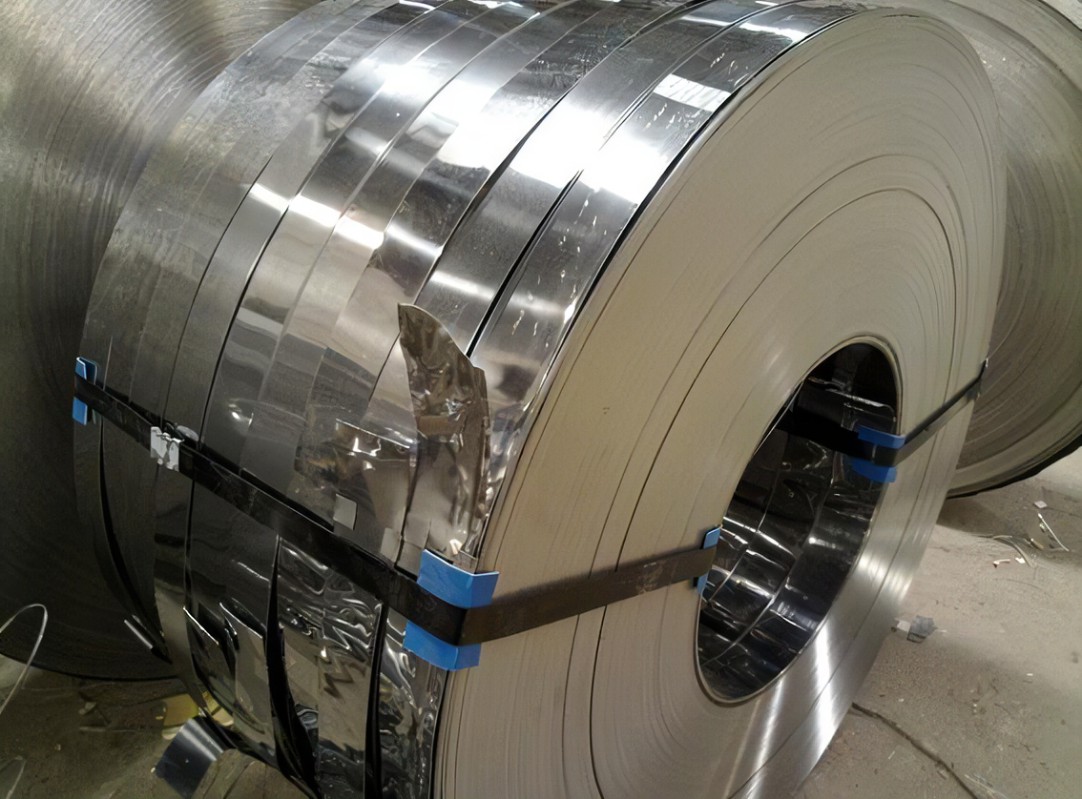
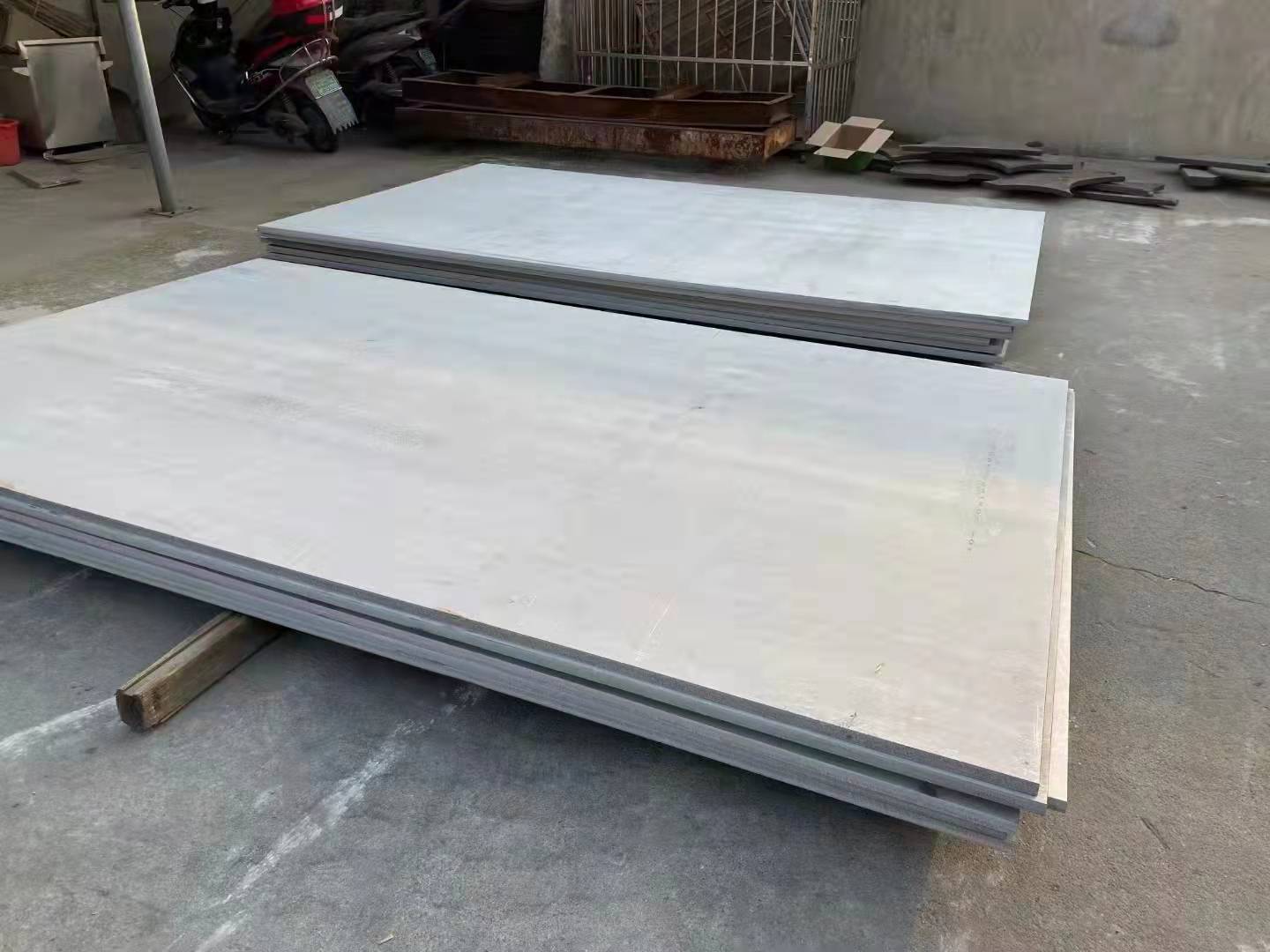
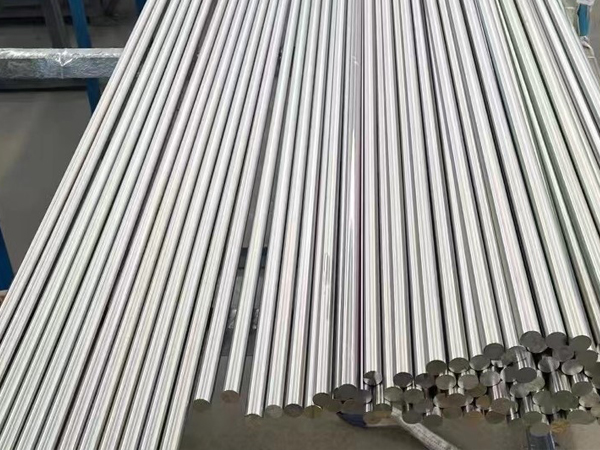
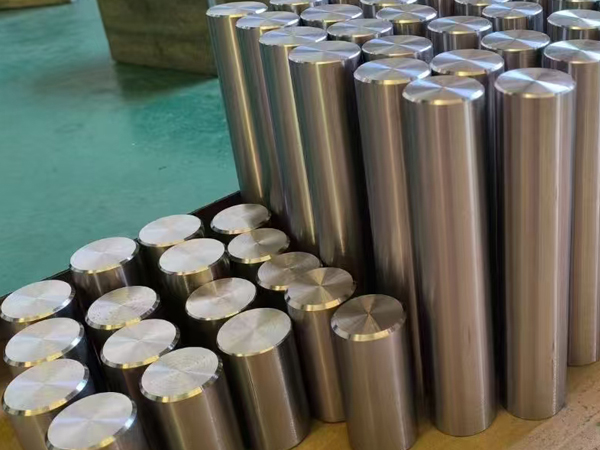
At roughly 4.51 g/cm³, Grade 3 weighs about 56% of an equivalent nickel alloy and 43% less than steel — a density advantage that multiplies the benefit of every kilogram of material moved, fabricated, shipped, and installed in an exchanger bundle, vessel shell, or piping system. Shanghai Hangbo Alloy Group (nickel-alloy.com) supplies Titanium Grade 3 in plate, sheet, strip, bar, billet, forgings, and seamless/welded pipe and tube, with every heat certified to the governing ASTM product specification and shipped with an EN 10204 3.1 mill certificate, 100% PMI verification, and full melt-to-shipment traceability. This guide documents the composition, mechanical envelope, governing specifications, corrosion performance, and fabrication practice for Grade 3, with the ASME pressure-vessel context that drives most Grade 3 procurement.
Chemical Composition
The composition limits below are the acceptance baseline for Titanium Grade 3 mill products supplied by Hangbo Alloy to ASTM B265, B348, and B338. Titanium is the balance element.
| Element | ASTM Spec Limit (wt %) | Typical Heat Value | Metallurgical Role |
|---|---|---|---|
| Titanium (Ti) | Balance | ~98.9 | α-phase matrix; passive TiO₂ film former |
| Oxygen (O) | 0.35 max | 0.25 – 0.33 | Primary strengthener — interstitial solid-solution hardening of α-Ti |
| Iron (Fe) | 0.30 max | 0.05 – 0.15 | Trace strengthening; held low for corrosion margin |
| Carbon (C) | 0.08 max | 0.01 – 0.03 | Interstitial; controlled to preserve ductility and weldability |
| Nitrogen (N) | 0.05 max | 0.008 – 0.02 | Potent interstitial strengthener; also hardens and embrittles if excessive |
| Hydrogen (H) | 0.015 max | 0.002 – 0.006 | Kept minimal — excessive H risks hydride embrittlement in heavy section |
| Other elements, each | 0.10 max | — | Per ASTM residual limits |
| Other elements, total | 0.40 max | — | Per ASTM residual limits |
The single most important number on a Grade 3 certificate is oxygen. Where Grade 2 is limited to 0.25% oxygen maximum and typically melts near 0.12–0.18%, Grade 3 permits 0.35% maximum and typically melts near 0.25–0.33%. Because oxygen atoms occupy interstitial sites in the α lattice and block dislocation motion, each additional ~0.01% oxygen raises the yield strength of CP titanium by roughly 7–8 MPa. The ~0.1% oxygen gap between a typical Grade 2 heat and a typical Grade 3 heat therefore translates into roughly 70–100 MPa of additional yield strength — exactly the difference that separates the 275 MPa Grade 2 yield minimum from the 380 MPa Grade 3 yield minimum in the governing ASTM tables.
Metallurgy: Why Grade 3 Is Stronger — and Why That Does Not Cost Corrosion Resistance
Commercially pure titanium is strengthened by interstitial solutes, principally oxygen, rather than by precipitation or heat treatment. The α-phase lattice accepts oxygen, nitrogen, and carbon atoms into octahedral interstitial sites, where they strain the lattice and impede dislocation glide. This is the only practical strengthening mechanism available in a single-phase α alloy: because there is no allotropic transformation product to refine and no second phase to precipitate, CP titanium cannot be strengthened by quenching and aging, and no amount of heat treatment will raise a Grade 2 heat to Grade 3 strength — only the melt chemistry can do that.
The critical engineering insight is that oxygen strengthening does not degrade corrosion resistance. The corrosion performance of titanium derives from the thin, dense, self-repairing titanium dioxide (TiO₂) passive film that forms instantly on any clean surface exposed to air, water, or oxidizing media. That film is a property of the titanium matrix, and the small interstitial oxygen additions that separate Grades 1–4 do not measurably change its stability. Grade 3 therefore offers the same near-immunity to chloride pitting and chloride stress-corrosion cracking, the same excellent resistance to oxidizing acids and seawater, and the same safe service envelope as Grade 2 — in a material that carries ~38% higher minimum yield strength.
Grade 3 is normally supplied and used in the annealed condition — for plate and sheet typically annealed in the 650–760 °C range — which recrystallizes the worked α structure, restores full ductility after hot or cold working, and is the condition on which the ASTM minimum properties are certified. Because the anneal is performed below the beta transus (approximately 915–930 °C for Grade 3, the exact value rising with oxygen content), the microstructure remains fine-grained, equiaxed α — the structure that gives CP titanium its combination of ductility, toughness, weldability, and resistance to hydrogen pickup.
Governing Specifications and Product Forms
Grade 3 is certified by UNS number and by ASTM product specification. The common procurement error is quoting only "titanium Grade 3" without the product standard — a bar certificate is not evidence of compliance for plate. Hangbo Alloy issues material to the applicable specification for each form:
| Product Form | ASTM Specification | ASME Equivalent | Typical Range Supplied by Hangbo Alloy |
|---|---|---|---|
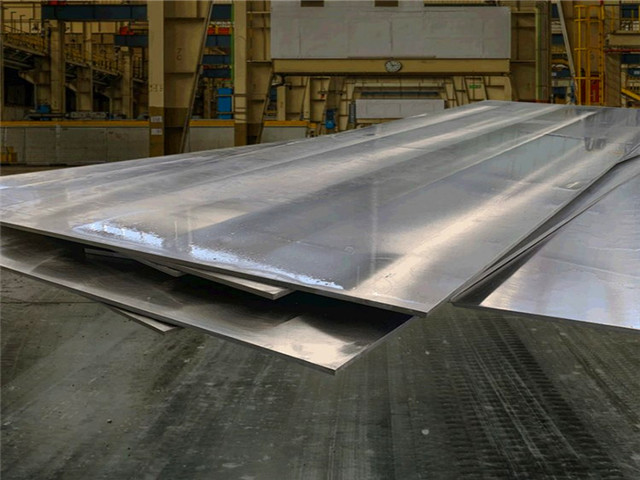
| Plate, sheet, and strip | ASTM B265 | ASME SB-265 | Plate 0.3 – 100 mm thick; sheet 0.3 – 4.75 mm |
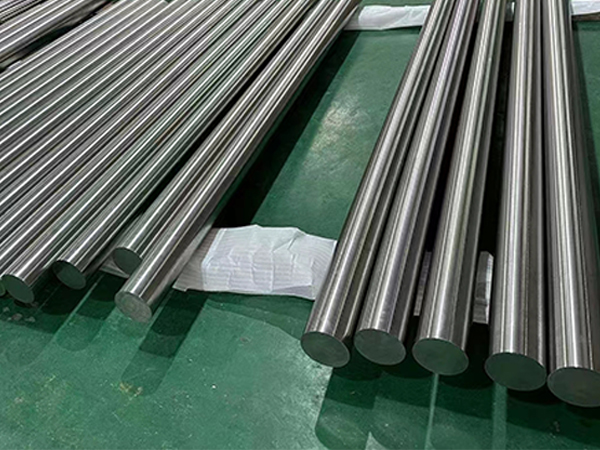
| Bar and billet | ASTM B348 | ASME SB-348 | Round bar Ø 6 – 400 mm; square, flat, hex |
| Seamless condenser / heat-exchanger tube | ASTM B338 | ASME SB-338 | Seamless tube Ø 6 – 89 mm OD |
| Seamless pipe | ASTM B861 | ASME SB-861 | Seamless pipe 1/8" – 12" NB |
| Welded pipe | ASTM B862 | ASME SB-862 | Welded pipe 60 – 610 mm OD |
| Forgings | ASTM B381 | ASME SB-381 | Flanges, rings, custom forgings |
| Welded fittings | ASTM B363 | ASME SB-363 | Elbows, tees, reducers per B16.9 |
| Wire | ASTM B863 | — | Welding wire and spring wire |
For pressure-boundary procurement, state the UNS grade, the product form, and the ASTM/ASME specification together — for example, "Titanium Grade 3, UNS R50550, plate to ASTM B265 / ASME SB-265, annealed, EN 10204 3.1." Hangbo Alloy confirms every purchase order against this callout discipline before quoting.
Mechanical Properties
Grade 3 minimum tensile requirements as tabulated in the governing ASTM product specifications (annealed condition) are shown below with representative typical values for plate and bar:
| Property | ASTM Minimum | Typical (Annealed) | Notes |
|---|---|---|---|
| Tensile strength (UTS) | 450 MPa (65 ksi) | 540 – 650 MPa | Minimum per B265/B348/B338 tables |
| 0.2% yield strength (YS) | 380 MPa (55 ksi) | 450 – 540 MPa | ~38% above the Grade 2 minimum of 275 MPa |
| Elongation in 2 in. (50 mm) | 18% | 20 – 28% | B265 plate/sheet; scaled with section size |
| Elongation for bar (B348) | 18% | 20 – 28% | Reduces with increasing diameter |
| Reduction of area | — | 35 – 50% | Not a B348 acceptance requirement for Gr3 |
| Hardness | — | 160 – 200 HV / ~80 – 90 HRB | Informational; no hardness cap for Gr3 |
Reading the table correctly: ASTM minimums are certified values on the mill test certificate and scale with product form and section thickness — heavier plate and larger-diameter bar carry the same strength minimums but elongation requirements may be reduced in thick sections per the governing table. Hangbo Alloy certifies the exact value applicable to the ordered dimension and states the tested values, not just "minimum compliance," on the EN 10204 3.1 document.
Physical Properties
| Property | Value | Notes |
|---|---|---|
| Density | 4.51 g/cm³ (0.163 lb/in³) | ~56% of nickel alloys; 57% of steel |
| Melting range | ~1660 – 1670 °C | CP titanium solidus/liquidus |
| Beta transus | ~915 – 930 °C | Rises with oxygen content; anneal is performed below it |
| Modulus of elasticity (tension) | ~103 – 110 GPa | ~half of steel; drives stiffness-limited design |
| Poisson's ratio | ~0.32 – 0.34 | — |
| Coefficient of thermal expansion | ~8.6 – 9.2 × 10⁻⁶ /°C (20 – 100 °C) | Low, near that of ferritic steels |
| Thermal conductivity | ~16 – 19 W/m·K | Lower than steel — relevant to heat-exchanger wall design |
| Electrical resistivity | ~0.55 µΩ·m | — |
| Magnetic behavior | Non-magnetic | Useful in instrumented and marine assemblies |
Corrosion Resistance: Identical Envelope to Grade 2
Grade 3 shares the CP titanium corrosion envelope because corrosion resistance is set by the TiO₂ passive film, not by oxygen content. The film forms spontaneously, is highly stable in oxidizing and neutral media, and repairs itself within fractions of a second when damaged, provided oxygen or water is present. This gives Grade 3 the same core credentials that make titanium the material of choice in chloride-laden chemical and marine service:
| Environment | Grade 3 Performance | Engineering Comment |
|---|---|---|
| Seawater, flowing and stagnant | Excellent — no pitting or crevice attack at ambient temperature | Extended immersion shows essentially zero corrosion |
| Chloride brines, all concentrations | Excellent to ~80 °C in creviced geometries | Total immunity to chloride SCC and pitting at ambient temperature |
| Oxidizing acids (nitric, chromic) | Excellent | TiO₂ film is strongly stabilized by oxidizers |
| Mild reducing acids (dilute sulfuric, phosphoric) | Good at moderate temperature/concentration | Oxidizing contaminants (Fe³⁺, Cu²⁺, dissolved O₂) improve performance |
| Wet chlorine, hypochlorite, chlorine dioxide | Excellent | Standard material for chlorine-cell and bleach-plant duty |
| Organic acids and media | Excellent | Film remains stable in most organics |
| Hot concentrated reducing acids (HCl, H₂SO₄) | Limited | Consider Grade 7 (Pd) or Grade 12 (Mo-Ni) per Hangbo guidance |
| Hydrofluoric acid | Not recommended | Dissolves the TiO₂ film; attack can be rapid |
| Hot chloride crevices above ~70 – 80 °C | Crevice corrosion possible in tight, oxygen-starved crevices | Use Pd-bearing Grade 7 or Ni-Ru Grades 13/15 for crevice-critical duty |
Because Grade 3 corrosion performance equals Grade 2, the selection between them is made on mechanics and economics, never on corrosion margin. Where a vessel or heat exchanger is thickness-limited by pressure, Grade 3 converts that limit into material savings; where the limiting case is thin-wall handling, buckling, or deflection, Grade 3 also wins. Grade 4 remains available when maximum CP strength is required and slight ductility loss is acceptable — Hangbo Alloy supplies all four CP grades and will certify each to its own UNS.
Grade 3 in ASME Pressure-Vessel Service
The principal modern market for Grade 3 is pressure-boundary equipment in chemical and process plants, where its higher allowable stress makes CP titanium economic in ASME-code construction. Grade 3 plate and bar are recognized in the ASME Boiler and Pressure Vessel Code through the SB-265 and SB-348 (and SB-338 for tubing) designations, with allowable stress values published in ASME Section II, Part D. Three engineering points govern the design:
-
Design-stress advantage. Because Section VIII Division 1 allowable stresses are set against yield and tensile strength with safety factors, Grade 3's 380 MPa minimum yield earns a materially higher allowable stress than Grade 2's 275 MPa minimum. For a fixed design pressure and diameter, the required wall thickness drops accordingly — typically 15–25% in realistic vessel geometry — saving weight, weld metal, and cost on every shell course and head.
-
Temperature envelope. CP titanium pressure components are conventionally limited to maximum design temperatures near 300 – 316 °C, above which long-term oxidation, hydrogen pickup, and loss of strength margin govern. Always verify the allowable-stress line and temperature ceiling in the current Section II Part D table for the specific product form — the Code value for your thickness is the governing number, and Hangbo Alloy certifies against the corresponding ASTM/SB specification.
-
Hydrogen discipline. Titanium absorbs hydrogen readily above roughly 80 °C, and absorbed hydrogen can precipitate brittle hydrides in the α matrix. Pressure-vessel fabrication therefore controls welding atmosphere, shielding gas purity, and cleaning agents; service environments must avoid hydrogen-generating conditions at temperature. This is standard titanium practice and is well handled by qualified fabricators using Hangbo Alloy's documented material.
Welded pressure vessels in Grade 3 are normally fabricated in the as-welded condition: the α microstructure is not degraded by weld thermal cycles, and no post-weld heat treatment is required — a major fabrication advantage over quenched-and-tempered steels and many nickel alloys. Qualification follows ASME Section IX with GTAW (preferred) or GMAW processes and matching CP filler, typically Grade 2 filler where slightly lower-strength weld metal is acceptable or Grade 3-equivalent filler where full joint efficiency against the Grade 3 minimums is required.
Grade 3 vs. Grade 2 vs. Grade 4: A Selection Guide
| Attribute | Grade 2 (R50400) | Grade 3 (R50550) | Grade 4 (R50700) |
|---|---|---|---|
| Oxygen, max | 0.25% | 0.35% | 0.40% |
| UTS minimum | 345 MPa | 450 MPa | 550 MPa |
| 0.2% YS minimum | 275 MPa | 380 MPa | 483 MPa |
| Elongation minimum | 20% | 18% | 15% |
| Formability / cold work | Excellent | Very good | Good |
| Weldability | Excellent | Excellent | Very good |
| Corrosion resistance | Reference | Equal to Grade 2 | Essentially equal |
| Typical design role | General chemical, marine | Thinner-walled pressure vessels, rotating equipment | Maximum-strength CP (fasteners, shafts) |
| Relative cost | Low | Low-moderate | Moderate |
Fabrication, Welding, and Machining
- Hot forming: Grade 3 hot-forms readily in the 650 – 925 °C band, finishing above roughly 650 °C to avoid excessive oxidation. Heavy forming is followed by annealing at 650 – 760 °C where code or design requires restoration of the annealed envelope.
- Cold forming: Excellent; Grade 3 bends, rolls, and presses without the springback management burden of α+β alloys. Severe cold work (above roughly 5 – 10% strain) in corrosion-critical service should be followed by stress relief or full anneal per design practice.
- Welding: GTAW with argon shielding (including backing purge of the weld root) is the standard process; GMAW and plasma arc welding are used for production seams. Matching Grade 3 filler or Grade 2 filler is selected by joint-strength requirement. Preheat is not required; interpass temperature is normally limited to ~150 – 200 °C. No post-weld heat treatment is required for α structure.
- Machining: CP titanium is free-cutting compared with α+β alloys but tends to gall; use sharp tooling, positive rake, rigid setups, and flood coolant, and avoid low-speed rubbing that work-hardens the surface. Threading and tapping benefit from single-point methods.
- Surface and cleaning: Titanium surfaces should be kept free of iron contamination (which can initiate localized attack in service) — use dedicated tooling, avoid carbon-steel wire brushing, and pickle or passivate after fabrication where the specification requires.
- Pickling / descaling: Oxidized surfaces from hot working are removed by alkaline permanganate or inhibited acid treatments per recognized titanium practice; HF-bearing pickles require strict control and rinsing to prevent hydrogen pickup.
Applications Summary
- Chemical-process pressure vessels, reactors, and columns where chloride-bearing process streams rule out stainless steels.
- Heat exchangers, condensers, and reboilers — shell-and-tube and plate-type — in seawater-cooled and chloride-laden duty.
- ASME Section VIII and B31.3 pressure-boundary systems requiring thin-wall economic design with total chloride SCC immunity.
- Pulp bleaching equipment, chlorine dioxide generators, and wet-chlorine handling systems.
- Marine and offshore hardware: shafting, valve trim, seawater piping, and structural forgings where Grade 2 strength is marginal.
- Electrochemical and metal-finishing equipment, including anodizing racks, plating barrels, and electrolytic cells.
- Desalination evaporator and brine-heater tubing in plants where maximum-wall-thickness economy is sought.
- Rotating-equipment components — impellers, shafts, and casings — in corrosive pump and compressor service.
Hangbo Alloy Supply Program
| Product Form | Specification | Typical Size Range | Testing / Documentation |
|---|---|---|---|
| Plate / Sheet / Strip | ASTM B265 / ASME SB-265 | 0.3 – 100 mm thick | EN 10204 3.1, PMI, UT on request |
| Bar / Billet | ASTM B348 / ASME SB-348 | Ø 6 – 400 mm | EN 10204 3.1, PMI, ultrasonic per spec |
| Seamless Tube | ASTM B338 / ASME SB-338 | Ø 6 – 89 mm OD | Hydrostatic, eddy current, flaring tests |
| Pipe (seamless / welded) | ASTM B861 / B862 | 1/8" NB – 610 mm OD | Hydrostatic, flattening, PMI |
| Forgings / Flanges | ASTM B381 | Custom | Dye penetrant, dimensional, PMI |
| Fittings | ASTM B363 | 1/2" – 24" | Dimensional, PMI |
Hangbo Alloy maintains dedicated CP-titanium stock segregation by grade so that Grade 2, Grade 3, and Grade 4 heats can never be mixed, verifies oxygen and iron on every incoming heat by OES/PMI plus certified LECO analysis, and supports third-party witness testing at the Shanghai mill by SGS, BV, TÜV, or the customer's designated inspector.
Technical FAQ — Titanium Grade 3 (UNS R50550)
1. What is the difference between Titanium Grade 2 and Grade 3?
The controlling difference is oxygen content: Grade 2 permits 0.25% oxygen maximum and has a 275 MPa minimum yield strength, while Grade 3 permits 0.35% maximum and requires 380 MPa minimum yield. Corrosion resistance is essentially identical because both rely on the same titanium dioxide passive film. Grade 3 is selected when the higher allowable stress reduces wall thickness or adds design margin.
2. Can Grade 3 be strengthened by heat treatment?
No. CP titanium is single-phase α and is strengthened only by interstitial solutes (mainly oxygen) and cold work. Quenching and aging do nothing useful. If higher strength than Grade 4 is required, move to an α+β alloy such as Grade 5 (Ti-6Al-4V) or Grade 9 — with the corrosion and weldability trade-offs Hangbo Alloy can advise on.
3. Which ASTM specifications cover Grade 3 plate, bar, and tube?
Plate, sheet, and strip are covered by ASTM B265; bar and billet by ASTM B348; seamless condenser and heat-exchanger tube by ASTM B338. Seamless pipe is B861, welded pipe B862, forgings B381, and fittings B363. ASME code equivalents are the SB-265, SB-348, SB-338 series. Each product form must be certified to its own spec.
4. Is Grade 3 suitable for ASME pressure vessels?
Yes. Grade 3 plate and bar are recognized through ASME SB-265 and SB-348, with allowable stresses published in ASME Section II Part D for Section VIII Division 1 construction. Its higher yield minimum earns higher allowable stress than Grade 2, enabling thinner, lighter shells. Verify the current Code temperature ceiling and stress table for the specific thickness ordered.
5. Does Grade 3 resist seawater and chlorides as well as Grade 2?
Yes — corrosion performance is governed by the passive TiO₂ film, which is unaffected by the interstitial oxygen difference. Grade 3 is effectively immune to chloride pitting and stress-corrosion cracking at ambient temperature, and behaves identically to Grade 2 in seawater, brines, oxidizing acids, and wet chlorine.
6. Where does Grade 3 NOT perform?
Hot concentrated reducing acids such as hydrochloric and sulfuric, and any hydrofluoric acid service, attack CP titanium regardless of grade. In hot chloride crevices above roughly 70 – 80 °C, crevice corrosion is possible in oxygen-starved geometries. For those cases consider Grade 7 (palladium), Grade 12 (molybdenum-nickel), or Grades 13/15 (nickel-ruthenium), which Hangbo Alloy also supplies.
7. Does Grade 3 require post-weld heat treatment?
No. The α microstructure is unaffected by weld thermal cycles, so Grade 3 weldments are used in the as-welded condition. Control shielding gas purity and clean the joint surfaces rigorously — the practical welding risks are oxygen/nitrogen contamination and hydrogen pickup, not phase transformation.
8. What filler metal is used to weld Grade 3?
Matching Grade 3 filler is used where the weld must develop the full Grade 3 joint strength; Grade 2 filler is a common choice where slight under-matching is acceptable for ductility margin. GTAW with argon backing purge is the preferred process for highest integrity.
9. What is the maximum service temperature of Grade 3?
In pressure-boundary service, ASME design tables conventionally cap titanium near 300 – 316 °C; above this range oxidation, hydrogen pickup, and reduced strength margin govern. In non-code, lightly loaded service, CP titanium can be used at higher temperatures, but design reviews should address oxidation and hydriding.
10. How does Hangbo Alloy guarantee Grade 3 quality and identity?
Every Hangbo Alloy Grade 3 shipment carries an EN 10204 3.1 mill certificate stating the tested chemistry — with oxygen and iron explicitly declared — and the tested tensile values, plus 100% PMI verification, heat-lot traceability from melt to shipment, and, on request, third-party witness testing by SGS, BV, or TÜV at our Shanghai facility. Stock is segregated by grade to exclude any possibility of Grade 2/3/4 substitution.
This page is part of the Titanium Alloy Technical Reference series by Hangbo Alloy (Shanghai Hangbo Alloy Group, nickel-alloy.com). Data presented are typical engineering values compiled from recognized industry sources and are provided for material selection guidance; the governing documents for any purchase are the applicable ASTM/ASME specifications (B265/B348/B338 and SB equivalents), the ASME Section II Part D design tables for code construction, and the certified mill test report. Contact Hangbo Alloy for current stock, mill certificates, and application engineering support.