

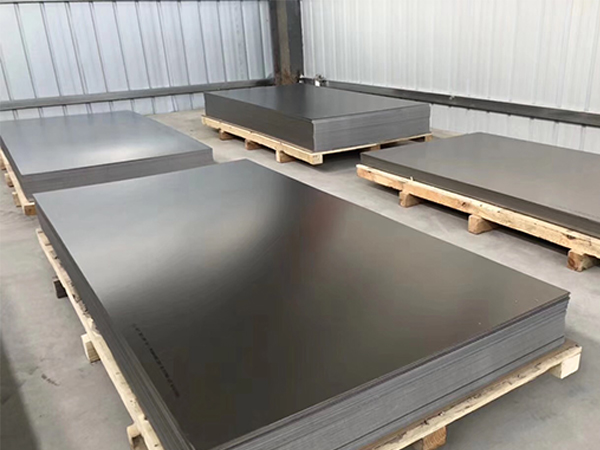
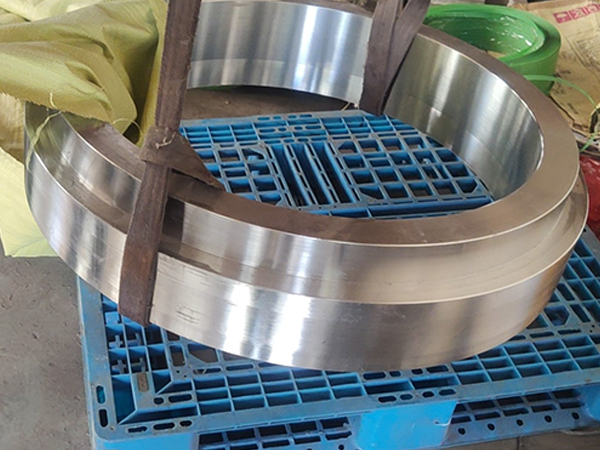

Overview: 15-5PH (UNS S15500) / XM-12
15-5PH is a martensitic precipitation-hardening stainless steel designed to provide higher toughness than 17-4PH. Benchmarked against ASTM A564, it is typically produced via Vacuum Arc Remelting (VAR) to ensure a refined, ferrite-free microstructure, resulting in exceptional transverse properties.
Specifications & Standards by Product Form
| Product Form | ASTM / ASME Standards |
|---|---|
| Round Bar | ASTM A564 / ASME SA564 |
| Seamless Tube | Available on Request |
| Forgings | ASTM A705 / ASME SA705 |
| Strip / Plate | ASTM A693 / ASME SA693 |
Chemical Composition (ASTM A564 / UNS S15500)
| Element | Cr | Ni | Cu | Nb+Ta | Mn | Si | C | Fe |
|---|---|---|---|---|---|---|---|---|
| Range (%) | 14.0-15.5 | 3.5-5.5 | 2.5-4.5 | 0.15-0.45 | ≤1.0 | ≤1.0 | ≤0.07 | Bal. |
Mechanical Properties (Condition H900)
| Property | Tensile Strength (MPa) | Yield Strength 0.2% (MPa) | Elongation (%) | Hardness (HRC) |
|---|---|---|---|---|
| ASTM A564 Min. | 1310 (190 ksi) | 1170 (170 ksi) | 10 | ≥40 |
Material Characteristics & Applications
- Enhanced Transverse Toughness: The VAR process reduces delta ferrite, significantly improving toughness in the transverse direction compared to 17-4PH.
- High Strength: Can be aged to various strength levels through heat treatment.
- Corrosion Resistance: Comparable to 304 stainless steel in most environments.
Primary Applications: Aerospace components, high-pressure valves, gears, shafts, and precision mechanical structural parts.
Global Project Case: Precision Mechanical Structural Parts
Hangbo Alloy supplied 15-5PH round bars for a aerospace manufacturer’s landing gear structural components. The client required high strength combined with guaranteed transverse ductility to withstand multi-axial loading. 15-5PH was chosen over 17-4PH specifically for its consistent properties in large cross-sections and superior fracture toughness.
Pros & Cons
- Pros: Excellent toughness in all directions, very high strength, good weldability, and low-temperature aging.
- Cons: More expensive than 17-4PH due to VAR processing; limited corrosion resistance in aggressive chloride media.
Deep FAQ: 15-5PH vs. 17-4PH Depth Comparison
- What is the primary difference between 15-5PH and 17-4PH? While chemically similar, 15-5PH has a more controlled microstructure (less delta ferrite) due to vacuum melting, leading to significantly better transverse toughness and ductility.
- Can 15-5PH replace 17-4PH? In almost all cases, yes. It is the preferred upgrade when the component is subject to complex stresses or requires high reliability in large diameters.
- Is 15-5PH easier to machine? It is slightly more consistent in machinability than 17-4PH because of its cleaner, more uniform structure.
- What heat treatment is most common for 15-5PH? Condition H900 (aging at 900°F) provides the highest strength, while H1150 provides better ductility and impact resistance.
- Does 15-5PH require preheating before welding? Generally no, but post-weld heat treatment is recommended to restore the precipitation-hardened properties.
Explore our PH Stainless Steel Selection or contact us for Aerospace-Grade Materials.